Iran’s underground financial lifeline—its Southeast Asian oil reserves—finally runs dry
- Input
- 2026-10-22 14:01:54
- Updated
- 2026-10-22 14:01:54
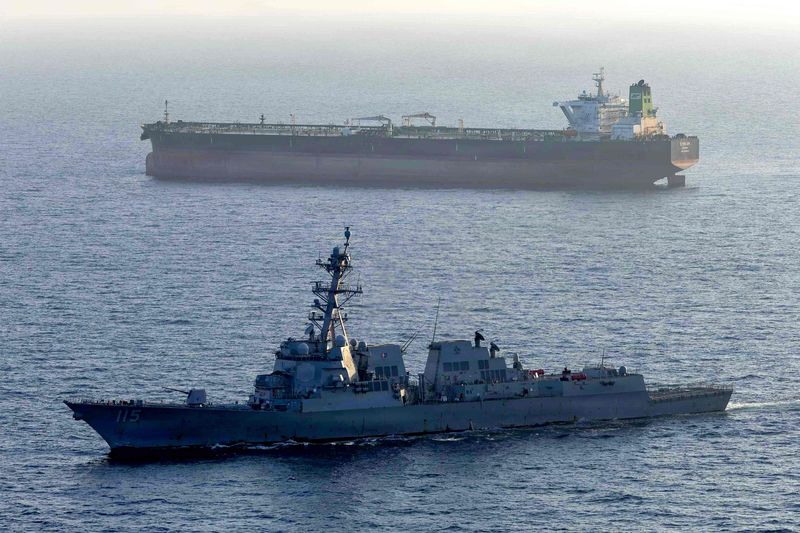
[Financial News] Iran’s offshore oil reserves, a crucial financial lifeline that had enabled it to hold out in its war with the United States, have now been completely depleted. With oil revenues effectively cut off by the US Navy’s maritime blockade, Iran’s economy is facing a severe cash crunch and the threat of inflation.
On the 21st (local time), The Wall Street Journal (WSJ), citing analysts at energy analytics firm Kpler, reported that Iran’s crude oil stockpiles, which had been sitting offshore near Southeast Asia for months, were completely depleted by mid-October. Homayoun Falakshahi, Kpler’s director of crude oil analysis, said, “There is no longer any Iranian crude oil left that can be shipped to China.”
To evade US sanctions, Iran had sold oil to its major customers, Chinese refineries, after transferring it between tankers in international waters near Malaysia and Singapore. These waters had served as a key hub for distributing Iranian oil and as a useful offshore storage site.
At the start of the war in February, Iran’s overseas oil stockpiles stood at 135 million barrels, worth about $10 billion. But the stockpiles quickly dwindled as the US Navy’s blockade and the disruption of maritime shipping routes continued. After the US military resumed its forceful blockade in July, the stockpiles—which had once approached 90 million barrels—fell to less than 1 million barrels in early October and have now run completely dry.
Navy Adm. Brad Cooper, commander of United States Central Command (CENTCOM), which oversees the Middle East, said, “The US military’s maritime blockade has deprived the authorities in Tehran of oil revenues worth at least $25 billion (about 34 trillion won).” He stressed, “This has dealt a devastating blow to the financial capacity of Iran’s security apparatus and its ability to rebuild destroyed weapons and factories.”
Oil exports account for 30–40% of Iranian government revenue and are its largest source of foreign currency. With this lifeline cut off, the value of the Iranian rial has plunged by about a third since July, while rapid inflation and shortages of goods are worsening.
Emma Lee, an analyst at energy consultancy Vortexa, said Chinese refiners were already turning to alternative suppliers such as Brazil and West Africa. Alternative routes are being explored, including overland trucking through neighboring countries, but they are nowhere near sufficient to replace the volume transported by sea.
Experts see the aim of the United States’ high-pressure economic blockade as a strategy to push Iran’s regime back to the nuclear negotiating table or to stoke domestic discontent and destabilize the regime.
However, the Iranian government is maintaining a hard-line stance. Central Bank of Iran Governor Abdolnaser Hemmati pushed back at a recent International Monetary Fund (IMF) meeting in Bangkok, saying, “Despite external pressure, Iran’s economy has shown remarkable resilience.” He added, “Claims that the Iranian economy is collapsing are nothing more than an illusion.”
[email protected] Yoon Jae-joon Reporter