Park Duk-hyum: “More senior-level aides than the Blue House” ... Min Hyung-bae: “They’re called senior secretaries, but serve as aides”
- Input
- 2026-10-22 12:49:50
- Updated
- 2026-10-22 12:49:50
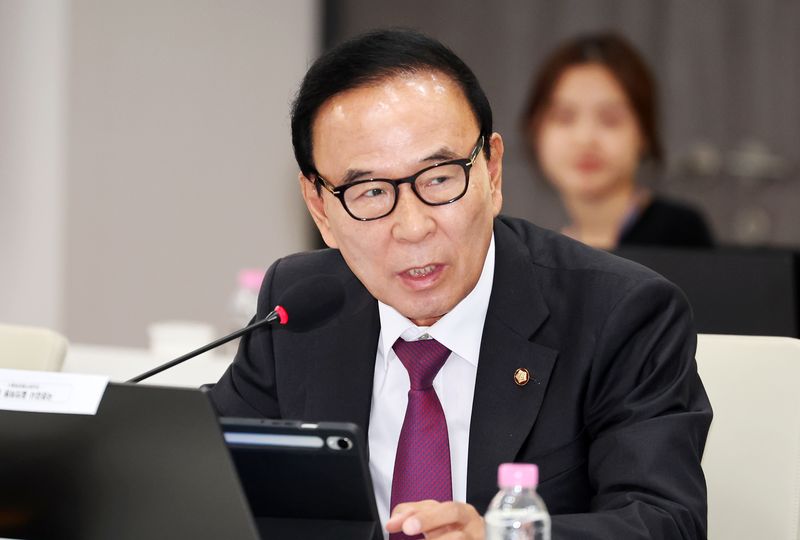
【Financial News | Jeonnam-Gwangju = Hwang Tae-jong, reporter】The National Assembly’s Security and Public Administration Committee audit of Gwangju Metropolitan City, held at the Gwangju office of Jeonnam-Gwangju Integrated Special City (Gwangju Metropolitan City) on the 22nd, drew attention when a criticism was raised that “Mayor Min Hyung-bae has more senior-level aides than the Blue House.”
People Power Party lawmaker Park Duk-hyum (representing Boeun, Okcheon, Yeongdong and Goesan in North Chungcheong Province) said that day, “Special fixed-term positions were created to assist the mayor. The Blue House has 11, including senior secretaries for political affairs and public relations. Jeonnam-Gwangju Integrated Special City has 13.” He criticized the arrangement, adding, “I think people might get the impression that Mayor Min intends to run in the next presidential election.”
He added, “There are eight senior secretaries alone, along with special advisers and aides, and four vice mayors at the vice-minister level. They also plan to have 26 aides, including policy advisers, so frankly, looking at the organization, it’s hard to tell whether it’s the mayor’s office or the Blue House, and it gives the impression of being at the presidential level.”
He continued, “Just 100 days after the city was launched, Mayor Min revised an enforcement rule—not an ordinance—three times. It was first established on July 31 with six positions, amended to seven in the second revision on September 14, and revised again on October 7, bringing the total to 13. After applications opened, exactly one person applied for each position,” he said.
Lawmaker Park emphasized, “The organization looks vast on the surface. The most important effect of administrative integration is reducing duplication, and although the number of heads of local governments has been cut from two to one, having one more special-service staff member than Seoul Metropolitan City’s 28 is bound to invite misunderstanding.”
He also called for disclosure of the additional personnel costs resulting from the expanded organization and compensation by position.
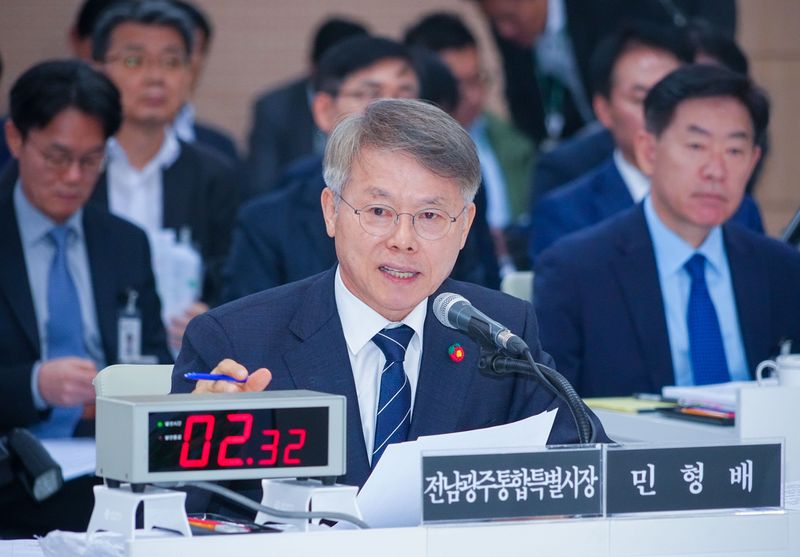
In response, Gwangju Metropolitan City Mayor Min Hyung-bae said, “There seems to be a misunderstanding. After becoming mayor of the integrated special city, I found that I had to make every decision on my own, and there were far too few people. Although they are called senior secretaries, there was a need for them to perform the role of aides.”
He also rebutted the criticism, saying, “Under the law, related staff can make up as much as 3% of the total authorized personnel. We selected experts through open recruitment, and it is also untrue that there was only one applicant.”
Mayor Min also addressed the special-service staff, saying, “The authorized number is 29, but the current staff count is 20, and there are virtually no plans for additional hiring. We initially expected integration to reduce overlapping functions by 15–20%, but differences between the administrative systems of Gwangju and South Jeolla, as well as the principle of guaranteeing staff their previous work locations, constrain the redeployment of personnel.”
[email protected] Hwang Tae-jong Reporter