'Ponzi scheme' seizure: Forfeiture of 240 million won in cash finalized; money to be returned to victims
- Input
- 2026-10-22 12:00:00
- Updated
- 2026-10-22 12:00:00
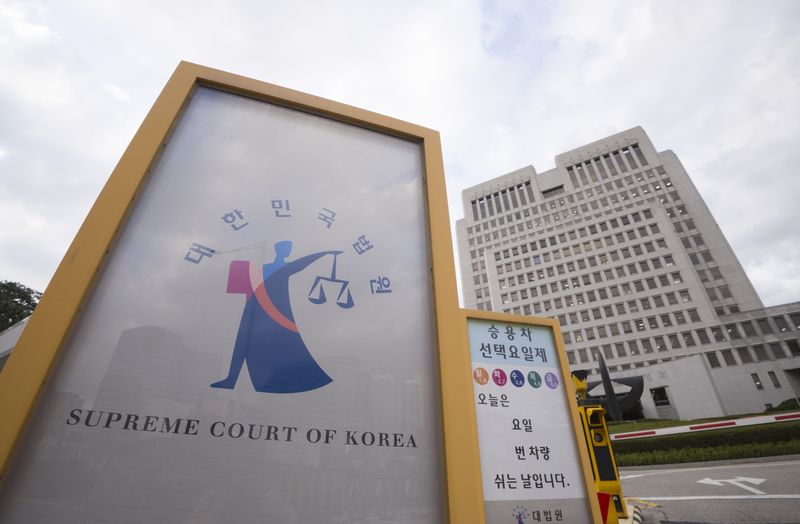
According to legal sources on the 22nd, the First Petty Bench of the Supreme Court of Korea, with Justice Ma Yong-joo as the justice in charge, on the 1st dismissed the appeal by A, who had been indicted on charges of fraud and violating the Act on the Regulation of Conducting Fund-Raising Business Without Permission, and upheld the lower court’s sentence of four years in prison and forfeiture of the seized cash.
Around May or June 2024, A joined an investment fraud group operating an online gambling site that falsely used the name of a famous Malaysian integrated resort, and was responsible for managing lower-level members and laundering the money obtained through the fraud. The group recruited investors by claiming that “reverse betting” on soccer matches had a 93.75% chance of winning and guaranteed profits without risking the principal. In reality, it was a so-called Ponzi scheme, paying returns to existing investors with funds from new investors. A conspired with other members of the group to swindle about 6.1 billion won from 321 victims between March 3 and May 12 last year. Investigators seized about 243.25 million won in cash from A’s home and vehicle, including bundles of 100 50,000-won bills.
The issue was whether the cash could be confiscated. Money obtained from victims through fraud is property that should be returned to them, and therefore cannot be confiscated under the Criminal Act. However, the Act on Confiscation and Recovery of Corrupt Property allows confiscation or collection of equivalent value as an exception when victims face difficulty seeking restitution or damages from the offender and recovery is extremely difficult. It also stipulates that property confiscated in this way must be returned to victims. The first and second trials differed on whether the seized cash was “criminal victim property” under the Act and whether the case qualified as one in which recovery was extremely difficult.
In January this year, the Jeju District Court, in the first trial, sentenced A to four years and six months in prison but did not confiscate the cash. Although it found that the seized money was not A’s own property but criminal victim property that should be returned to the victims, it ruled that the evidence submitted by the prosecutor alone was not enough to conclude that recovery would be extremely difficult.
In June, the Jeju District Court, hearing the second trial, accepted the prosecutor’s appeal, overturned the first-trial ruling and ordered the cash confiscated. It found that, given the organized and planned nature of the crime and the multiple rounds of money laundering carried out from the group’s base in Cambodia using cryptocurrency and other means, most of the proceeds were likely to have been taken overseas. It also found that it would be practically impossible for victims to trace the flow of assets individually and exercise their civil claims. When a ruling is overturned because it omitted a forfeiture order, the entire judgment must be reconsidered, so the sentence was also recalculated. The sentence was reduced to four years in prison after the second trial took into account that A had reached settlements with 71 victims.
The Supreme Court upheld the second-trial ruling. The panel ruled, “There was no error in the lower court’s decision, such as a failure to conduct the necessary examination, a violation of the rules of logic and experience that took the court beyond the limits of the principle of free evaluation of evidence, or a misunderstanding of the legal principles concerning forfeiture under Article 6(1) of the Act on Confiscation and Recovery of Corrupt Property.”
A’s claim that the sentence was too severe was not considered. The Criminal Procedure Act of the Republic of Korea allows appeals on the grounds of excessive sentencing only in cases where the sentence is death, life imprisonment, or at least 10 years’ imprisonment; A was given a lighter sentence. The panel said, “The argument that the sentence is unjustly too severe does not constitute a valid ground for appeal.”
[email protected] Kim Dong-kyu Reporter