Bank of Korea (BOK) weighs further rate hike ... “This year’s growth rate expected to exceed 3.3%” [Monetary Policy Direction]
- Input
- 2026-10-22 11:04:03
- Updated
- 2026-10-22 11:04:03
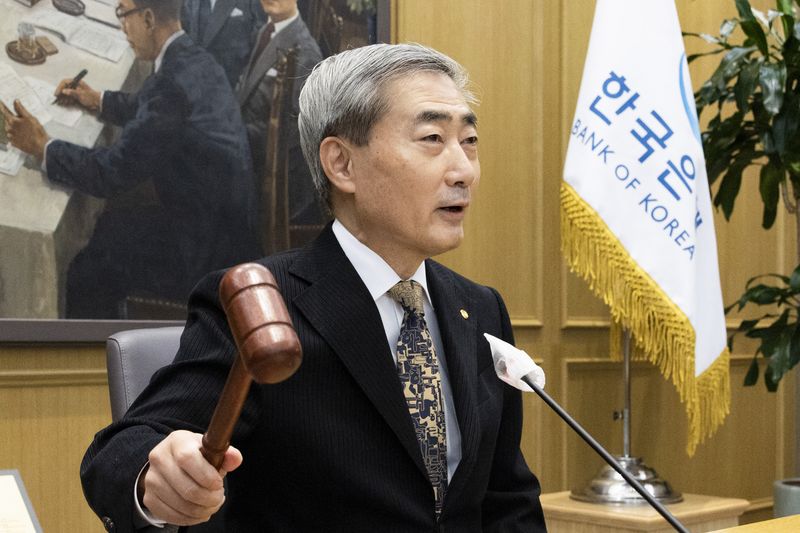
[Financial News] The Bank of Korea’s Monetary Policy Board said it had kept the base rate at its current level of 3.00% per annum on the 22nd because “it judged that it was necessary to assess developments in domestic and external risk factors and the effects of the two rate hikes (in July and August).”
The BOK held a Monetary Policy Board meeting to set monetary policy that day and unanimously decided, with all seven members in agreement, to keep the base rate at its current level of 3.00%.
The board noted that the domestic economy was continuing to grow strongly, led by exports and investment, while inflation continued to rise at a high rate of around 3% and risks to financial stability remained.
It also expressed concern that uncertainties surrounding the situation in the Middle East and the monetary and fiscal policies of major countries were increasing. It expected inflation to remain elevated for the time being due to rising energy prices and supply-chain disruptions.
The board expected the domestic economy to continue growing faster than anticipated, supported by strong exports and investment. It also forecast that the recovery in consumption would gradually gain momentum as income conditions improved.
Accordingly, it expected economic growth this year and next year to exceed by a considerable margin the forecasts made in August (3.3% and 2.9%, respectively).
However, the board noted that “developments in the Middle East, the expansion of the semiconductor cycle and its impact on domestic demand, and changes in domestic and international financial conditions are potential sources of uncertainty.”
It expected inflation to remain elevated in the high 2% range.
This year’s consumer price and core inflation rates were expected to be broadly in line with the August forecasts (2.7% and 2.5%), but next year they were expected to exceed the existing forecasts (2.3% and 2.5%).
In September, consumer prices and core inflation (the index excluding food and energy) both continued to rise at a high rate in the upper 2% range (2.9% and 2.8%, respectively). Short-term inflation expectations among the general public also remained in the upper 2% range.
Regarding future inflation, the board said that “the pass-through of increased cost pressures will continue, and demand-side pressures will also intensify, leading inflation to continue rising above the target for a considerable period.” It assessed that “the inflation path is expected to be affected by movements in international oil prices and exchange rates, the pace of improvement in domestic demand, and the extent to which wage growth spreads.”
It expected risks related to housing prices in the Seoul metropolitan area and household debt to persist amid increased volatility in financial and foreign exchange markets.
In particular, from a financial stability perspective, household loans shifted to a decline as other loans were repaid on net, while housing-related loans continued to increase. The rise in housing prices in the Seoul metropolitan area accelerated again.
The board plans to weigh the timing of further base-rate hikes after assessing inflation, economic conditions and financial stability.
The board said it “plans to conduct monetary policy with due regard for financial stability while ensuring that inflation stabilizes at the target level over the medium term.” It added that “future monetary policy will determine the timing and pace of further rate hikes after closely assessing inflation and economic trends and financial stability.”
[email protected] Jung Sang-gyun Reporter