KAI, Air Force Form “One Team” with Countries Operating Korean-Made Aircraft, Seek to Expand Exports
- Input
- 2026-10-22 11:02:56
- Updated
- 2026-10-22 11:02:56
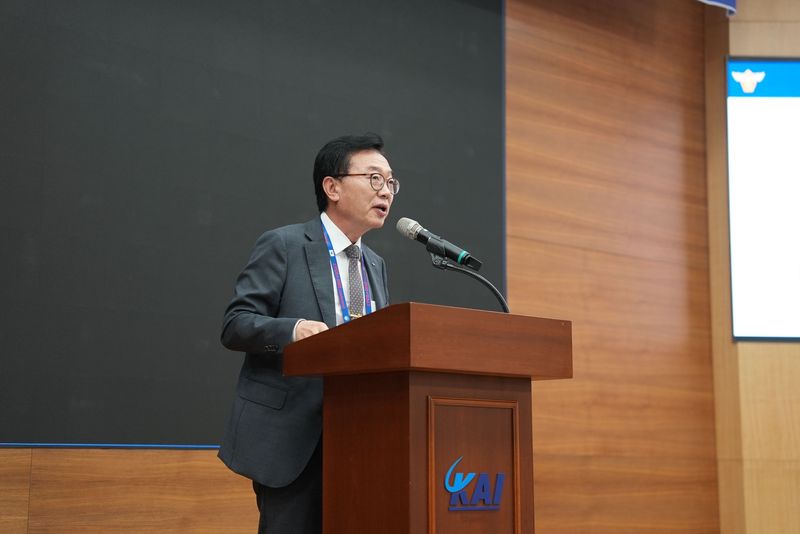
[Financial News] Korea Aerospace Industries (KAI), together with the Republic of Korea Air Force, has set out to strengthen cooperation with countries operating Korean-made aircraft. The plan is to share operational experience and maintenance technology, establish a stable follow-on logistics support system, and use it to enhance the export competitiveness of Korean-made aircraft.
KAI said on the 22nd that it would hold the 15th K-TCG and 9th SMG international conferences with the Air Force in Sacheon, South Gyeongsang Province, from the 21st to the 23rd.
Around 140 South Korean participants, including representatives from the Air Force, the Defense Acquisition Program Administration, KAI, Hanwha Aerospace and LIG D&A, attended the conference, along with about 24 representatives from six countries operating Korean-made aircraft: Indonesia, Peru, the Philippines, Poland, Thailand and Türkiye.
K-TCG, led by the Air Force and supported by KAI, is an international cooperative body that discusses ways to improve the operational availability of Korean-made aircraft, enhance maintenance capabilities and reduce operating and maintenance costs. Since its first meeting in 2009, it has shared accumulated operational data with overseas operators and expanded technical support. Since 2016, it has also held SMG meetings to exchange information related to flight safety.
On the first day of the conference, the 21st, presentations on logistics support strategies and ways to improve the operation of Korean-made aircraft were given, beginning with opening remarks by Park Jong-un, head of the Air Force Logistics Command. Time was also set aside to hear about logistics support issues and difficulties faced by overseas operators and discuss solutions. That day, KAI presented “Ways to Use Aircraft RAM-C Analysis” to improve aircraft reliability and reduce maintenance costs through total life-cycle management. It also introduced a performance-upgrade case in which a Sniper Targeting Pod was fitted to the FA-50 light attack aircraft. The aim is to strengthen follow-on support capabilities for countries to which aircraft have already been exported by upgrading aircraft and improving operational efficiency.
The Air Force Logistics Command and the Aviation Safety Group also shared information on the operational management of T-50 and KT-1 series aircraft, flight safety statistics and recent accident investigations. On the second day of the conference, the 22nd, participants will visit the Sacheon Airshow venue to watch demonstration flights of Korean-made aircraft. On the final day, the 23rd, separate meetings by country and aircraft type are scheduled to discuss in depth issues arising during operations and areas for improvement.
KAI expects the conference to strengthen cooperation with existing export markets and also contribute to expanding exports to new markets in the future. This is because follow-on logistics support capabilities—including reliable maintenance, parts supply and performance upgrades after aircraft are delivered—are considered key factors in determining export competitiveness.
Song Ho-cheol, KAI executive vice president and head of production operations, said, “This is a valuable opportunity to share operational performance, improvement cases and difficulties with countries operating Korean-made aircraft,” adding, “Presenting performance-upgrade cases and strengthening mutual cooperation have provided an opportunity to improve the reliability of Korean-made aircraft and expand export markets in the future.”
[email protected] Jung Won-il Reporter