Jeju unveils 161.8 billion won plan to develop local businesses ... new investment amount undisclosed
- Input
- 2026-10-22 10:45:28
- Updated
- 2026-10-22 10:45:28

【Financial News, Jeju = Reporter Jeong Yong-bok】 Jeju Province has drawn up a five-year investment plan worth 161.8 billion won to develop local businesses, but did not disclose separate figures for budgets for existing support programs and new investments. A business survey found that 62% of companies that had been operating for 5–7 years were still at the stage of laying business foundations.
According to Jeju Special Self-Governing Province on the 22nd, the Basic Plan for Fostering and Supporting Local Creators (2027–2031), released on the 21st, consists of four strategies, nine initiatives and 75 action plans. It is a statutory five-year plan to identify startups that combine Jeju’s unique resources with creative ideas and develop them into leading local businesses.
The plan focuses on connecting existing support programs, which are spread across multiple departments and organizations, in line with businesses’ growth stages. Jeju Province conducted a comprehensive review of this year’s budget documents and identified 63 programs related to the local economy, including business development, culture, tourism, food and regional revitalization.
However, the published basic plan does not separately specify investment amounts for existing and new programs. It also does not provide the respective contributions from different funding sources, such as national and provincial funds and private financing.
The largest share of the five-year investment plan is earmarked for upgrading business growth and supporting the growth ecosystem. The total is 95.9 billion won, or 59.3% of the overall amount.
Specifically, 55.1 billion won is allocated to specialized growth support in areas such as food, lifestyle industries and tourism; 16.1 billion won to support tailored to each growth stage, from identifying startups to developing leading local businesses; and 24.7 billion won to strengthening business capabilities and providing financial support.
A further 43.3 billion won is planned for developing local talent and helping them settle in the region, and 21.1 billion won for collaboration among businesses and building a foundation for shared prosperity in the region. The remaining 1.5 billion won is allocated to establishing an integrated support system and using artificial intelligence (AI)-based data, among other things.
The annual investment plan calls for 31.7 billion won in 2027, 33.5 billion won in 2028, 32.9 billion won in 2029, 32.1 billion won in 2030 and 31.6 billion won in 2031. These amounts are set out in the mid- to long-term investment plan; actual project costs will be determined through the annual budgeting process.
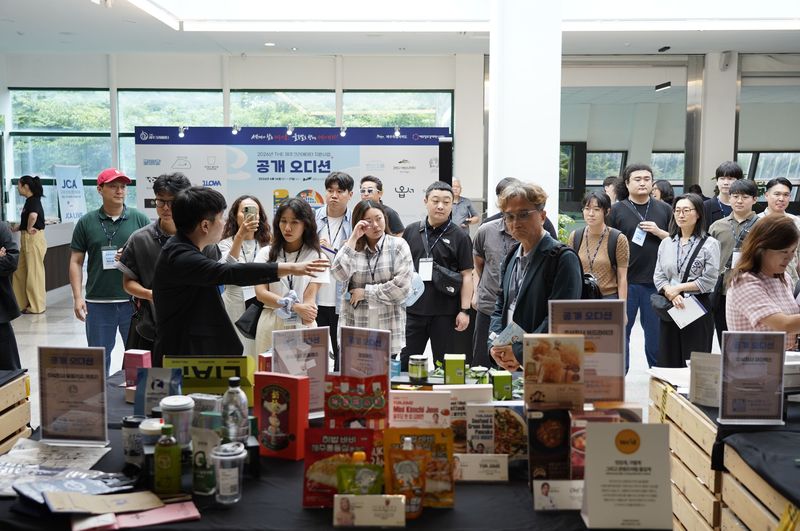
The need to support businesses at different stages of growth is also borne out by a survey conducted by Jeju Province. Of 555 local businesses in Jeju surveyed, 47.5% were at the stage of laying business foundations and 30.5% were entering the growth stage, together accounting for 78%. About 86% of the surveyed businesses had fewer than 10 employees.
In particular, 62% of businesses that had been operating for 5–7 years were still at the foundation-building stage. In other words, many had been in business for a while but had yet to enter the growth stage. As for financing, 63.7% relied on reinvesting sales revenue. Some 29.6% had tried to attract external investment.
Investment and financial support was the most frequently cited need, at 26.2%. Marketing followed at 17.8%, and market access at 14.4%. A further 47.0% called for a support system tailored to businesses’ growth stages.
Jeju Province’s approach to developing businesses is to link early-stage startup support and market entry with financing and investment. The plan is to develop businesses with growth potential into leading local companies and expand economic activity in villages and commercial districts through collaboration among businesses.
The scope of the policy’s target sectors also needs to be clearly defined. Jeju Province estimated that related industries across five fields, including clothing, food and shelter, arts content, and leisure and tourism, comprised 38,828 businesses and 88,870 employees, with sales of 13.8517 trillion won.
In 2027–2028, Jeju Province will establish a system to link existing support programs, select leading local businesses and develop pilot hubs. In 2029–2030, it will expand sector-specific development and links to investment, and in 2031, it plans to support businesses and collaborative organizations in operating independently.
Kang Ae-suk, head of Jeju Province’s Economic Vitality Bureau, said, “Local entrepreneurship is an important pillar of ‘Jeju, a Startup City,’ because it creates distinctive competitiveness by reinterpreting local resources.” She added, “Through annual implementation plans, we will support the tangible growth of local businesses and carry out the plan without a hitch so that its results contribute to the vitality of the region.”
To assess the policy’s results in the future, existing programs and new investment amounts will need to be distinguished. An evaluation is also needed of how many supported businesses have actually moved from the foundation-building stage into the growth stage, and how their sales and employment have changed.
[email protected] Jeong Yong-bok Reporter