Ruling Party: “No Government Intervention in National Pension Service (NPS) Decision to Defer Stock Sales”
- Input
- 2026-10-22 10:38:39
- Updated
- 2026-10-22 10:38:39
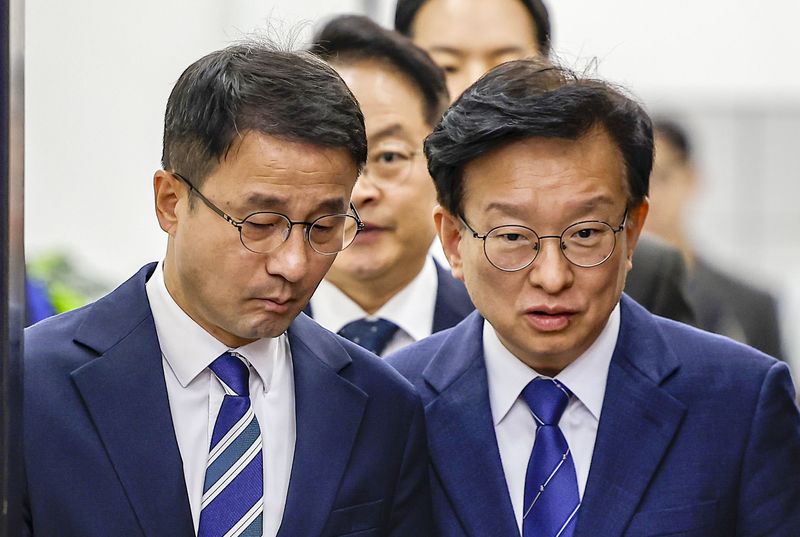
Kwon Chil-seung, the DPK’s policy committee chair, said at a parliamentary audit response meeting at the National Assembly that “the Fund Management Committee’s decision last January to temporarily defer rebalancing was a measure to adjust the investment allocation,” adding that “the claim that the government blocked stock sales is not true.”
The People Power Party had earlier alleged that the government was using the NPS for “election-driven stock price support” ahead of the June 3 local elections. It said that after President Lee Jae-myung mentioned last year the need to expand domestic stock investment, the NPS deferred rebalancing (the readjustment of asset allocations) last January and raised its target allocation to domestic stocks from 14.9% to 20.8% in May.
The NPS typically sells some stocks to diversify investment risk when a rise in share prices pushes its domestic stock holdings above the target allocation. However, it temporarily deferred rebalancing last January, easing the pressure to sell stocks, and raised its target allocation to domestic stocks in May. The People Power Party has argued that President Lee Jae-myung’s call to expand domestic stock investment may have influenced these decisions.
At a press briefing on the 19th, President Lee said that “the Korean stock market is significantly undervalued,” while also stating that it was undesirable for the government to intervene directly in the financial and securities markets, thereby distancing himself from allegations of intervention.
Kwon, the policy committee chair, also argued regarding the NPS’s deferral of rebalancing that “bringing the allocation down under the existing criteria would have made large-scale stock sales inevitable,” and that “if rebalancing had not been temporarily deferred, there would have been heavy selling pressure and market shocks.” He explained that the measure was intended to prevent the market impact of large-scale sales, given that a sharp rise in the domestic stock market had pushed the NPS’s allocation to domestic stocks as high as 24.5% at the end of February.
[email protected] Jiwon Song Reporter