“Honey, they say our kid’s rent went up by 30,000 won” ... Average Seoul studio rent: 710,000 won
- Input
- 2026-10-22 10:38:49
- Updated
- 2026-10-22 10:38:49
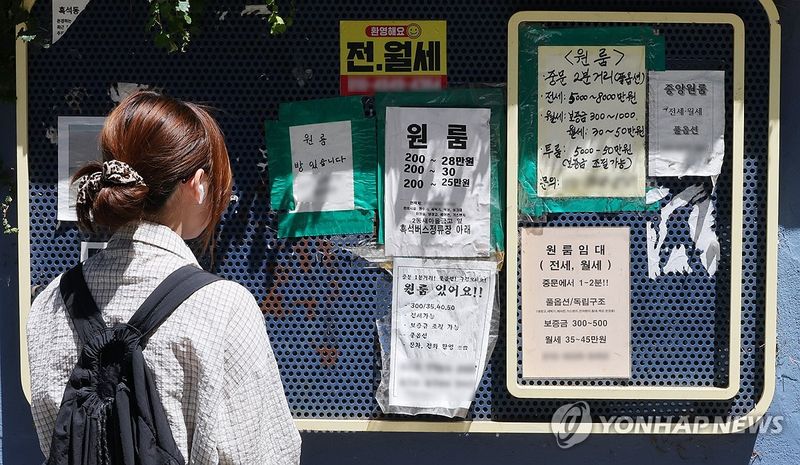
According to the “September Dabang Yeojido” released on the 22nd by real estate information platform Dabang, the average jeonse deposit for studios in row houses and multi-family homes in Seoul with exclusive-use areas of 33 square meters or less was 219.91 million won in September, down 1.1% (2.37 million won) from the previous month. By contrast, average monthly rent rose 5.2% (35,000 won) from the previous month to 710,000 won.
By district, Gangnam-gu recorded the highest levels among Seoul’s districts for both average jeonse deposits and monthly rents. Its average jeonse deposit was 287.08 million won, or 131% of the Seoul average, while its average monthly rent was tallied at 970,000 won, or 138% of the Seoul average.
For jeonse deposits, the districts above the Seoul average, after Gangnam-gu, were Seocho District (123%), Gwangjin District (109%), Mapo-gu (108%), Yongsan District (106%), Yeongdeungpo District (103%) and Dongjak District (100%), in that order. Average monthly rents were higher than the Seoul average in Yongsan District (126%), Gwanak-gu (123%), Seongdong-gu (117%), Gwangjin District (112%), Seocho District (109%), Mapo-gu and Jung-gu (108%), Gangseo District and Geumcheon-gu (106%), and Dongjak District (102%), after Gangnam-gu.
In particular, average monthly rent in Gwanak-gu surged 30.0% from the previous month as some transactions for newly built studios were factored into the average. In Yongsan District, meanwhile, average monthly rent fell 23.1% as it was adjusted downward from an elevated level driven by new-build transactions the previous month. Districts thus showed clear differences in the direction and scale of change.
Dabang Yeojido is an index designed to let users compare at a glance the relative levels in each district, using Seoul’s average market rates as the baseline (100%). The latest survey was calculated using transaction data for studios with exclusive-use areas of 33 square meters or less that were contracted during September, based on actual transaction prices reported to the Ministry of Land, Infrastructure and Transport (MOLIT).
[email protected] Jeon Min-kyung Reporter