SKT to boost K-LLM’s reasoning through research on difficult math problems
- Input
- 2026-10-22 11:10:00
- Updated
- 2026-10-22 11:10:00
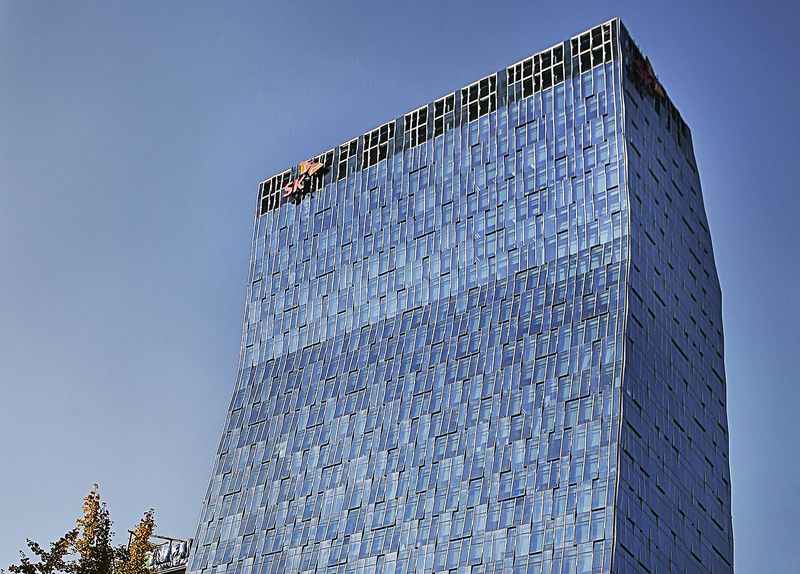
SKT said it would hold a technical exchange with faculty members and researchers from Seoul National University and the Korea Advanced Institute of Science and Technology (KAIST) at its headquarters in Euljiro, Seoul, on the 22nd to discuss mathematical research using A.X K2 and ways to further develop the model. The exchange will be attended by Seoul National University Department of Mathematical Sciences professors Seo In-seok, Byeon Seong-su and Hong Yeong-jun, KAIST School of Computing professor Park No-seong, and student researchers, among others.
Researchers from the Korea Institute for Advanced Study (KIAS) will also take part. The plan is to incorporate specialist knowledge from fields including probability theory and statistical physics, discrete mathematics and graph theory, and low-dimensional topology and geometric group theory into the model’s training. They will also study methods for using large language models (LLMs) in mathematical research.
The researchers will work together to help A.X K2 learn more deeply the specialist knowledge and reasoning processes involved in specific areas of mathematics. The plan is to fill gaps in knowledge that existing models have not adequately addressed and use the enhanced model to tackle difficult mathematical problems in different fields.
SKT plans to apply the mathematical reasoning and verification capabilities strengthened through this industry-academia collaboration to further develop agentic AI. The goal is for AI that plans solutions to complex problems and carries out multistep tasks to check the validity of its reasoning process and results.
Mathematical reasoning and verification are also important to research on “recursive self-improvement (RSI).” This is because AI needs to be able to judge whether not only its outputs but also the experiments and verification methods it designs itself are valid.
In the long term, SKT aims to build mathematical capabilities comparable to those of the world’s leading AI models and develop AI agents that learn the knowledge they need and continue to improve.
Michael Troper, who is in charge of foundation models at SKT, said, “Through joint research with specialist researchers, we will improve the real-world problem-solving capabilities of our proprietary foundation model and further develop our agentic AI capabilities.”
[email protected] Yoon Hong-jip Reporter