Liver cancer, the 'silent cancer': Catch it early and live longer ... Even advanced liver cancer survival is extended by two years [Weekend Health]
- Input
- 2026-10-22 10:26:22
- Updated
- 2026-10-22 10:26:22
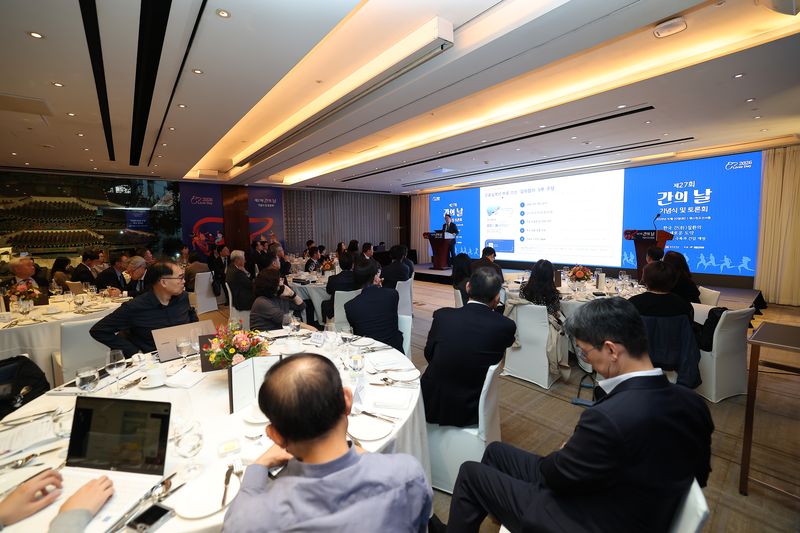
[Financial News] Liver cancer is changing from a cancer that is too late by the time it is found into one that patients can live with for a long time if it is detected early and treated with personalized care. However, upgrading surveillance systems and improving access to treatment remain key challenges in translating treatment gains into longer patient survival.
Professor Yoo Su-jong of the Department of Gastroenterology at Seoul National University Hospital spoke on the 20th at the 'Liver Day' ceremony hosted by the Korean Association for the Study of the Liver. In a presentation titled 'A Paradigm Shift in Overcoming Liver Cancer,' he outlined changes and challenges in liver cancer care, from prevention and early detection to treatment and long-term prognosis.
The age-standardized mortality rate for liver cancer in Korea fell sharply from 16.8 per 100,000 people in 2013 to 9.7 in 2024. Over the same period, however, the crude mortality rate declined only slightly, from 22.6 to 20.4. This means that although the age-adjusted risk of death has fallen, the actual burden of liver cancer remains high due to population aging.
The causes of liver cancer have also shifted. Comparing 2008 with 2022, the proportion of liver cancers linked to hepatitis B fell from 68.9% to 59.7%. By contrast, alcohol-related liver disease rose from 8.9% to 15.8%, and metabolic dysfunction-associated steatotic liver disease (MASLD) increased from 7.5% to 11.8%. Prevention strategies now need to address alcohol use and metabolic diseases as well as viral hepatitis.■High-risk groups: 'Ultrasound and AFP' every six monthsThe starting point for preventing liver cancer is identifying and treating the underlying liver disease. Since last year, hepatitis C antibody testing has been included in national health screenings for people aged 56, and this year, support for the cost of confirmatory (RNA) testing for those who test positive for antibodies was expanded to all medical institutions, including general and tertiary general hospitals. Out-of-pocket costs are covered for one initial test, up to 70,000 won. Professor Yoo stressed that because antibody testing is a screening test, it is important to ensure that those who test positive go on to receive confirmatory testing and treatment.
Treating the underlying disease does not mean it is safe to let your guard down. Even if the hepatitis B virus is suppressed or hepatitis C is cured, the risk of liver cancer remains in people with cirrhosis or advanced fibrosis. In other words, successful antiviral treatment does not mean regular surveillance can stop.
The foundation of early detection is regular surveillance of high-risk groups. People with cirrhosis and those with chronic hepatitis B or C should have a liver ultrasound and a serum alpha-fetoprotein (AFP) test every six months. The Korean Liver Cancer Association designated February 2 as 'Liver Cancer Day' to promote getting 'two tests twice a year.' In a randomized trial involving 18,816 people with hepatitis B, liver cancer deaths in the surveillance group fell by 37%.
The sensitivity for detecting early liver cancer is about 74.1% when the two tests are used together. AFP levels do not rise in about 40% of liver cancers, so a blood test alone cannot replace imaging. Detection methods using MRI or methylation of tumor DNA in the blood (cfDNA) have shown promise in research, but their actual survival benefit and cost-effectiveness are still being evaluated. Other issues requiring discussion include how widely surveillance should be extended among people with MASLD and when it should stop after hepatitis C has been cured.■Gains in survival need policy support tooTreatment outcomes have also improved markedly. In major phase 3 clinical trials, first-line immunotherapy combination regimens for advanced liver cancer extended median overall survival to 16.4–23.7 months, or roughly two years. In particular, five-year follow-up results from the HIMALAYA trial showed a five-year survival rate of 19.6% in the immunotherapy combination group, about twice the 9.4% rate in the group receiving existing targeted therapy. However, these results were for patients with preserved liver function (Child-Pugh A) and are not the same as a cure rate.
By contrast, combining transarterial chemoembolization (TACE) with systemic therapy slowed disease progression, but an extension in overall survival has not yet been confirmed. There is also insufficient evidence at present to recommend adjuvant immunotherapy to prevent recurrence after surgery or local treatment as standard care.
The need for policy changes to improve access to treatment was also raised. Coverage for systemic therapies currently requires that 'surgery or local treatment be impossible,' meaning there are cases in which coverage is not approved even when embolization and systemic therapy are planned together. The choice of first-line drug can also restrict coverage options for subsequent treatment. The association has submitted a consensus proposal to the Health Insurance Review and Assessment Service to clarify review criteria for systemic therapies and is continuing discussions. It also plans to request expanded coverage for combination therapies.
Professor Yoo stressed, "Research and policy must advance together so that regular testing can detect liver cancer earlier and patients can enjoy better lives through treatments suited to them."
[email protected] Jung Myung-jin, Medical Correspondent Reporter