A Spark Ignites in a Declining New Town: Créteil, France [Park Jong-won’s ‘Back Then, Here’]
- Input
- 2026-10-24 06:00:00
- Updated
- 2026-10-24 06:00:00

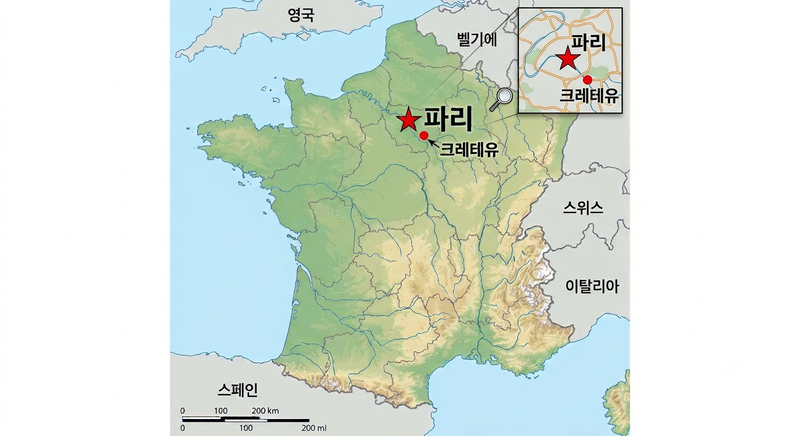
[Financial News] On September 17, classes were disrupted at Saint-Exupéry Public High School in Créteil, a small city about 11.7 km southeast of central Paris, France. At least half of the teachers on staff did not enter their classrooms because of strikes or sick leave. The next day, students at the same school, like the teachers, refused to attend classes and blockaded the school entrance. The resistance gradually turned into anti-government protests, culminating in nationwide violent demonstrations on October 17.
The school staff and students initially called for better educational conditions. In a statement at the end of September, the Créteil branch of France’s secondary teachers’ union (SNES-FSU) said that, with a teacher shortage, classes in core subjects such as mathematics and science were not being properly taught, even two weeks into the second semester. It also pointed out that class sizes exceeded the cap of 35 students, leaving too few desks and chairs, and that there were not enough support staff for special education.
In fact, teacher shortages are a nationwide problem in France. In a survey of 1,033 schools conducted by SNES-FSU in September, 53% of public middle and high schools reported being short of at least one teacher. According to the French outlet Le Monde, teacher shortages resulted in 15.4 million hours of missed classes at public middle and high schools during the 2024–2025 school year. That amounted to 7.5% of all scheduled class time. Local media have noted that the number of candidates passing teacher recruitment exams falls short of the annual quota because of low salaries, heavy workloads, and the high cost of housing in the capital region. In addition to staff shortages, France’s public schools are grappling with severe budget shortfalls: last summer, some could not turn on air conditioning because they lacked the funds, while others put off building repairs. Citing OECD data, foreign media highlighted the French government’s figures for this year: debt equal to 119% of GDP (the highest in 80 years), a tax burden of 44% of GDP (compared with the OECD average of 34%), and pension spending of 14% of GDP (compared with the OECD average of 9.4%). They went on to point out that France has no money to invest in public education.
Yet the private education market remains robust. According to the OECD, in 2022 France spent $18,127 (about 24 million won) per high school student on education, 24% more than the OECD average. The gap between public and private education was one reason the protests expanded into anti-government demonstrations against the wealth gap and economic unfairness.
Seen in this context, it becomes clear why the protests began in Créteil. Located in France’s capital region (Île-de-France), Créteil is the capital of the department of Val-de-Marne. The city covers 11.43 km2 and had a population of 93,397 as of 2023. Until the early-to-mid 20th century, Créteil was a small rural community with farms supplying Paris with grain, fruit, vegetables, and other produce, as well as country houses. In the immediate aftermath of World War II, French authorities developed large new towns on the outskirts of Paris to address the city’s rapidly growing population and the housing shortage caused by wartime destruction. Development of a new town in Créteil began in 1965, bringing large public rental apartment complexes and facilities such as schools and hospitals.
Créteil’s population, which had been mostly middle class, changed rapidly around the 1980s. The middle-class residents who lived in aging public housing moved to suburban areas under the French government’s 1977 policy encouraging single-family homes. Local authorities also eased eligibility requirements for public rental housing in response to the oil crisis and economic difficulties of the 1970s. As a result, Créteil’s aging public apartment buildings filled with low-income households and North African immigrant families. Although geographically close to Paris, the city is relatively poorly connected to the center because of traffic congestion and inadequate public transportation. After periods of sharp increases in unemployment in the 1990s and 2010s, Créteil came to be increasingly described as one of the “banlieues,” the impoverished suburbs on the outskirts of Paris. According to a 2023 survey by France’s National Institute of Statistics and Economic Studies, Créteil’s poverty rate was 23%, far above the national average of 15.4%.
[email protected] Park Jong-won Reporter