MOLIT, TS hold joint drill to prepare for network outages...aim to minimize disruption to transportation administrative services
- Input
- 2026-10-22 09:17:42
- Updated
- 2026-10-22 09:17:42
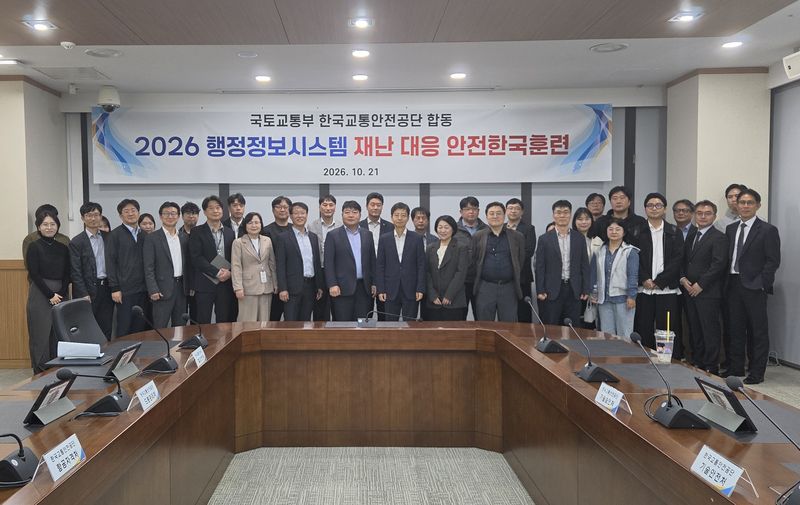
According to TS on the 22nd, the “2026 Safe Korea Disaster Response Training” was conducted based on a scenario in which the Vehicle Inspection Management System (VIMS) and the National Qualification Examination Management System (CBT) went down simultaneously. The focus was on confirming that the standard manual for disaster risk management of administrative information systems and each system’s business continuity plan (BCP) would work in a real-world situation.
The drill simulated a cascading complex disaster in which a wildfire near TS headquarters on the 21st severed an overhead power line and caused an outage, followed by an overload of the emergency generator that sparked a fire in the communications room and brought critical servers to a halt.
Immediately after the network was shut down, MOLIT and TS declared the “caution phase” in accordance with the manual and activated an emergency response body. They then implemented and verified detailed response measures set out in the BCP, including switching to offline operations, coordinating administrative procedures such as fee refunds and fine reductions, and notifying the public.
TS President Yong-Sik Jung said, “I will continue striving to ensure business continuity so that transportation administrative services, which are directly tied to people’s daily lives, do not stop for even a single second, no matter how advanced or complex the disaster.”
[email protected] Choi Ga-young Reporter