“Labeling rules change every six months”... KCCI proposes 129 regulatory improvements
- Input
- 2026-10-22 12:00:00
- Updated
- 2026-10-22 12:00:00
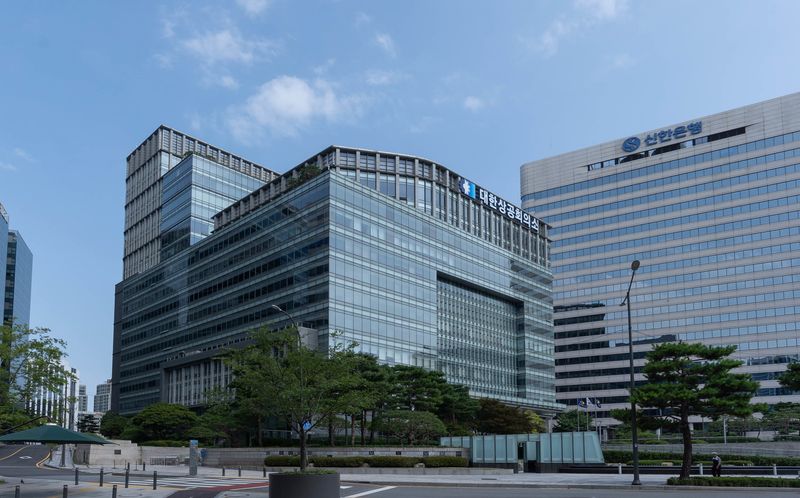
[Financial News] The Korea Chamber of Commerce and Industry (KCCI) has urged the government to address the on-the-ground difficulties companies face because of differing regulatory standards across ministries and frequent policy changes. The aim is to reduce the burden on businesses by revising regulations that do not reflect real-world conditions, from labeling requirements for food and beverage products to standards for wearing protective equipment at industrial sites.
KCCI said on the 22nd that it had submitted 129 regulatory improvement proposals for the second half of the year, identified at businesses’ worksites, to the Joint Public-Private Regulatory Rationalization Task Force.
A key proposal is to improve labeling requirements for food and beverage products. Currently, labeling is managed by different ministries: the Ministry of Food and Drug Safety oversees product names and ingredients; the Ministry of Agriculture, Food and Rural Affairs and the Korea Customs Service oversee country-of-origin labels; and the Ministry of Climate, Energy and Environment oversees labels on separating waste for disposal, among other responsibilities. Alcoholic beverages are subject to additional labeling requirements, including a ban on sales to minors and health warnings, and must comply with regulations from as many as nine ministries.
The problem is that ministries revise their regulations at different times, leaving companies to bear the cost of frequently replacing packaging. According to the proposals, alcohol-labeling rules have changed around 10 times since 2020. After a regulatory revision in 2017, the government established a principle of allowing at least one year of preparation after regulatory revisions, but some rules have reportedly taken effect just six months after being revised. This has made it difficult for importers of alcoholic beverages, which take about four months to ship by sea from Europe to South Korea alone, to respond.
In this regard, KCCI asked the government to “set up a consultative body to coordinate schedules before each ministry changes labeling rules, and defer relabeling whiskey, wine and other products without a separate expiration date until existing stocks are depleted.”
KCCI also proposed improving regulations on safety equipment used at industrial sites. Currently, safety harnesses and safety blocks used to prevent falls when working at heights are certified as a set, so products from different manufacturers cannot be used together. If the safety block installed by a prime contractor and the harness supplied by a subcontractor are made by different manufacturers, the subcontractor has to buy a new harness costing an average of 80,000 won. KCCI proposed establishing compatibility standards that allow equipment to be used together regardless of manufacturer, provided its performance and connection specifications meet the requirements.
The proposals also included regulatory improvements to address public inconvenience. Under current guidelines, airport ambulance crews cannot take emergency patients directly to hospitals outside the airport and must wait for 119 ambulance crews to arrive. In one accident at an airport cargo terminal, airport ambulance crews reached the scene in six minutes, but it took 30 minutes to hand the patient over to an outside ambulance crew. KCCI urged the government to consider allowing airport ambulance crews to transport patients to outside hospitals, or granting an exception for emergency patients with cardiac or cerebrovascular conditions.
Meanwhile, KCCI is continuing its efforts to improve regulations based on conditions on the ground, working closely with the Joint Public-Private Regulatory Rationalization Task Force, which was launched this year. Of the proposals submitted last April, 10 led to actual regulatory improvements, including clarifying requirements for installing doors at high-pressure gas storage facilities and establishing common standards for separation distances between energy storage systems (ESS).
Lee Jong-myeong, head of KCCI’s Industrial Growth Division, said, “Regulatory rationalization is moving forward steadily, but many problems remain because standards and systems differ between ministries or fail to keep pace with conditions on the ground. We hope the government will move beyond silos between ministries and boldly revise the system to reflect realities on the ground.”
[email protected] Lim Su-bin Reporter