Kim Jung-kwan, who skipped even ‘Semiconductor Day,’ made a point of attending the auto semiconductor event despite staff’s pleas
- Input
- 2026-10-21 20:09:29
- Updated
- 2026-10-21 20:09:29
[Financial News] “I asked them to understand even last week, on Semiconductor Day. But I really wanted to attend this event.”
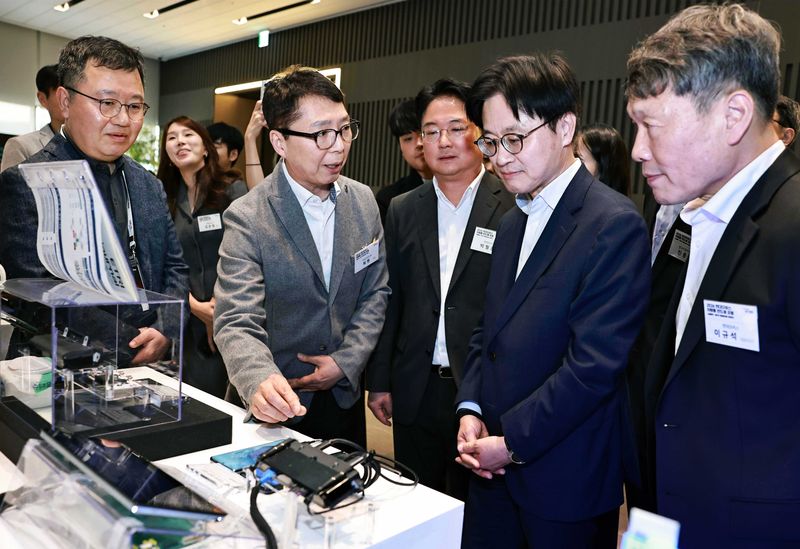
On the 21st, a day before the National Assembly audit, Minister of Trade, Industry and Energy Kim Jung-kwan visited an event hosted by automotive semiconductor companies. He had refrained from attending public events since taking office, but this time he came in person despite staff’s efforts to dissuade him. His decision reflected his view that the potential of industries that can grow with government support matters more than the size of an event.
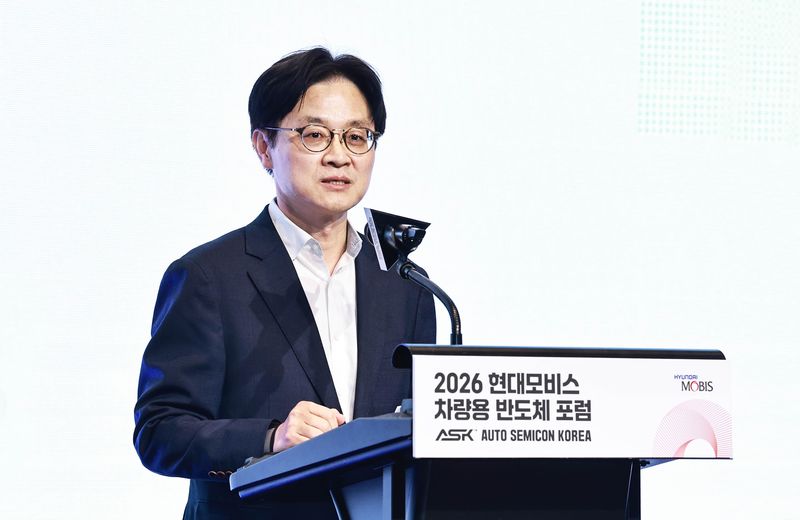
Minister Kim made the remarks while delivering congratulatory remarks at the second Automotive Semiconductor Forum, Auto Semicon Korea (ASK), held that day at DoubleTree by Hilton Seoul Pangyo in Seongnam, Gyeonggi Province. The event also saw the launch of the Automotive Semiconductor One-Team Task Force (TF), which will bring together the capabilities of the government and companies spanning demand-side firms, design, manufacturing and packaging.
Minister Kim said he had asked for understanding when declining invitations to events across various industries in order to save time. This time, too, staff reportedly worried whether it was appropriate for the minister to attend, given that the event was not yet a major one for the industry as a whole and that preparations for the National Assembly audit were also underway. Kim added that they had suggested sending an official at the director-general level or postponing the minister’s visit until next year.
Minister Kim joked, “I don’t know if I’ll still be here next year,” then said, “What matters isn’t attending events held by big companies or major industries.”
He went on to stress, “I’m paying close attention to fields that can flourish if we keep watching them and provide support,” adding, “I think automotive semiconductors are one of them.”
What Minister Kim focused on was the gap between domestic companies’ technological potential and commercialization. He had seen their growth potential at company sites and discussion forums, but also felt there was more to be done to connect that potential to actual market entry.
Minister Kim said emphatically, “I came here expecting our automotive semiconductors to grow much more than they have so far.”
Minister Kim also referred to the industry’s shift toward electric vehicles and software-defined vehicles (SDVs). He praised automotive semiconductor companies as potential leading players, saying, “If the paradigm is reorganized around future vehicles, the protagonists who shape the history of the automotive industry could change.”
The One-Team TF launched that day is a forum for cooperation to jointly lower the commercialization barriers that individual companies struggle to overcome. Fabless companies will develop products to meet demand-side companies’ specifications, foundries and packaging companies will support manufacturing, and demand-side companies will connect the products to validation and use in actual vehicles.
Minister Kim explained, “Fabless companies will secure stable customers, foundries and packaging companies will expand their business into automotive semiconductors, and demand-side companies will be able to broaden their supply-chain options.”
The number of companies and institutions participating in ASK, held with Hyundai Mobis at the center, rose from 27 last year to 53 this year. Of the 19 system semiconductor collaboration projects identified over the past year, 13 types have begun development. Target vehicle models have been selected for nine of them, which are slated for real-world deployment in 2029.
The government plans to strengthen support from the design stage through certification and mass production, as well as demand creation. Minister Kim said, “We will do our utmost to ease the many risks encountered in commercializing automotive semiconductors.” He reiterated his commitment to provide comprehensive support not only for memory but also for non-memory fields, including automotive semiconductors, through the Semiconductor Innovation and Growth Support Group launched the previous day.
[email protected] Kim Hak-jae Reporter