Tokyo home prices double in 10 years; Japan, too, to tax speculative transactions more heavily
- Input
- 2026-10-21 19:10:31
- Updated
- 2026-10-21 19:10:31
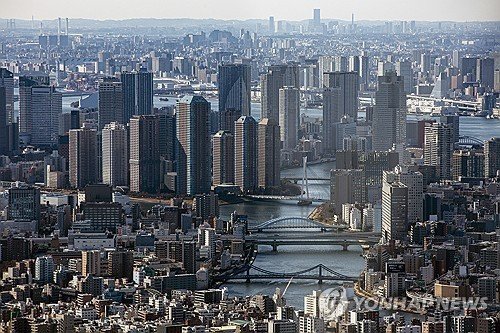
【Financial News, Tokyo = Correspondent Seo Hye-jin】Japan’s ruling Liberal Democratic Party is considering higher taxes on real estate transactions aimed at short-term gains to curb surging apartment prices. With new apartment prices in Tokyo having doubled in 10 years, the party has begun working on measures ahead of next year’s local elections. Housing costs are also putting pressure on governments in South Korea and Europe, but they are weighing how far to go with regulations amid concerns that a sharp fall in home prices could shock the financial sector.
According to the Nikkei, on the 21st the LDP’s Housing, Land and Urban Policy Research Commission invited local government officials, academics and real estate industry representatives to begin discussions on measures to address home prices. It plans to gather opinions and pursue measures including higher taxes on short-term sales.
■New Tokyo homes cost 1.1675 billion won...20 times the average annual salary
According to the Real Estate Economic Institute, the average price of a new apartment in Tokyo’s 23 wards in fiscal 2025 was ¥137.84 million (about 1.1675 billion won), up 18.5% from the previous year. That was 20.3 times the average annual salary of ¥6.78 million (about 57.43 million won) earned last year by full-time workers in Tokyo.
Commission chair Midori Matsushima said, “The average price of new apartments in Tokyo’s 23 wards has doubled from 10 years ago,” and said she would support homebuyers purchasing homes for their own use.
Japan already levies about 40% in income and resident taxes on profits from short-term real estate sales. That is twice the roughly 20% rate applied to long-term holdings, but some in the LDP say it is not enough to curb speculative demand. Additional measures are also expected to be a point of contention in the tax reform package the ruling party plans to draw up this December.
The LDP pledged to curb speculative transactions in the greater Tokyo area and elsewhere in last February’s House of Representatives of Japan election. Early this month, a task force under the party’s Foreign Residents Policy Headquarters urged the government to introduce tax measures promptly.
Next April’s unified local elections are also hastening the debate. Ward assembly elections are scheduled in 22 of Tokyo’s 23 special wards. An LDP official said, “We need to support families with children who are at the stage of buying a home.”
The opposition parties have prioritized support for tenants, as rising home prices have increased rental demand and driven up rents as well. The Democratic Party for the People proposed easing the burden of public housing rents and supplying affordable rental housing by making use of vacant homes. Komeito also signaled it would expand support, citing Tokyo’s provision of rental housing through a public-private fund.
■Public sentiment shaken by home prices...financial sector shock a concern
Housing is also a burden for governments in various countries. The Nikkei reported, “Property policy has also emerged as a major challenge for the Lee Jae-myung administration in South Korea,” adding, “In a Gallup Korea poll last September, property policy was the most frequently cited reason for not supporting the government.”
In Spain, Prime Minister Pedro Sánchez declared the dissolution of parliament on the 5th after parliament rejected his housing measures. Earlier, the eviction of an 87-year-old woman from her home in Madrid last month became a social issue, and protests calling for housing measures spread.
Restrictions on foreign home purchases are also increasing. Canada and Australia have temporarily banned foreign purchases of homes, while Singapore imposes an additional 60% stamp duty on foreigners acquiring residential property.
Rather than imposing blanket restrictions on foreign purchases, the Japanese government is considering measures to regulate speculative transactions. Restrictions on purchases based on nationality could run counter to international agreements on trade in services and investment.
The concern, however, is that falling home prices could lead to financial sector distress. Last June, real estate loans accounted for 18.2% of all loans in Japan’s banking sector, exceeding the roughly 10% share seen during the bubble economy. According to the Financial Services Agency, as of March last year, about a quarter of regional banks’ loans to the real estate industry were concentrated in five central Tokyo wards.
A downturn in the real estate market could spread to the stock market, dealing a blow to the cabinet of Sanae Takaichi, which has maintained high approval ratings on the back of rising asset prices. An LDP commission official said the strength and timing of price-control measures must be decided carefully.
Osamu Tanaka, chief economist at the Dai-ichi Life Asset Management Economic Research Institute, said, “The fundamental cause of rising home prices is a lack of supply,” adding, “Unless curbs on speculative transactions are accompanied by expanded supply, the downward effect on prices will not last long.”
[email protected] Seo Hye-jin Reporter