[Editorial] Crypto-asset taxation looms; a delay is inevitable if preparations are inadequate
- Input
- 2026-10-21 18:38:55
- Updated
- 2026-10-21 18:38:55
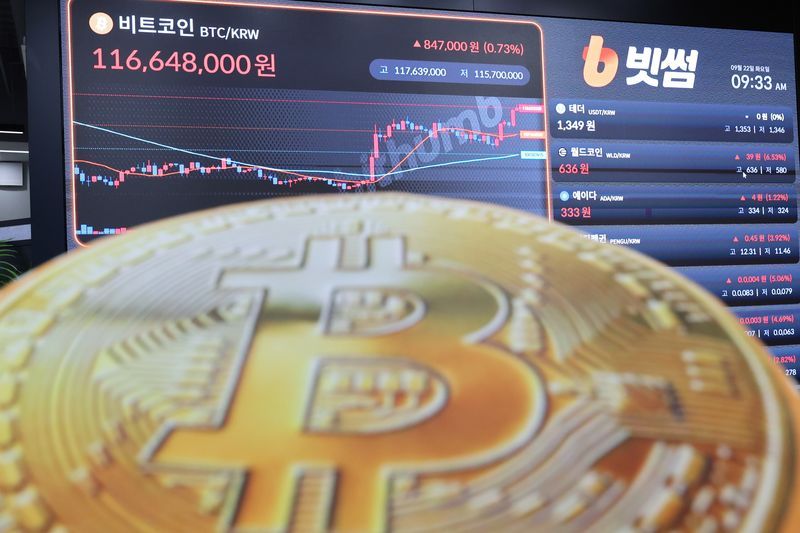
The government’s position has shifted in the span of a month. Initially, the government planned to implement a system from January 1 next year that would allow an annual basic deduction of 2.5 million won on income from transferring or lending crypto assets, with any excess treated as other income and subject to separate taxation at a rate of 22%. On the 28th of last month, Lee Hyeong-il, Deputy Prime Minister for Economic Affairs and Minister of Economy and Finance, told the National Assembly’s Committee on Finance and Economy Planning, “Under the current tax laws, taxation is already scheduled to begin next year.”
However, at a parliamentary audit on the 6th, the minister stepped back, saying, “We will broadly gather views from the National Assembly and the industry.” The government is currently considering whether to proceed with implementation or postpone it, and there are reportedly voices both within and outside the government calling for a delay.
A key argument for postponement is the discrepancy in the timing of information exchange between countries. Starting next year, South Korea will exchange crypto-asset transaction information annually with major participating countries under the OECD’s Crypto-Asset Reporting Framework (CARF). Hong Kong, Singapore and the United Arab Emirates (UAE), however, will not begin implementation until 2028, and the United States until 2029. Taxing crypto-asset income without being able to identify income from overseas exchanges would raise an equity issue, leaving only users of domestic exchanges subject to taxation. That is also why Park Min-gyu, a Democratic Party of Korea lawmaker, submitted an amendment to the Income Tax Act on the 16th to delay the implementation date until 2029 or later.
The government must also check whether the foundations for taxation are ready. Industry representatives argue that, as trading methods have become more diverse and complex, they need time to establish and verify tax criteria and a system for submitting data. Experts point out that the market environment has changed significantly since the taxation system was first legislated in late 2020, and that institutional changes under the proposed General Act on Digital Assets should also be taken into account.
Warnings that another delay would undermine the principle that income should be taxed cannot be ignored. Repeated postponements, dating back to the first implementation planned for January 2022, have followed a course similar to that of taxation on stock capital gains. But pressing ahead regardless could also cause problems if the conditions for implementation are not sufficiently in place. Even if implementation is delayed, “unprepared taxation” must be avoided.
In 2017, Japan introduced a registration system for crypto-asset exchanges through an amendment to the Payment Services Act, and then taxed profits from crypto-asset trading. Japan improved public acceptance by introducing a loss carryforward deduction system, allowing losses to be carried over to the following year. Of course, Japan’s circumstances may not be the same as ours.
The government and both the ruling and opposition parties should set the timing of taxation after comprehensively considering tax criteria for different types of transactions, the ease of filing, data-submission systems for businesses, and the schedule for information exchange between countries. The National Assembly should also accelerate the enactment of the General Act on Digital Assets so that market rules and the tax schedule are aligned.