JoongAng Ilbo acquisition: ‘Capital increase after capital reduction’ not finalized; rehabilitation court’s decision a key factor [fnMarketWatch]
- Input
- 2026-10-21 18:05:58
- Updated
- 2026-10-21 18:05:58
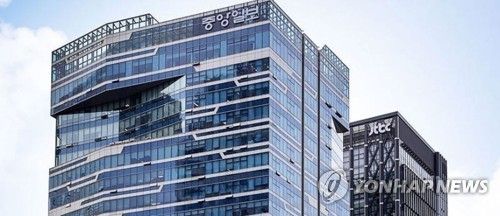
According to financial investment industry sources on the 21st, the final capital restructuring method for the Dow Kiwoom-CJ-Shinsegae consortium, selected as the preferred bidder for JoongAng Ilbo, is expected to be decided in future negotiations.
A market source said, “It has not yet been decided whether to carry out a capital increase after a capital reduction or proceed with a capital increase alone without reducing capital. Given JoongAng Holdings’ rehabilitation proceedings, we also have to consider whether the court will authorize a capital reduction.”
Previously, a plan was discussed under which the JoongAng Ilbo acquisition consortium would secure a stake of at least 95% through a capital increase following a capital reduction, with Dow Technology holding 47.5%, CJ 34.7% and Shinsegae 12.8%. However, neither whether to carry out a capital reduction nor the specific allocation of shares has been finalized in a definitive agreement.
The key factor is JoongAng Holdings’ rehabilitation proceedings. JoongAng Ilbo entered workout proceedings last July following a resolution by the council of financial creditors, while its largest shareholder, JoongAng Holdings, is separately undergoing court-led corporate rehabilitation proceedings. If JoongAng Ilbo pursues a capital reduction, whether additional steps—such as obtaining the rehabilitation court’s approval in relation to JoongAng Holdings’ exercise of shareholder rights—are required could become an issue.
Omitting the capital reduction could reduce the burden of related procedures. However, even if the company proceeds with a capital increase alone, it will need to reconcile the dilution of existing shareholders’ stakes with the new investors’ need to secure control.
The interests of CJ, an existing shareholder, are also a factor. CJ is participating in the consortium while also having interests linked to existing JoongAng Ilbo shareholders. The value of existing shares and the final ownership percentages could vary depending on whether a capital reduction is carried out, as well as the issue price and size of the new share offering.
The need for a capital reduction has also been raised as a way to improve the company’s financial structure. As of the end of June this year, JoongAng Ilbo had total equity of 28.7 billion won, below its paid-in capital of 33 billion won, leaving it partially capital-impaired. A capital reduction could be considered to clear accumulated deficits before raising new capital, but the company could also raise capital simply by carrying out a large-scale capital increase without a reduction.
The issue is timing. JoongAng Ilbo’s need to accelerate the sale is not simply because its corporate bonds are coming due. It must secure a new investor and prepare a plan to normalize operations before repayments fall due on debts deferred under the workout. Now that the preferred bidder has been selected, the need has been raised to clarify the capital restructuring plan—including whether to reduce capital and the structure of the capital increase—within the next two weeks or so.
In particular, adding a capital reduction procedure could bring the burden of uncertainty over the rehabilitation court’s decision and possible delays to the transaction schedule. Accordingly, observers say that, as the acquisition consortium and existing shareholders reconcile their interests, they may also consider omitting the capital reduction and carrying out only a capital increase.
[email protected] Kim Hyun-jung Reporter