Korea Zinc’s U.S. smelting business gains prominence as the critical minerals race shifts “from mining to refining” [fn Market Watch]
- Input
- 2026-10-21 17:45:51
- Updated
- 2026-10-21 17:45:51
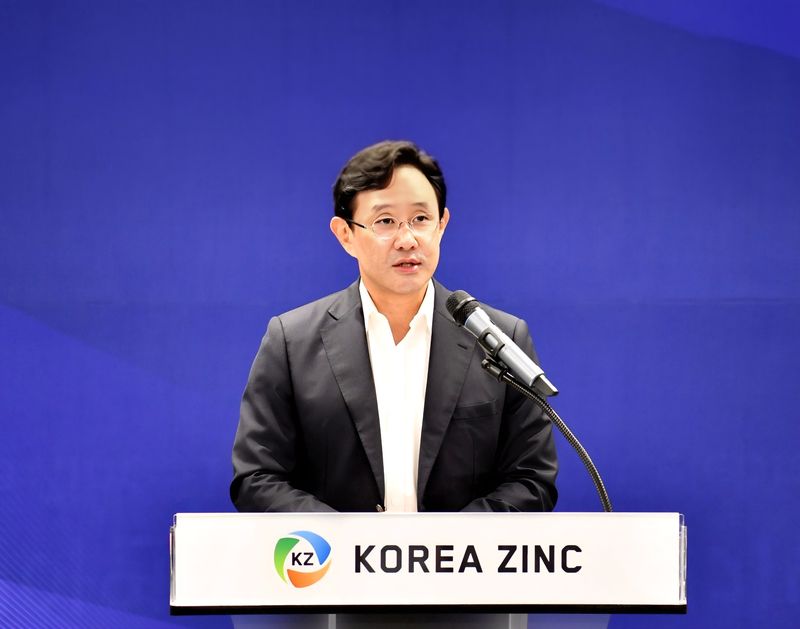
[The Financial News] As the focus of the global race to secure critical minerals shifts from developing mines to refining and processing capabilities, Korea Zinc’s U.S. smelting business is drawing attention. As efforts to reshape critical-mineral supply chains from a cost-centered model to one centered on national security gather pace, the strategic value of Korea Zinc, with its multimetal recovery and refining technologies, is coming into sharper relief.
According to industry sources on the 21st, Korea Zinc Chairman Choi Yun-beom recently identified geopolitical risks and national security as key factors in building critical-mineral supply chains in an interview with the World Economic Forum (WEF).
Chairman Choi stressed, “The old system, which worried only about costs and prices, is now clearly over,” adding, “We need to pay more attention to geopolitical and national-security factors in supply chains.”
This is interpreted to mean that building a stable procurement system is becoming more important than the economic cost of securing critical minerals. In particular, analysts say that as demand for strategic minerals grows in advanced industries such as artificial intelligence (AI), electric vehicles and defense, refining and processing concentrated in particular countries has emerged as a vulnerability in supply chains.
This shift dovetails with Korea Zinc’s integrated nonferrous metals smelting project, Project Crucible, which it is pursuing in the U.S. state of Tennessee.
Korea Zinc plans to establish a production base for strategic minerals such as gallium, germanium, indium and antimony through the project. According to Chairman Choi, a total of 13 types of metals are slated for production at the site, 11 of which are included on the United States Geological Survey (USGS) list of critical minerals.
What is notable is that, beyond simply expanding production facilities, the company will directly enter the refining and processing stages of the critical-minerals supply chain in the United States. Unlike previous mineral investments focused on securing raw materials, the strategy is to build business competitiveness by developing the capacity to produce metals needed by industry.
Korea Zinc’s multimetal recovery technology is also seen as a differentiating factor. Over the past 20 years, the company has expanded the range of metals, materials and by-products it produces at the Onsan Refinery of Korea Zinc Company Ltd. from 12 types to around 20. This reflects its recovery and refining of by-products generated during smelting, in addition to its main metals, and turning them into products.
In a recent letter to shareholders, Chairman Choi explained that this technological buildup was the result of a business strategy pursued over 52 years. Korea Zinc plans to expand its product portfolio to around 30 varieties over the next five years.
Meanwhile, investment banking industry analysts say that the restructuring of critical-mineral supply chains could create a mid- to long-term growth opportunity for Korea Zinc. However, the investment burden of smelting facilities in the United States, the timeline for commercial production and whether the company can achieve actual profitability are seen as factors that will determine the business’s future value.
A source in the investment banking industry added, “As the strategic importance of critical-mineral supply chains grows, the criteria for evaluating smelting companies will expand from production scale to technical capabilities and supply stability,” and “For Korea Zinc’s U.S. project, too, proving profitability relative to the investment, beyond its strategic necessity, is likely to be important.”
[email protected] Kim Gyeong-a Reporter