Ewha Womans University, GS Caltex and prosecutors seek nationwide expansion of arts therapy that has supported 1,400 at-risk youths over 10 years
- Input
- 2026-10-21 17:20:46
- Updated
- 2026-10-21 17:20:46
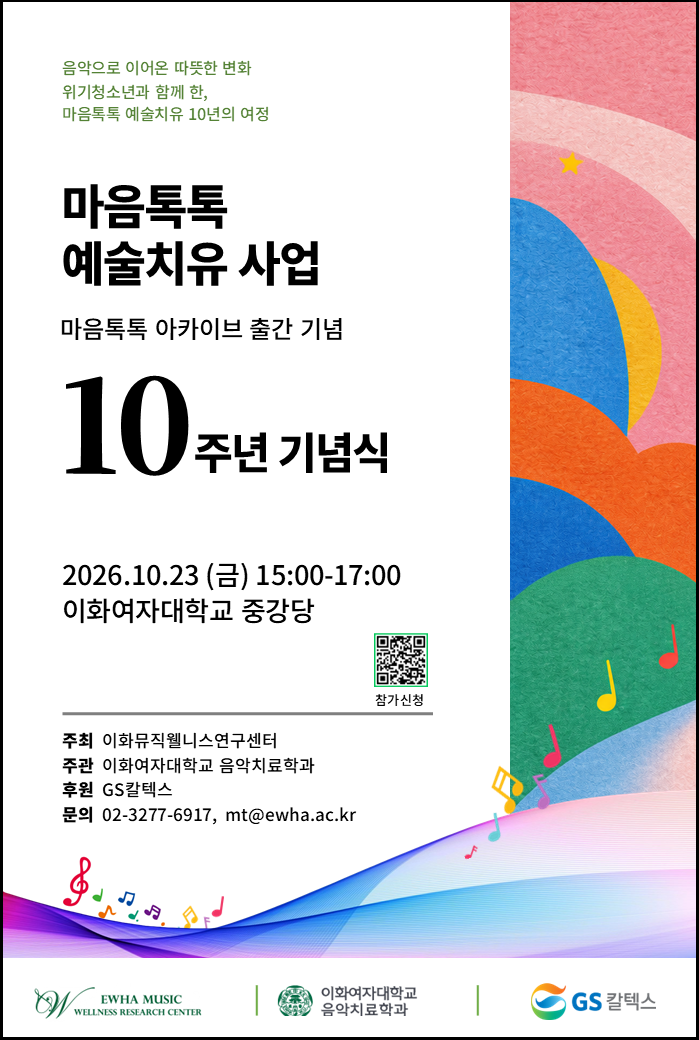
[Financial News] Ewha Womans University is expanding nationwide an arts therapy program that it has run with businesses and prosecutors and that has helped heal the emotional wounds of more than 1,400 at-risk youths over the past 10 years. The government-industry-academia collaboration model, which goes beyond punishment to care for young people through music and help them reintegrate into society, is seen as having borne fruit.
Ewha Womans University said on the 21st that it will hold an event marking the 10th anniversary of “Maeum Toktok Art Healing,” its emotional support program for at-risk youths run with GS Caltex, prosecutors and others, on the 23rd at the university’s medium-sized auditorium on campus in Seodaemun-gu, Seoul.
The program served young people who had broken the law and faced possible punishment but were granted conditional deferment of prosecution, as well as those on probation and those released from juvenile detention centers. After the Department of Music Therapy at Ewha Womans University first launched the program with the Seoul Western District Prosecutors’ Office in 2013, it expanded its reach to areas including Yeosu, Suncheon and Goheung in South Jeolla Province from 2016, with support from GS Caltex and cooperation from the Suncheon Branch of the Gwangju District Prosecutors’ Office. About 1,400 youths have participated in the program over the past 13 years.
Combining the university’s expertise, corporate social contributions and legal support from prosecutors, the program focused on helping young people express their emotions in healthy ways and rebuild trust with society. It provided tailored music therapy that took each young person’s circumstances and pace of change into account, leading to meaningful recovery.
Ewha Womans University plans to publish a 10th-anniversary archive documenting its accumulated operating experience and the factors behind the program’s success, and to use it as a basis for rolling out the model nationwide.
Professor Jeong Hyeon-ju, who oversees program operations, said, “The past 10 years have shown that at-risk youths can recover even after punishment, and that sustained support bringing together institutions, relationships and expertise is essential for that recovery. With the publication of this archive, we plan to expand nationwide the social cooperation system for the emotional recovery of at-risk youths.”
[email protected] Kim Man-gi Reporter