High Interest Rates and Construction Cost Shock... The ‘72-Story Daejeon Station-Area’ Project Ultimately Falls Through
- Input
- 2026-10-21 17:26:29
- Updated
- 2026-10-21 17:26:29
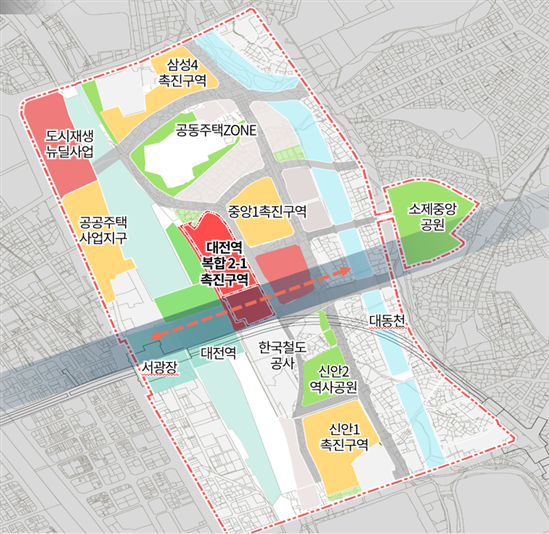
Daejeon City said on the 21st that it would explore various ways to get the project back on track after KORAIL notified the city that it planned to terminate the agreement for the Daejeon Station Area Complex 2-1 District development project.
The project got underway in October 2020, when KORAIL and the Hanwha Construction consortium signed an agreement. It received approval for its project implementation plan in March this year and completed major administrative procedures, including an integrated review, in October. However, worsening market conditions, including high interest rates and a sharp rise in construction costs, held it back.
To improve the project’s viability, Daejeon City had increased the proportion of residential facilities from 62.3% to 72.6% and sharply raised the floor-area ratio from 700% to 1,100%. As a result, the number of apartment units rose from 987 to 1,184, while the gross floor area of the less profitable convention facilities was cut by more than half, from 17,187 square meters to 7,489 square meters. KORAIL also continued its behind-the-scenes support, extending the deadline for payment of the remaining land costs six times.
However, as Hanwha Construction, the project’s lead sponsor, maintained that it was “impossible to ensure the project’s viability,” Daejeon Station Area Development, the project’s implementing entity and a project financing vehicle (PFV), failed to pay the remaining land costs by the final deadline, the 19th of this month.
With termination of the agreement now imminent, Daejeon City will comprehensively review the existing plan for a 72-story high-rise development. The city plans to recalculate the appropriate scale of the planned residential, office, retail and lodging facilities to substantially reduce the construction cost burden on the builder. It also plans to form a joint task force (TF) with KORAIL, Dong-gu and outside experts to divide responsibilities among the organizations, and, after discussions with potential investors including major construction companies, to reopen the tender for a new developer with the goal of doing so in the second half of next year.
Choi Jong-su, director of Daejeon City’s urban affairs bureau, said, “The Daejeon Station-area development is a key project for revitalizing the old downtown and creating a regional growth hub. We will carefully review the existing plan and project structure and work closely with relevant organizations to develop a viable plan to get the project back on track.”
The collapse of the Daejeon Station-area project is not an issue unique to Daejeon; it is a prime example of the “construction cost shock” that has recently spread across project financing (PF) developments in major cities nationwide. In regional hub developments, where sales price caps and demand forecasts are more uncertain than in the Seoul metropolitan area, raw material prices and interest rates have soared at the same time, strengthening the trend of even major construction companies making preemptive cuts and walking away from projects worth hundreds of billions of won. As a result, the revival of the old downtown around Daejeon Station and the synergies expected from its designation as an “innovation city” are also bound to face delays for the time being.
[email protected] Kim Won-jun Reporter