Jecheon Jeommal Cave’s elevation to National Historic Site status to be discussed at Yonsei University Museum international conference
- Input
- 2026-10-21 16:39:26
- Updated
- 2026-10-21 16:39:26
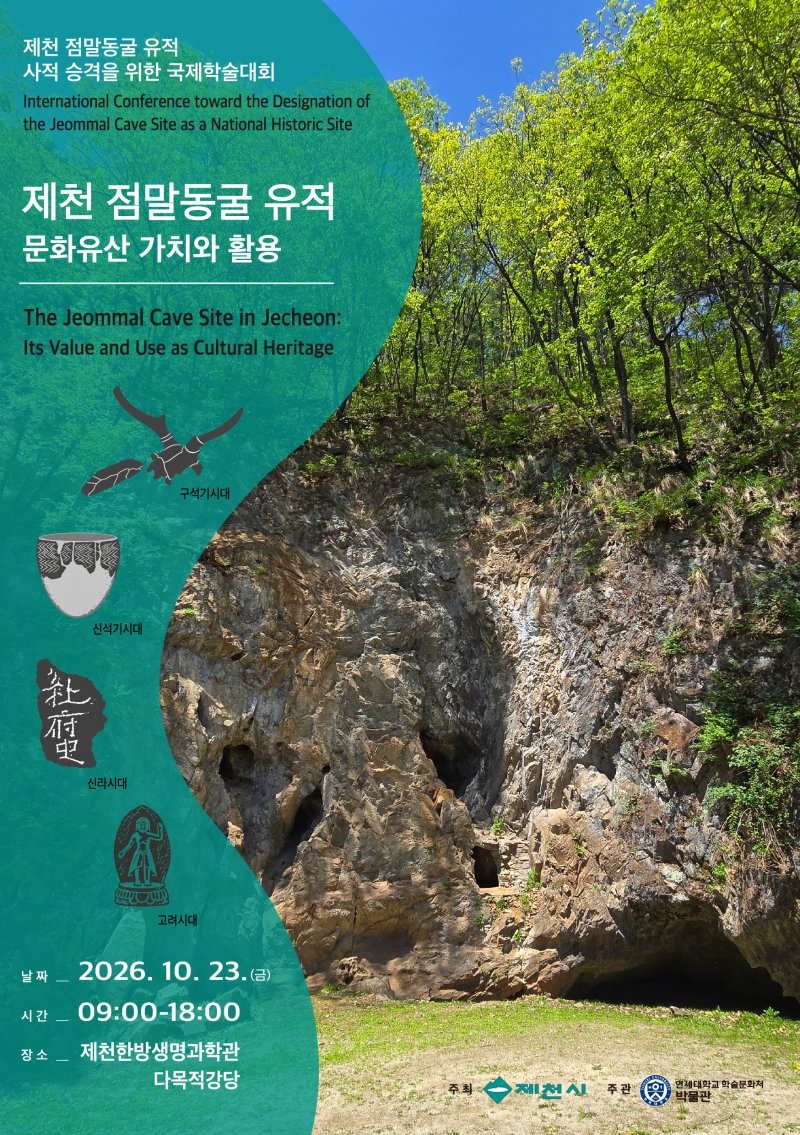
[Financial News] A forum will be held to build the academic foundation for elevating Jecheon’s Jeommal Cave, the nation’s first Paleolithic cave site, to National Historic Site status.
Yonsei University Museum announced on the 21st that it will hold an international academic conference on the 23rd at the Jecheon Oriental Medicine and Life Science Center in North Chungcheong Province, under the theme “Jecheon Jeommal Cave Site: Cultural Heritage Value and Use.” Hosted by Jecheon City and organized by Yonsei University Museum, the conference will review the site’s academic findings and cultural heritage value, and explore directions for its future preservation and use.
Jeommal Cave is a Paleolithic cave site first investigated in Korea and brought to the attention of the academic community in 1973 by a team led by Professor Son Bo-gi of Yonsei University Museum. A total of seven excavation campaigns, through 1980, uncovered traces of Paleolithic human activity, various animal fossils, stone tools and bone tools. The animal fossils in particular are regarded as important material for studying past changes in the Korean Peninsula’s natural environment and fauna.
The site preserves traces not only of prehistoric times but also of the historic period. Silla-period inscriptions carved into the cave walls and Buddhist artifacts, including a statue of the Buddha at birth found nearby, show that the site was used for various purposes over a long period. This is why it is valued as a multifaceted cultural heritage site encompassing both prehistoric and historic periods.
Researchers in archaeology, paleoanthropology and paleozoology from five countries—South Korea, China, Japan, Italy and France—will take part in the conference. In the first session, Korean researchers will examine Jeommal Cave’s past natural environment and major research findings, and discuss its academic significance. In the second session, researchers from overseas will introduce trends in cave-site research and use in their respective countries, and explore the possibilities for comparative studies and international collaboration from the perspective of prehistoric cultures in East Asia and Eurasia. A general discussion will follow on systematic preservation, research and use of the site.
Jecheon City has recently expanded the infrastructure for public engagement with cultural heritage, including by establishing the Jeommal Cave Site Experience Center. Findings discussed at the conference are expected to inform future academic investigations and conservation management of Jeommal Cave, as well as the development of exhibition and educational programs.
Jo Won-hee, director of Yonsei University Museum, said, “This conference will provide an opportunity to share research findings on Jeommal Cave and pursue joint research with overseas researchers. I hope it will help raise awareness of the cave’s history and value as cultural heritage, and contribute to its development as a representative historical and cultural heritage site in the Jecheon area.”
[email protected] Kim Man-gi Reporter