Seoul cuts city-sponsored marathons from 15 to 7; government-sponsored races surge to 21
- Input
- 2026-10-21 16:37:32
- Updated
- 2026-10-21 16:37:32
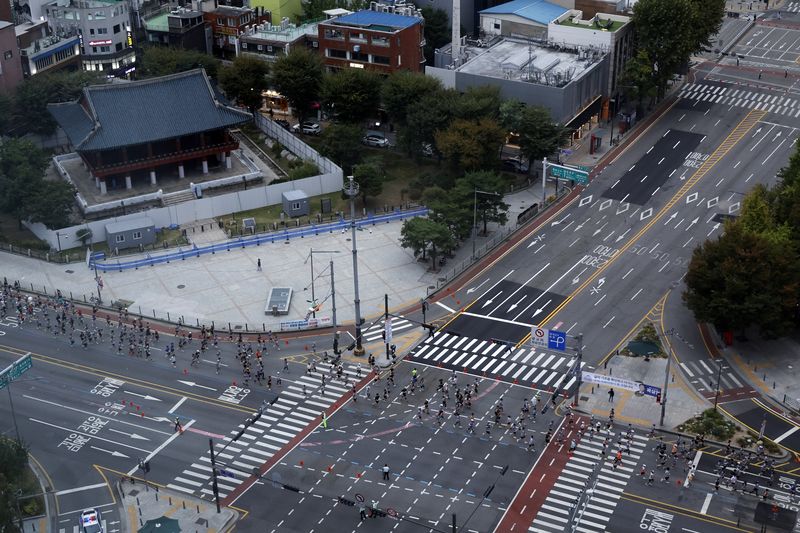
[Financial News] Seoul City has begun strengthening operating standards, including cutting the number of city-sponsored races by about half and adjusting start times and courses, to reduce inconvenience to residents as the number of marathons grows. According to Seoul City on the 21st, the number of city-sponsored marathons fell from 15 last year to 7 this year. By contrast, over the same period, the number of races held in Seoul with central government sponsorship rose from 1 to 21.
Earlier, Seoul Mayor Oh Se-hoon said at a parliamentary audit by the National Assembly’s Public Administration and Security Committee on the 15th that, citing traffic restrictions and inconvenience to residents caused by marathons, he had directly asked race organizers to shorten courses and adjust start times, and had ordered a reduction in city-sponsored races.
Mayor Oh cited the example of a sharp rise in complaints after a marathon organized by a media company that crossed Seoul from east to west last year. He explained, "Those requests were accepted, and most marathons were moved up to 7:30 in the morning, and courses also began to be designed to be shorter."
In fact, after residents in major race-hosting areas such as Gwanghwamun, Yeouido and Jamsil continued to complain about traffic restrictions and noise, Seoul City drew up and began implementing the 'Seoul City Guidelines for Marathons Organized or Sponsored by Seoul City' this past January.
Under the guidelines, city-organized or city-sponsored races that require traffic restrictions must start before 7:30 a.m. The aim is to reduce inconvenience to residents by completing traffic restrictions on major roads before weekend vehicle traffic increases.
To prevent safety accidents caused by crowding among participants, Seoul also set appropriate participant limits for each venue: 15,000 at Gwanghwamun Square, 12,000 at Seoul Plaza and 9,000 at Yeouido Park.
Standards for noise and environmental management have also been tightened. DJing, marching bands and electronic sound systems are prohibited at starting areas, and event noise is capped at 65 decibels. Standards have been established to impose disadvantages on future race operations if litter on roads is not promptly collected, and to minimize restrictions on access to special facilities such as hospitals, the passage of emergency vehicles, and the movement of people with disabilities and older adults.
However, these standards apply only to races directly organized or sponsored by Seoul City, making it difficult for the city to adjust the schedules, courses and scale of all races. This is because marathons themselves are not subject to comprehensive permits or approvals by local governments, and the authority to restrict road traffic lies with the police.
Seoul City therefore plans to ask the central government to strengthen oversight of sponsored races and to adjust their schedules and courses in consultation with the police and other relevant agencies. It also plans to discuss ways to consider venues and inconvenience to residents comprehensively, so that races do not repeatedly cluster in particular areas.
A Seoul City official said, "Following the mayor's directive, Seoul has cut the number of sponsored races by at least half to reduce inconvenience to residents as marathons have increased, and has proactively strengthened operating standards for start times, noise and safety management. We will continue working with the central government, police and other relevant agencies to address the concentration of races in particular areas and expand opportunities for residents to enjoy running in their everyday lives."
[email protected] Seong Chorong Reporter