US solar tariffs of up to 268% put supply chain strengths of Hanwha Solutions Corporation and OCI Holdings in focus
- Input
- 2026-10-21 16:54:32
- Updated
- 2026-10-21 16:54:32
[Financial News] The US decision to impose tariffs of up to 268% on solar products from India, Indonesia and Laos has put the strength of the non-Chinese supply chains of Hanwha Solutions Corporation and OCI Holdings in focus. Analysts say the importance of US-based production facilities and the ability to source non-Chinese raw materials is also growing, as the US prepares to introduce a minimum import price system for solar products and China moves to control exports of key manufacturing technologies.
According to foreign media and industry sources on the 21st, the US International Trade Commission (USITC) recently determined that imports of solar cells and modules from India, Indonesia and Laos had injured the US industry. The anti-dumping and countervailing duty rates previously calculated by the US Department of Commerce range from 147.06% to 268.06%, depending on the company.
The US also plans to introduce a minimum import price (MIP) system for solar products starting this December under the Trade Expansion Act and other laws. The benchmarks include $21 per kilogram for polysilicon, $0.22 per watt (W) for cells and $0.38 per W for modules. An additional 15% tariff will also apply to some solar-related imports. The measure is intended to encourage production in the US.
China has also released a proposed revision that would add 12 solar technology items—including perovskite-silicon tandem cells and polysilicon manufacturing technology—to its list of export bans and restrictions. The proposal is currently open for public comment, but if the restrictions are finalized, they could affect overseas companies that rely on Chinese technology as they build manufacturing facilities and secure technology.
The regulatory changes could improve business conditions for South Korean solar companies with production facilities in the US and non-Chinese raw-material supply chains.
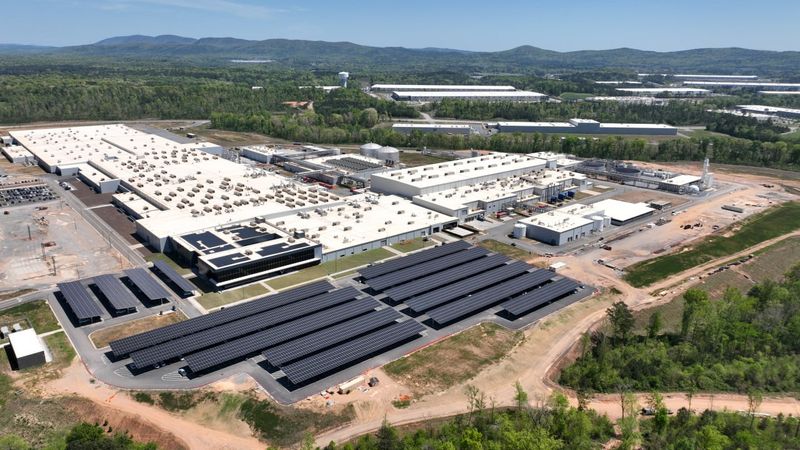
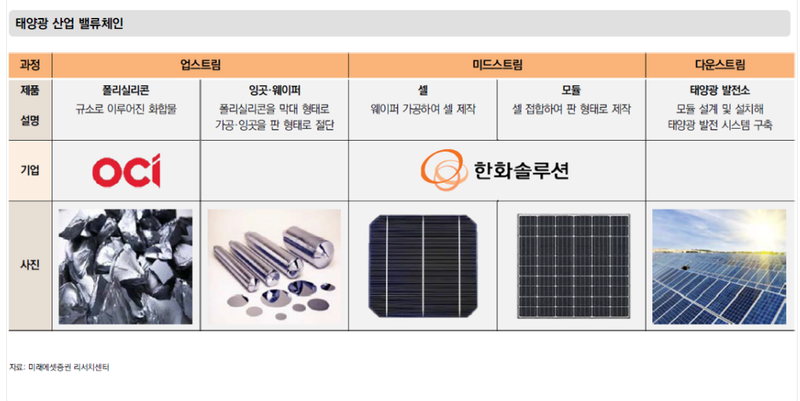
Hanwha Solutions Corporation is building a local supply chain centered on its solar production facilities in Georgia. Its US module production capacity is estimated at 8.6 GW per year, while capacity for ingots, wafers and cells is estimated at 3.3 GW each. Analysts say that greater pricing leverage for US-made products could help improve the profitability of its US facilities.
However, analysts say it remains to be seen whether performance in the manufacturing segment will improve. Samsung Securities forecasts Hanwha Solutions Corporation’s operating profit for the third quarter of this year at 228 billion won, while projecting an operating loss of 127.3 billion won in solar module manufacturing. The key question, analysts say, is how much tax credits from higher utilization rates and increased output at US facilities will ease manufacturing costs.
Hanwha Qcells has annual production capacity of 5.3 GW of cells and 2.8 GW of modules at its Jincheon plant in North Chungcheong Province, South Korea. It aims to begin mass production of next-generation perovskite-silicon tandem cells and modules by the end of 2028.
OCI Holdings is expanding its non-Chinese supply chain through polysilicon facilities in Malaysia and wafer production facilities in Vietnam. A key example is the expansion plan it finalized last July to increase polysilicon production capacity at its Malaysian subsidiary OCI TerraSus from 35,000 tonnes to 70,000 tonnes a year.
OCI Holdings has also signed long-term supply contracts with major US technology companies. Analysts say demand could rise for supply chains with less reliance on Chinese raw materials as US import restrictions tighten.
An industry source said, “The impact of US protectionist measures on companies’ results will depend on future production volumes and selling prices. If prices for imported solar products rise, local manufacturers’ price competitiveness could improve, but power producers’ equipment investment costs and the cost of sourcing some raw materials could also increase.”
[email protected] Kim Mi-hee Reporter