“Creating 10 Seoul National Universities will create a hierarchy among national universities” vs. “Time lags and limits in conditions for settling down”
- Input
- 2026-10-21 16:14:42
- Updated
- 2026-10-21 16:14:42
[Financial News] At the National Assembly Education Committee’s audit on the 21st, the fairness and effectiveness of project selection under the government’s policies to nurture regional talent and support regional universities came under scrutiny. Ruling and opposition lawmakers strongly raised concerns that concentrated support for certain universities could create a hierarchy among national universities, as well as pointing to a time lag between industry needs and the supply of workers and the need to provide conditions that enable people to settle in a region, beyond simply supporting education.
■ “Only selected universities benefit... concerns over a new hierarchy among national universities”
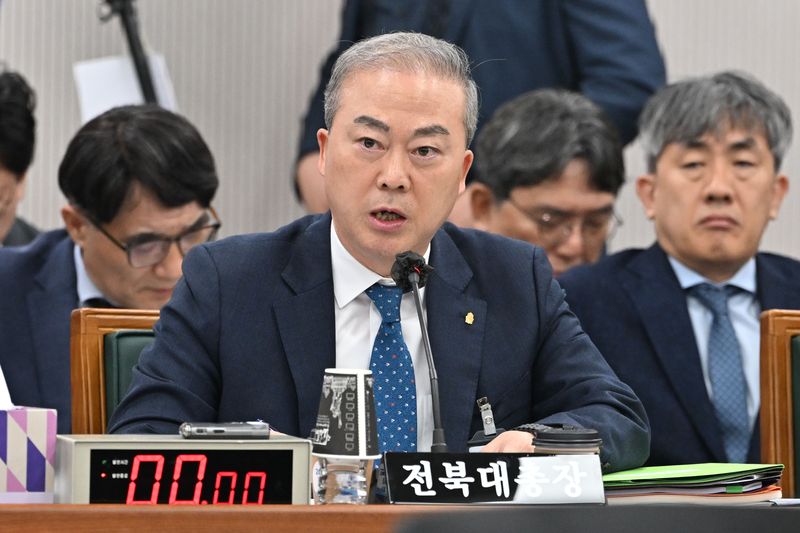
Ahn Gyu-baek of the Democratic Party of Korea criticized the exclusion of Jeonbuk National University from the selection process for the “Make 10 Seoul National Universities” project. “Jeonbuk National University demonstrated outstanding capabilities, establishing a branded college and launching a joint research center with a leading domestic company, yet it was excluded,” Ahn said. He sharply criticized the decision, asking, “Some of the selected universities are still at the planning stage. Why was a university that was fully prepared rejected?”
In response, Seol Se-hun, director general of planning and coordination at the Ministry of Education, said, “The decision was made after a comprehensive review by nine relevant ministries, so it is difficult to point to any shortcomings on the part of a particular university.” He added, “I will report on progress so that they can demonstrate their systems and capabilities going forward.”
Jang Dong-hyeok of the People Power Party also voiced concern about concentrating support on specific universities. “The idea was to establish a flagship national university in each region and province. If one university alone is selected and given a large share of the budget, a hierarchy will ultimately emerge among national universities,” he said, asking, “How are students at the other universities that were not selected and regional talent supposed to be nurtured and encouraged to settle in the region?”
■ A “time-lag mismatch” between industry’s need for workers and the supply of talent
Park Beom-gye of the Democratic Party of Korea raised the issue of a time lag between large-scale industrial investments, including the Honam-region semiconductor cluster, and universities’ plans to develop talent. “The regional mega-projects will require a workforce of 23,000, but Chonnam National University will admit its first students in 2028 and produce its first graduates in 2032,” Park said. He pointed out that “concrete measures, not abstract plans, are needed to meet companies’ immediate demand for highly skilled workers.”
In response, Chonnam National University President Lee Geun-bae said, “The semiconductor cluster is an opportunity that may come only once every several hundred years.” He added, “We are doing everything we can, holding a forum every month with 33 universities in the region and discussing talent development as well as issues involving sites, electricity and water from multiple angles.”
■ Calls for “comprehensive conditions for settling in the region” beyond simple education projects
Questions were also raised about the effectiveness of policies aimed at preventing regional graduates from moving to the capital region. Regarding the Ministry of Education’s RISE and anchor projects, Jang Dong-hyeok criticized the approach, saying, “It is impossible to get students to settle in a region with just a few programs,” and “it will be difficult to achieve meaningful results unless the underlying causes are addressed.”
Chungnam National University President Kim Jang-gyeom also said candidly, “We hope that students who studied in Daejeon will find good jobs and settle here, but the reality is that, regrettably, most graduates set their sights on Seoul.”
The Ministry of Education said, “Through the anchor project, we are shifting the support system from being centered on universities to being centered on students.” It added, “Alongside creating success stories, we are developing a comprehensive government-level plan that bundles together not only talent development but also culture, the environment and conditions for settling in the region.”
[email protected] Kim Man-gi Reporter