Controversy over ‘backdoor deployment’ ahead of Cheonghae Unit extension ... Could it become a year-end issue in the National Assembly?
- Input
- 2026-10-21 16:57:57
- Updated
- 2026-10-21 16:57:57
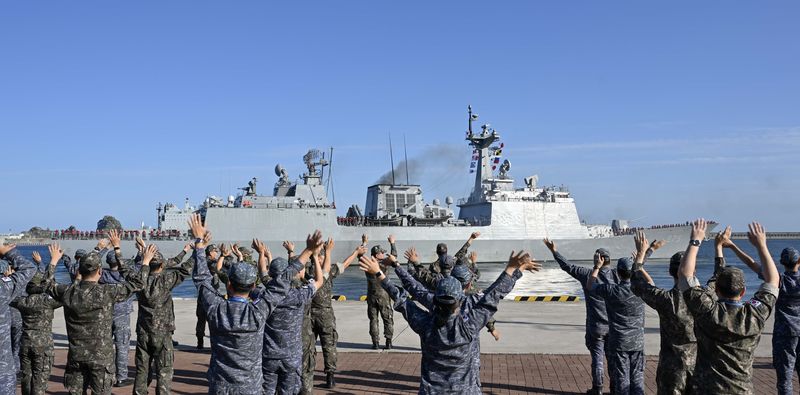
At a forum held at the National Assembly on the 21st, titled ‘Issues Surrounding the Cheonghae Unit Deployment Amid the Hormuz-Red Sea Crisis,’ Kim Jun-hyung, a lawmaker from the Rebuilding Korea Party, warned that the government might first obtain National Assembly approval to extend the Cheonghae Unit’s deployment and then expand its operational scope, citing changes in circumstances. Given the precedent set under the former Moon Jae-in administration, when the unit’s operational scope in the Strait of Hormuz was expanded without separate National Assembly approval, the government and ruling party could decide to ‘at least get the extension approved first,’ he said.
Kim stressed, ‘It wasn’t a war then, but it is a war now,’ adding, ‘This is a backdoor deployment, and we must oppose it to the end.’ Yoon Jong-oh, floor leader of the Progressive Party, also said, ‘An indirect deployment is still a deployment. It requires National Assembly approval.’
The Cheonghae Unit’s current deployment mandate runs through December 31, and the government must obtain the National Assembly’s approval for an extension if it wants to continue the deployment. The government is currently considering expanding the unit’s operational scope from the Gulf of Aden to the Gulf of Oman, adjacent to the Strait of Hormuz, and sending additional maritime patrol aircraft. Last September, it sent a fact-finding mission to the United Arab Emirates (UAE) to assess conditions for operating maritime patrol aircraft and facilities at U.S. military bases, among other things.
As the possibility of a deployment came to the fore, the government and the Democratic Party said they distinguish between strengthening the existing Cheonghae Unit’s ship-protection mission and taking part in a war. Kim Byung-joo, a Democratic Party lawmaker and special adviser on defense policy to the Blue House, has said, ‘This is about bolstering the Cheonghae Unit’s own defensive capabilities; it is not a decision to deploy to the Strait of Hormuz.’ The Ministry of National Defense also drew a line on the 16th, saying, ‘Under no circumstances will we become involved in a war or combat,’ and that no concrete decision had been made on whether to deploy. The broader progressive camp, however, is objecting, saying, ‘Even if the operational scope is expanded under the pretext of protecting ships, a military clash could escalate into a local conflict,’ and ‘(In that case) it could run counter to the Lee Jae-myung administration’s principle of noninvolvement in war.’
[email protected] Song Ji-won Reporter