60 Years Since Korean Nurses Were Sent to Germany: From Acupuncture and Chuna Therapy to Hanbok Gifts
- Input
- 2026-10-21 15:41:32
- Updated
- 2026-10-21 15:41:32
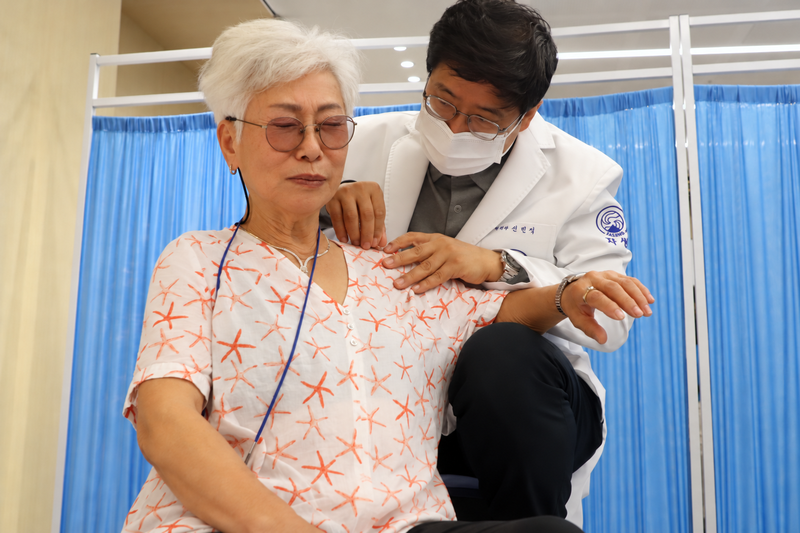
[Financial News] The young nurses who set foot on German soil in hanbok 60 years ago are now gray-haired and have put on hanbok once again. The nurses sent to Germany, who laid the foundations for their homeland’s economy while caring for patients in a foreign land, spent a special day back home.
Jaseng Medical Foundation said on the 21st that it had invited 100 members of the Korean Nurses Association in Germany to the “2026 Homecoming Commemorative Event for the 60th Anniversary of Korean Nurses’ Dispatch to Germany,” held on the 20th.
From 1966 through the 1970s, young nurses from Korea boarded planes for Germany to support their families and seek new opportunities. They endured three-shift work at hospitals where both the language and culture were unfamiliar, and even after grueling shifts, devoted themselves to studying German so they could communicate with medical staff and patients. The foreign currency they earned was sent home to support their families and became a foundation for South Korea’s economic development.
The foundation organized the event to express gratitude for their hard work and give the nurses, who had spent many years caring for others, a chance to look after their own health back home. Earlier, the two sides signed an “MOU on Medical Support for the 60th Anniversary Homecoming of Korean Nurses Sent to Germany” last May, agreeing to provide medical support during the nurses’ stay in Korea and jointly carry out social contribution activities commemorating their 60 years of dedication.
The event began with a Korean medicine volunteer clinic at the Jaseng Medi-Bio Center. The nurses were divided into four groups of 25 and received integrated Korean medicine treatments—including acupuncture, pharmacopuncture and Chuna manual therapy—from medical staff at Jaseng Korean Medicine Hospital. Participants, who had lived with musculoskeletal pain after years of working in hospital wards, carefully reviewed their symptoms with the medical staff. After their consultations, they toured the center to see firsthand how Korean medicine had advanced. Medical staff and the Bundang Jaseng Volunteer Group jointly handled on-site guidance and operations.
After the medical experience, the participants took a walk through Bundang Central Park, bathed in autumn colors, and then attended a hanbok presentation ceremony. Dressed in hanbok prepared by the Jaseng Volunteer Group, they took commemorative photos with their colleagues to remember their visit home.
Hanbok is also deeply connected to the history of the nurses sent to Germany. The nurses who first arrived in Germany in 1966 captivated locals in their hanbok, and even while living far from home, they would take out and wear their hanbok to ease their longing for their homeland.
The commemorative event that followed featured a performance by the Jaseng Windream Band and a flower presentation to express gratitude, among other activities. A video of a recitation of “White Angel,” a poem written by Shin Jun-sik, founder of Jaseng Korean Medicine Hospital and a poet, to capture the nurses’ dedication, added to the occasion’s significance. The nurses watched the performances and shared a dinner, bringing their day back home to a close.
Park So-hyang, president of the Korean Nurses Association in Germany, said, “I am deeply grateful that you welcomed us so warmly without forgetting the years when we left our families and hometowns behind and set off for Germany as young people.” She added, “Being able to dress up in hanbok and share memories with our colleagues back home for the first time in 60 years, as well as look after our health, is something I think we will remember for a long time.”
Shin Min-sik, chair of the Social Contribution Committee at Jaseng Medical Foundation, said, “I offer my deep respect to the nurses sent to Germany, who devoted themselves to their families and country while caring for patients in a foreign land.” He added, “I hope this event will give them an opportunity to look after their own health, which they have put off for so long, and to feel the warmth of their homeland.”
[email protected] Jung Myung-jin, Medical Correspondent Reporter