Yeom Seung-hwan: “It’s not that the KOSPI is bad ... Nothing is working right now” [fn Insight]
- Input
- 2026-10-21 16:07:51
- Updated
- 2026-10-21 16:07:51
Earnings are strong, but the stock price isn’t moving. Taiwan hit a record high, and Japan’s Nikkei touched the 70,000 mark, while the KOSPI slid from 7,100 to 5,400. Asked why, a market expert with 25 years of experience gave a surprisingly candid answer: “I could come up with reasons if I tried to force one. But honestly, I don’t know for sure.”
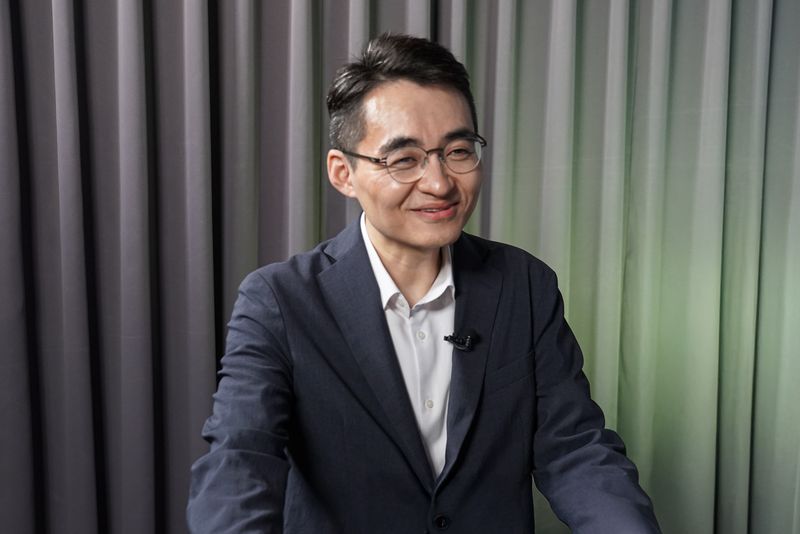
[Financial News] Yeom Seung-hwan, a director at LS Securities (pictured), met with Financial News on the 21st and summed up the recent domestic stock market in one line: “It feels like nothing works, no matter what you do.” His first words were, “I’m frustrated too.” He said July’s sharp drop came as memory stocks around the world fell together, but the situation is different now. “This time, it feels unfair. Investors can’t help thinking, ‘Why is only Korea falling?’”
“Money has moved; it’s not because Korea is the problem”
Director Yeom cited the exchange rate as the first reason. “It’s true that the estimate for Samsung Electronics’ operating profit was cut as the exchange rate fell by 200 won,” he said, explaining, “It’s not that people don’t believe in the earnings at all; the exchange rate put the brakes on figures that had been expected to keep rising.”
The second reason was the movement of funds. His assessment was that money had shifted both between industries and between countries. “In the first half, it all went into memory stocks. SanDisk rose 3,000%,” he said, adding, “Now it’s spreading to substrates, optical communications, and materials, parts and equipment.” The same was true across countries. “We did exceptionally well in the first half, so people want to take profits, and with so many share buybacks, it’s also a good time to sell. That money went to Taiwan and to Japan, which is strong in materials, parts and equipment, rather than being concentrated entirely in memory stocks,” he said.
He summed up the two trends as having converged. “It’s not a question of what’s wrong with the Korean market; money moved, and Korea wasn’t where it chose to go.”
He also attributed the fact that Nvidia is rising while Samsung Electronics and SK Hynix are not, despite being in the same AI value chain, to the difference in the strength of their momentum. His analogy was simple: “People expected 5 from Nvidia, and it delivered 10; they expected 5 from memory, and it delivered 6.”
In fact, the estimate for Samsung Electronics’ operating profit this year, which was put at 40 trillion won last November, climbed as high as 370 trillion won, but has been stuck between 370 trillion and 390 trillion won since June. “That doesn’t mean profits aren’t growing; it means there haven’t been any estimates that come as a surprise,” he stressed. “It’s not that memory is the problem. Micron has also said there will be a supply shortage through 2028.”
He nevertheless thought a return to the previous high was possible. “As long as earnings aren’t impaired, it will eventually go up. That’s what all the leading stocks of the past did.” The challenge is what comes after that. “To break through the previous high, there has to be new momentum, or interest rates have to fall sharply. Earnings growth alone will leave it stuck in a range.”

“Late October and next January are turning points”
He pointed to the earnings briefing at the end of this month as the nearest test. Samsung Electronics has set the date for the 29th. There are two things to watch. The first is the outlook for 2028. “Everyone knows things will be good through 2027. The issue is 2028: views are evenly split between those who expect oversupply and those who think supply will be even tighter,” he said. “We need to see whether Samsung Electronics and SK Hynix say the same thing as Micron.”
The other is shareholder returns, which he considered more important. He said Samsung Electronics is likely to announce a special shareholder-return plan for 2027–2029. He also calculated that, if half of next year’s free cash flow were paid out as dividends, the dividend yield would be 14% for Samsung Electronics and 11% for SK Hynix. “You don’t believe it, do you? That’s why they need to give people confidence that they’ll really pay it,” he said, citing Apple as an example. “When Apple started buying back and retiring its own shares in 2013, no one believed it either. After two or three years, once its earnings were confirmed, the stock went up 15-fold.”
He pointed to the end of this year and the beginning of next year as the time when the uncertainty around 2028 estimates would clear. “We’ll have some data by late October, and the picture will be clearer by the time Samsung Electronics announces its earnings next January,” he said. “When estimates converge in one direction, it takes off. Almost all the estimates that converged like that turned out to be right.”
Ultimately, what he stressed was “why you bought the stock”—the reason for buying it. “When a stock falls, the first thing to look at is why I bought it. If something emerges that goes against what I believed, it makes sense to sell. But if that hasn’t changed, you have to hold on no matter how far it falls. Interest rates are high now, but this isn’t a situation where the Fed is raising them like crazy to get inflation under control. It won’t be easy through the end of this year, but I’d like to say: let’s get through it as best we can.”

[email protected] Han Young-jun Reporter