Physical AI: From development to mass production...Calls for support for public-sector demand and localization of components
- Input
- 2026-10-21 15:12:22
- Updated
- 2026-10-21 15:12:22
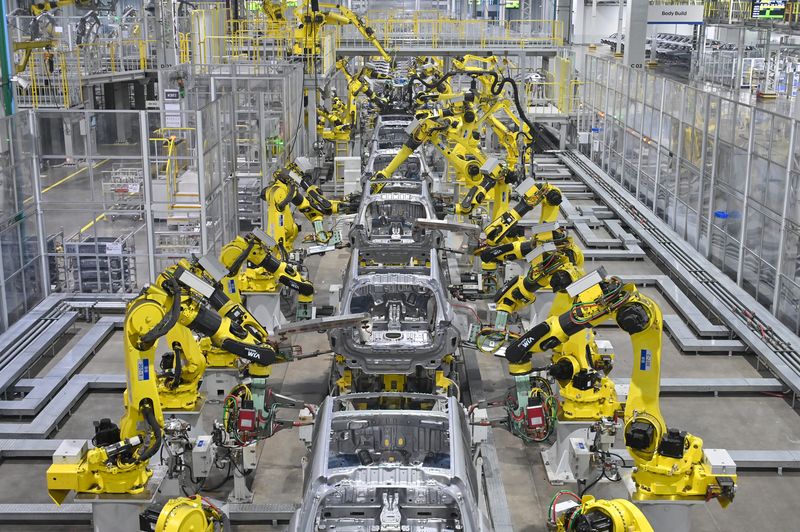
At the National Assembly Forum on Strategies for the AI and Robotics Industry Ecosystem, hosted at the National Assembly on the 21st by Lee Eon-ju, a lawmaker from the Democratic Party of Korea, participants called for building a foundation for cooperation across the industry, beyond the technology development efforts of individual companies.
In her opening remarks, Lee noted that South Korea has manufacturing capabilities and demand industries such as semiconductors, batteries, automobiles, and shipbuilding, but said, “Having the right conditions and taking the lead are two different things.” Reliance on overseas suppliers for core components such as reducers, servo motors, and precision sensors remains a challenge, she said.
She added that “China is surging ahead in the humanoid sector at a formidable pace, backed by its vast domestic market and government support,” and stressed, “As we have already seen with electric vehicles, the country that builds its ecosystem first takes the lead the moment the market opens. This is exactly the golden window.” She also emphasized the need for a strategy that treats robots and core components as national strategic assets and links technology development with demonstration, initial demand, and talent development.
Industry representatives attending the forum identified “the market after demonstration” as a key task. They said the industry as a whole can grow only if physical AI moves beyond demonstrations to actual purchases and repeat orders. They proposed first building a track record of initial deliveries in the public sector and then expanding into private-sector service markets. Labor-intensive, high-cost processes at small and midsize manufacturing companies were also cited as priority candidates for adoption.
Securing shared data and demonstration facilities was another major topic. The proposal was to establish national research hubs, including robot data factories and super-regional special zones, and connect AI models, robot hardware, core components, and companies with demand for them. The aim is to create an open ecosystem in which large and small companies develop technologies together and share data.
There were also concerns that, under the current structure, data needed to train physical AI could become concentrated in large companies. If a company spanning robot manufacturing, AI platforms, systems integration, and end users keeps process data in-house, it could make it difficult for outside companies to enter the market. Since security barriers could reinforce an industry structure dominated by large companies, participants said a foundation for broader participation must be established.
Calls were also made for technological and institutional improvements to enhance performance in real-world settings. Even if AI can recognize an object, it may fail during final alignment or contact, so sensor and control technologies and task execution capabilities need to be improved together. Participants said R&D evaluations should focus on real-world performance and safety, and that safety responsibilities between manufacturers and users, as well as data collection and safety certification systems, should be overhauled.
Standardization and support for adoption costs were identified as key to localizing core components. Participants proposed harmonizing the different communications, data, and control specifications used by manufacturers so components from multiple companies can work together, and covering the design changes and testing and certification costs incurred when domestic components are used for the first time. They also called for support for joint testing and certification and long-term reliability testing.
Some also called for company performance to be assessed by actual adoption, repeat purchases, and export and mass-production results, rather than by the number of components developed. They further proposed expanding financial support for mass-production facilities and working capital for technologies that have passed customer validation, so that localization achievements lead to deliveries and business growth.
[email protected] Kim Hyeong-gu Reporter