Public nominations for inaugural head of Public Prosecution Office close today ... Stance on dropping charges in 'Lee case' also a factor in selection
- Input
- 2026-10-21 15:14:49
- Updated
- 2026-10-21 15:14:49
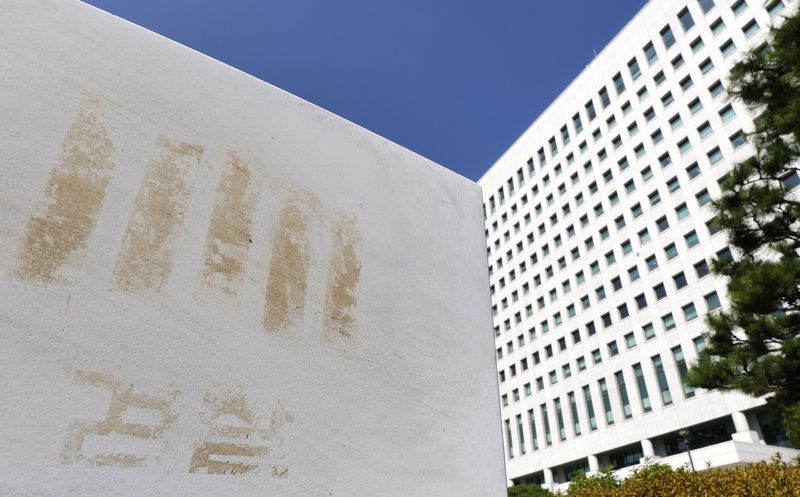
[Financial News] As the public nomination process to select the inaugural head of the Public Prosecution Office concludes on the 21st, Lee Jeong-hyeon, deputy chief prosecutor at the Public Prosecution Office (Judicial Research and Training Institute class 27); Vice Justice Minister Lee Jin-su (class 29); and Park Cheol-woo, chief of the Seoul Central District Public Prosecution Office (class 30), are among those being discussed as potential candidates. Each person's stance on dropping charges in cases involving President Lee Jae-myung has also emerged as a factor in the selection. Who will take on the challenges of establishing the new criminal justice system and securing political neutrality is also a matter of interest.
According to legal sources, the Ministry of Justice will close public nominations today for candidates to become the first Prosecutor General (head of the Public Prosecution Office). The Prosecutor General Candidate Recommendation Committee will then recommend at least three candidates, after which the justice minister will submit one candidate to the president for appointment.
The most senior among the leading contenders, Deputy Chief Lee Jeong-hyeon has served as first deputy chief prosecutor at the Seoul Central District Prosecutors' Office; head of the Public Investigation Division and director of the Planning and Coordination Department at the Supreme Prosecutors' Office; inspection officer at the Ministry of Justice; and chief of the Suwon High Prosecutors' Office, among other posts. With broad experience in criminal law and legislation, inspections, and organizational planning—and having led the launch of the Public Prosecution Office—continuity of operations and organizational stability are considered strengths.
On the 23rd of last month, Deputy Chief Lee left open the possibility of dropping charges in the president's case, saying that the findings of a fact-finding investigation should be reviewed. During the National Assembly's investigation into fabricated indictments last April, Lee also addressed allegations of coercion during the investigation of the Ssangbangwool case involving remittances to North Korea, saying, “I deeply regret and feel sorry that very improper methods were used.”
Vice Minister Lee Jin-su is an expert in criminal law and legal administration, having served as head of the Criminal Division and chief of Forensic Investigation Division 2 at the Supreme Prosecutors' Office; first and second deputy chief prosecutor at the Seoul Southern District Prosecutors' Office; and legal affairs adviser and director of the Commercial Legal Affairs Division at the Ministry of Justice, among other roles. At a parliamentary audit on the 8th, Lee ruled out dropping charges at the Justice Ministry's direction in a specific case, while leaving open the possibility of follow-up measures based on the findings of the Prosecution Service Committee on Respect for Human Rights and the Future's fact-finding investigation. However, as acting justice minister, Lee is overseeing the candidate recommendation and submission process, which could raise conflict-of-interest concerns if Lee is ultimately included among the candidates.
Chief Park Cheol-woo is a prominent special investigations specialist who has served as head of the Anti-Corruption Division at the Supreme Prosecutors' Office; second deputy chief prosecutor and head of the Crime Proceeds Recovery Division at the Seoul Central District Prosecutors' Office; and head of the special investigations divisions at the Ulsan and Gwangju District Prosecutors' Offices, among other posts. Park leads the Seoul Central District Public Prosecution Office, which handles cases involving President Lee. At a parliamentary audit on the 19th, Park stressed that there had been no consideration of dropping charges or consultation with a higher-level agency, saying, “It's no different from any other case.” Park also stated that the Future Committee fact-finding team's activities themselves could not be considered illegal.
Also among the potential candidates is Sung Sang-heon, chief of the Seoul Southern District Public Prosecution Office (class 30), who previously served as head of the Human Rights Oversight Division and director of the Planning and Coordination Department at the Supreme Prosecutors' Office, as well as director of the Prosecutors Bureau at the Ministry of Justice. Experience in personnel and organizational management and human rights is considered a strength.
Legal circles identify organizational stability and political neutrality as key challenges for the next head of the Public Prosecution Office. “The organization is quite demoralized, and there is confusion in practice as well. We need someone who is highly trusted within the organization and can present a vision for the new system,” said a lawyer who previously served as a senior prosecutor.
“There is an urgent need for someone who can secure trust in political neutrality and fairness, along with expertise in maintaining prosecutions and ensuring effective coordination between investigations and prosecutions,” said Cha Jin-a, a professor at Korea University Law School. Cha added, “The person must not give in to pressure to drop charges in the president's case.”
“We need to move beyond the image of the prosecution service in the past and establish the role of prosecutors as public prosecutors,” said Han Sang-hee, an honorary professor at Konkuk University Law School. Han emphasized, “Cases involving the president should not be treated specially, but there is a need to establish the facts and make judgments about past allegations of abuse of prosecutorial authority or fabricated investigations.”
[email protected] Choi Eun-sol Reporter