[On-the-Scene Report] CCTV cameras detect threats and robots patrol... Policing evolves with AI
- Input
- 2026-10-21 17:08:19
- Updated
- 2026-10-21 17:08:19
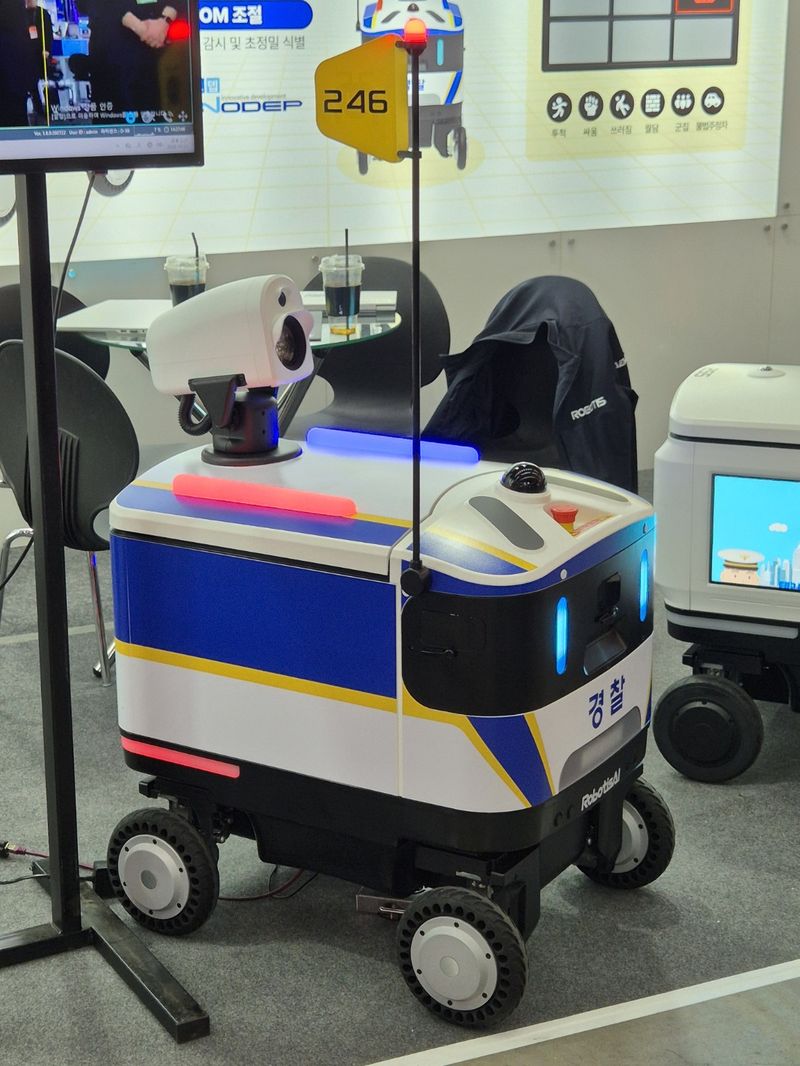
[Financial News] “Conventional CCTV cameras look down from high vantage points, but there are blind spots, and it is difficult to see distant areas in detail. In such cases, the robot moves to the location itself and uploads the footage.”
A representative of ROBOTIS AI, whom we met at the 2026 Korea Police World Expo (KPEX 2026) in Incheon on the 21st, explained how the autonomous patrol robot is used. A four-wheeled patrol robot was on display, with a white-and-blue body bearing the word “POLICE.” The camera mounted on top allows it to monitor even blind spots that fixed closed-circuit television (CCTV) cameras have difficulty covering, the representative said.
A range of security equipment using artificial intelligence (AI) and robotics was presented at the exhibition that day. From systems that detect dangerous situations in CCTV footage to equipment for detecting illegal filming, efforts to apply advanced technology to crime prevention and on-site response stood out.
ROBOTIS AI’s patrol robot is designed to detect unusual situations such as loitering, fights, and people collapsing using thermal imaging cameras and video analysis technology, and to relay public announcements or police officers’ voices through a speaker. The company said that, unlike the fifth-generation model on display, its existing fourth-generation model is in operation at Goyang Police Station.
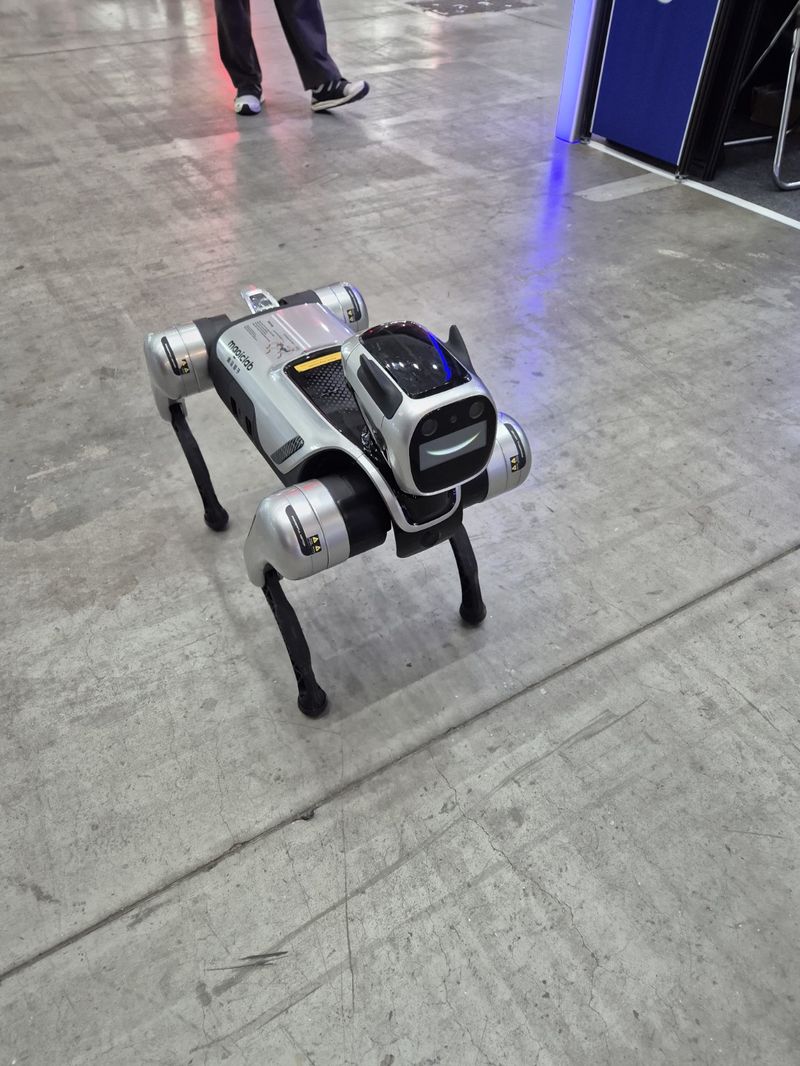
A quadruped robot made by Refine Co. caught the eye at one corner of the exhibition hall. When a company representative operated the robot—which had a silver body and four black legs—with a smartphone, it changed direction, moved around, and then did a backflip. A camera was mounted in its head, and it also had obstacle-avoidance and voice-interaction functions, the representative said. “Unlike other robots, it has a head, which helps it feel a little more approachable to children and other people,” the representative said. The robot is currently being developed for educational use, but the company is also considering its potential use in policing, including police patrols, in the future.
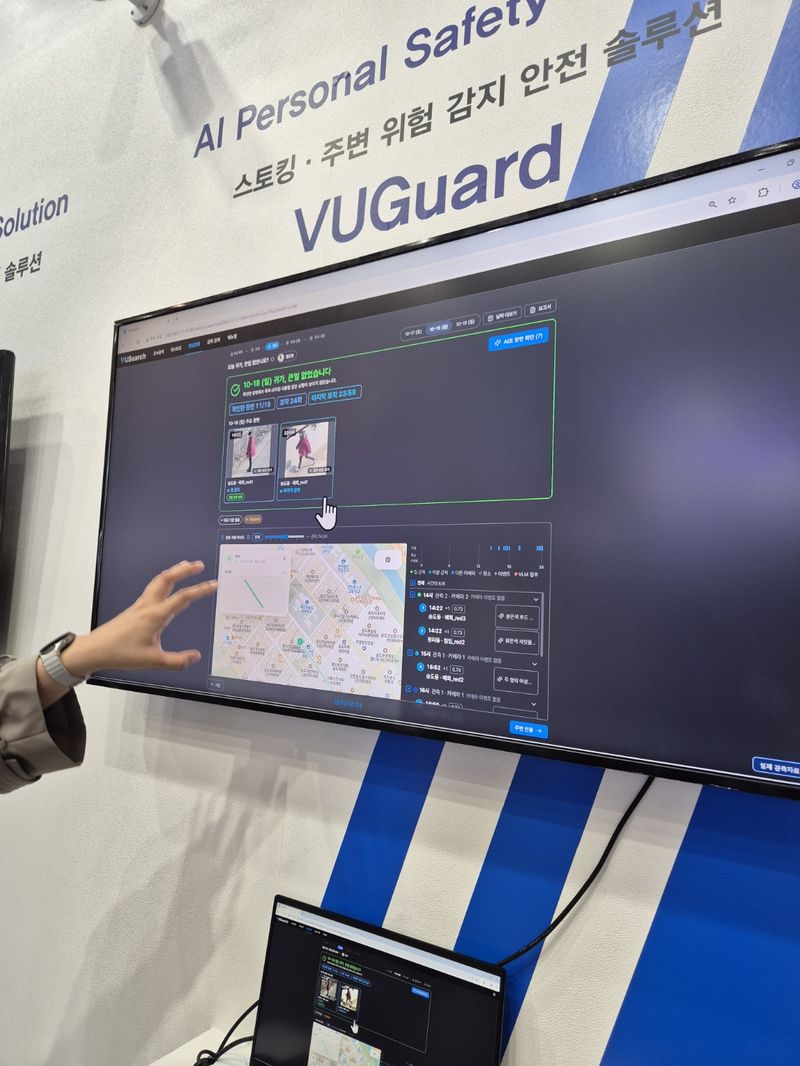
Technology for monitoring crime risks using AI was also introduced. Innodep’s AI safety solution VUGuard is being developed for use in protecting victims of crimes involving personal relationships, such as stalking, and monitoring people wearing electronic ankle monitors. “Safety Monitoring” analyzes the movements of people under protection and whether the same individuals repeatedly appear nearby, while “Supervision Monitoring” tracks unusual behavior by people wearing ankle monitors. It uses a video language model (VLM) to analyze cases such as someone going out at a time they would normally be at home, staying for a long time in a particular location, or appearing to carry an object suspected of being a weapon, helping monitoring staff review the footage.
Technology for finding and tracking people and vehicles was also presented. Innodep’s VUSearch is a solution for searching for and tracking objects in video footage. One More Eye also introduced “Selective Monitoring,” which uses AI to detect dangerous situations in real time, and “High-Speed Search,” which finds the routes taken by specific people or vehicles.
Equipment to prevent crimes involving illegal filming was also on display. Netvisiontel exhibited portable and fixed devices that detect wireless signals from hidden cameras, along with an integrated monitoring system. The portable device is carried by the user, who tracks a camera’s location by monitoring signal strength, while the fixed device is installed in places such as restrooms to detect signals around the clock.
A company representative explained, “The portable device has to be carried by a person, but it can detect signals from different locations. The fixed device has limitations in pinpointing the exact location, but it can detect signals 24 hours a day.” The CamEye series also includes a feature that analyzes signals from AirTags and Galaxy Tags, and the company introduced a monitoring system for reviewing detection results and records. The company said its devices have been installed in national park restrooms, highway rest areas, schools, community service centers, and other locations.
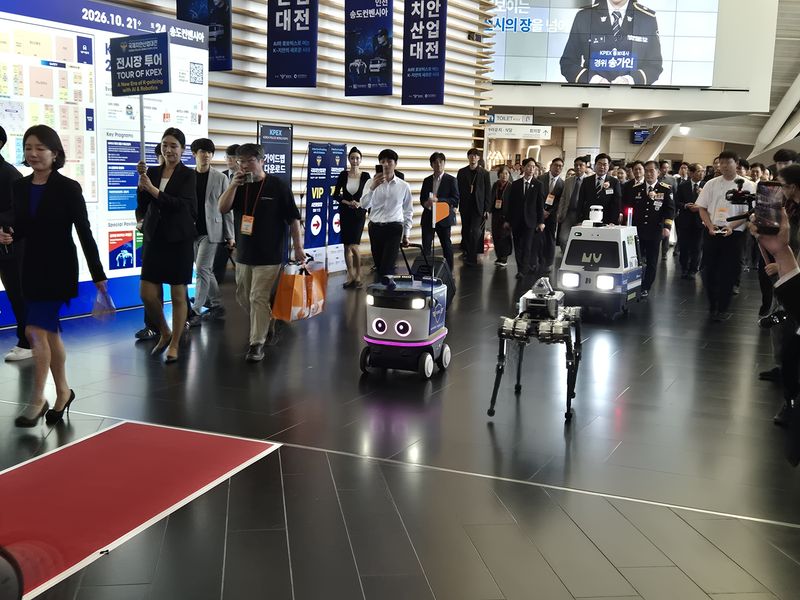
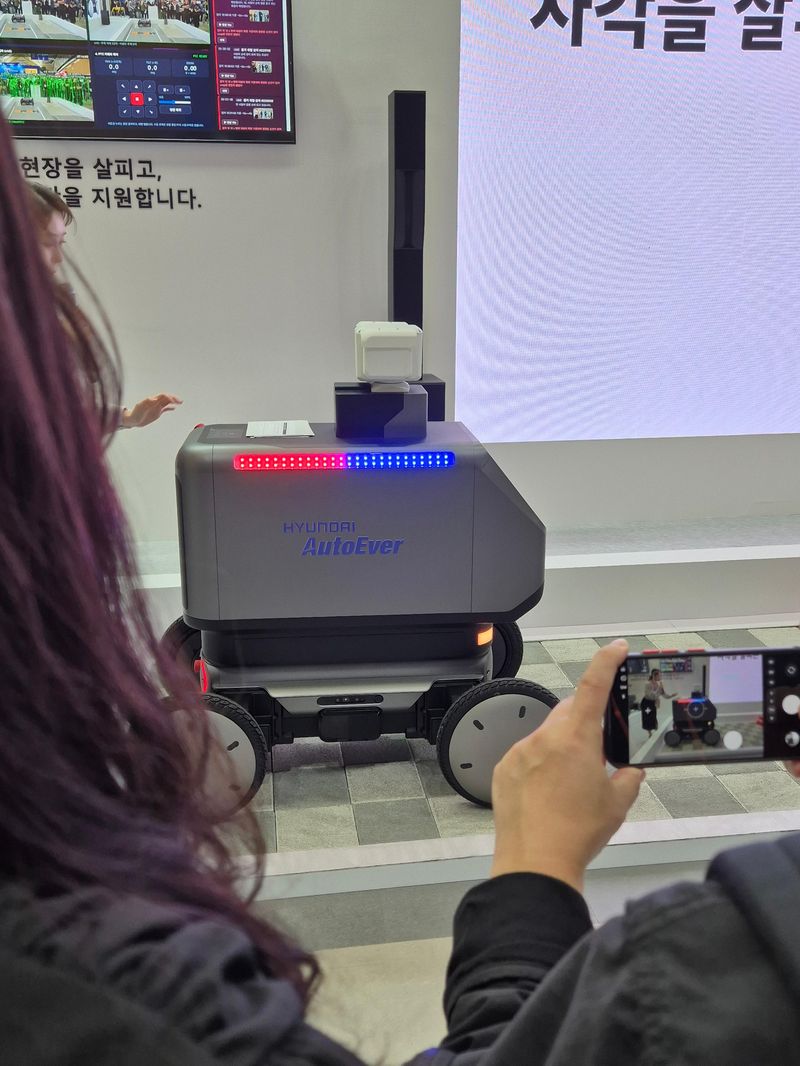
The event, jointly hosted by the Korean National Police Agency and Incheon Metropolitan City, runs through the 24th under the theme “A New Era of K-Policing Powered by AI and Robotics.” Now in its eighth edition, the expo features advanced policing technology and safety equipment from 245 domestic and international companies across some 880 booths. The program also includes on-site police officers directly evaluating the performance, safety, and ease of use of AI patrol robots. The National Police Agency plans to incorporate the evaluation results into technology development and support the deployment of outstanding products in the field.
Acting National Police Commissioner Kim Jong-cheol also visited the exhibition hall that day to view advanced policing equipment. He toured major exhibits, including a demonstration of Hyundai Motor Group Robotics Lab’s AI-powered autonomous patrol robot, Kia Corporation’s electrified patrol car concept, and a police helicopter from Korea Aerospace Industries (KAI).
[email protected] Kim Ye-ji Reporter