Brunson: “U.S.-South Korea drills should be held year-round” ... discusses next year’s exercises with the JCS
- Input
- 2026-10-21 14:44:42
- Updated
- 2026-10-21 14:44:42
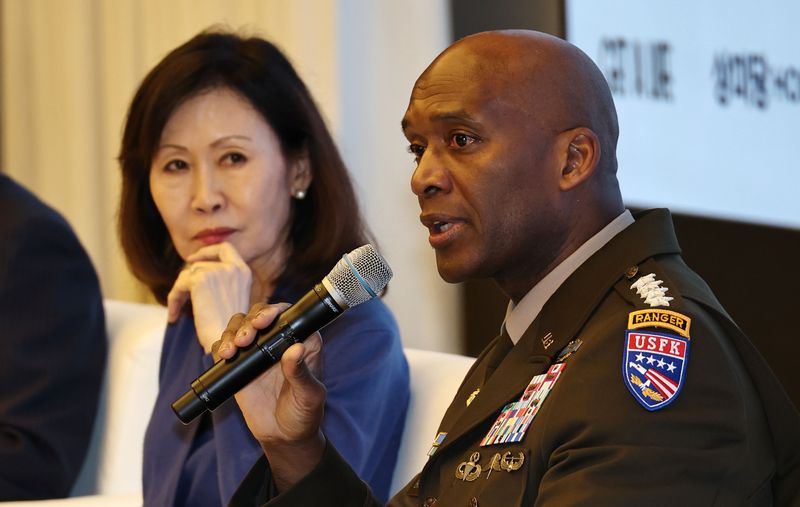
General Brunson said, “This week, I met with Chairman Jin Young-seung and discussed how we will train during the upcoming FS exercise,” adding, “What we confirmed in that process is that we should not rely solely on the two major exercises held annually to maintain our readiness.” He stressed in particular, “We need to train year-round,” and added, “We need to keep developing in order to achieve the objectives we have set. That is what we need to do.”
Given General Brunson’s emphasis on the importance of ROK-U.S. joint exercises, next year’s FS exercise is expected to proceed as normal, without the large-scale reductions seen this year.
The scale of field training exercises (FTX) during the FS exercise held in the first half of this year was sharply reduced following internal coordination between the ROK and U.S. military authorities and an assessment that tensions with North Korea should be eased. The Ulchi Freedom Shield (UFS) exercise, the ROK-U.S. joint exercise held in August, was also sharply scaled back at the direction of U.S. President Donald Trump.
General Brunson said, “Our security environment is not static,” and pointed to the need for more training, saying, “North Korea is advancing its ballistic- and cruise-missile capabilities and deepening its defense cooperation with Russia to a dangerous degree.”
He continued, “Even in this changing environment, our mission remains the same: to support the Republic of Korea, maintain our combined posture, and ensure the security of both sides,” he stressed.
General Brunson said, “The way U.S. Forces Korea trains on the Korean Peninsula will also change,” adding, “As the security environment changes and new challenges emerge, we need to train and exercise together so that we can respond to those challenges.”
He added, “If U.S. Navy ships can receive maintenance and depot-level repairs safely and quickly at shipyards in South Korea and return to sea ahead of schedule, that translates into operational deterrence,” and said, “We need to build a relationship in which U.S. innovation and South Korea’s creative capabilities are integrated more deeply and sustainably.”
General Brunson did not comment that day on changing the criteria for the transfer of wartime operational control, which had sparked controversy following his recent remarks, or on issues such as the Demilitarized Zone (DMZ).
[email protected] Kim Kyung-soo Reporter