From regulatory exemptions to permits, the 'chief operating officer' set to steer super-regional special zones is unveiled
- Input
- 2026-10-21 15:00:27
- Updated
- 2026-10-21 15:00:27
[Financial News] As the Super-Regional Special Zones Act being pursued by the government and ruling party has been unveiled, so too has the so-called “czar” who will oversee the zones’ large-scale investment projects, regulatory exemptions and permits. The formal title is chief operating officer of the special zone, a role that carries sweeping authority and the responsibility of driving projects forward.
According to the National Assembly on the 21st, bills on super-regional special zones separately introduced by Democratic Party of Korea lawmakers Park Sang-hyuk and Choi Ki-sang both provide for a chief operating officer (czar) in each special zone. Both bills assign the czar overall responsibility for large-scale investment projects, regulatory exemptions, permits and related matters. The term “czar” symbolizes an absolute monarch, reflecting an intent to speed up projects by leveraging the role’s sweeping authority. Given the complex web of interests among ministries surrounding various projects and regulations, the czar will also be responsible for resolving disagreements.
Once a special zone is designated, the president will appoint its czar. The czar will be appointed to a political post, but it has yet to be decided whether the position will be at the ministerial or vice-ministerial level. The specific rank is expected to be discussed during the bill review process. However, some observers predict that a ministerial-level appointment is more likely, given the czar’s extensive authority and the need for frequent consultations with ministers from various ministries.
The czar can ask ministers from various ministries to apply regulatory exemptions needed for projects, improve systems such as by revising laws and regulations, and expedite administrative procedures such as permits. Ministers are obliged to act promptly on such requests if they are justified. If they deem a request unjustified, they must notify the czar of their reasons and grounds within 15 days. If the czar disagrees, the czar may ask for the matter to be placed on the agenda of the Regulatory Rationalization Committee or the Presidential Committee for the Era of Local Autonomy for deliberation and a decision.
In particular, the bill introduced by Rep. Park Sang-hyuk would allow some 320 regulatory exemptions, including exceptions to the 52-hour workweek for R&D workers whose earned income ranks in the top 3%. The czar would be able to take the lead in selecting which of these exemptions are deemed necessary for companies and local governments in the special zone.
The czar system was introduced at the initiative of President Lee Jae-myung, who backed the Regulatory Rationalization Committee’s strong call for it. At the committee’s first plenary meeting in April, when the view was raised that a czar with overall authority was needed to quickly establish special zones and foster industries, Lee responded positively, saying, “That’s really good. That’s our style.”
Given the czar’s extensive authority, Lee said at the time, “We need to ensure proper democratic oversight.” It appears that the effort to address this concern involved sharing authority with the executive branch, local governments, the Regulatory Rationalization Committee and the Presidential Committee for the Era of Local Autonomy. Some aspects of special-zone operations and regulatory exemptions also require prior review and approval by the two committees.
Some argue that the czar should be a well-rounded candidate with a strong understanding of both industry and the region, and the ability to reconcile differences among the government, local authorities and other parties. For a Honam semiconductor special zone, the czar would need a strong understanding of both Honam and the semiconductor industry. Special zones for areas such as physical AI (artificial intelligence) and biotech would likewise require expertise in the relevant region and industry. Since the bill requires measures to prevent conflicts of interest in czar appointments, those with substantial interests in the relevant industry could well be excluded.
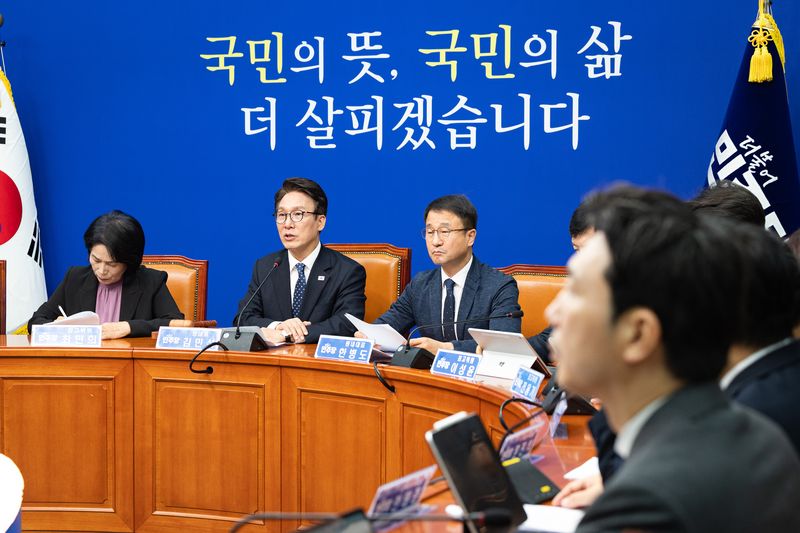
Meanwhile, the DPK plans to make the Super-Regional Special Zones Act its top legislative priority during the regular session. At the Supreme Council meeting that day, party leader Kim Min-seok said, “We will firmly back the three mega-projects that will get South Korea moving again,” adding, “We will support the regions in becoming the drivers of future industries through infrastructure provision, bold fiscal, financial and tax support, and sweeping regulatory rationalization.”
[email protected] Lee Hae-ram Reporter