Stock-market plunge sends NextTrade into a “trading cliff”; trading value plunges 70% in six weeks
- Input
- 2026-10-22 15:54:41
- Updated
- 2026-10-22 15:54:41
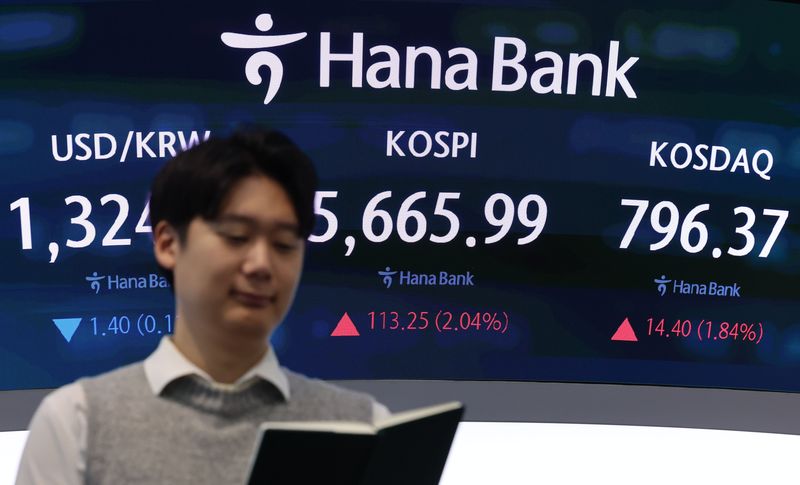
[Financial News] As weakness in the South Korean stock market persists, trading activity at NextTrade (NXT), an alternative trading system with a high proportion of individual investors, is also slowing rapidly.
According to NextTrade on the 22nd, after-hours trading value fell 70.6% in 42 days, from 3.6662 trillion won on the 8th of last month to 1.079 trillion won on the 21st of this month.
Trading volume also fell 51.0%, from 22.08 million shares to 10.83 million. Over the same period, total trading value on NextTrade dropped 46.4%, from 18.4479 trillion won to 9.8801 trillion won, while total trading volume declined 32.1%, from 124.05 million shares to 84.24 million.
The KOSPI also fell 17.5% over the same period, from 6,954.52 to 5,735.66. The decline in NextTrade’s trading value was at least twice the index’s drop, while the decline in after-hours trading value was more than three times as large.
Although the index’s percentage decline and the drop in trading value are difficult to compare directly, the sharp decline in trading volume as well shows that actual trading activity also contracted, beyond the effect of falling share prices alone.
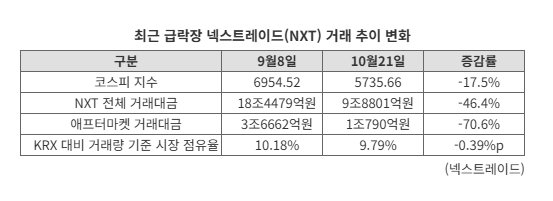
In particular, the decline in after-hours trading value was about 10 percentage points greater than the drop across NextTrade as a whole. Trading after regular market hours contracted faster than the market overall.
Since the after-hours market gives investors an opportunity to make additional trades after the regular session closes, this decline can be seen as a sign that demand for after-hours trading has weakened.
The market’s structure, with individual investors at its center, is also worth noting. Individual investors account for nearly 80% of trading on NextTrade. Since their trading activity has a significant impact on overall trading, the simultaneous declines in trading volume and value suggest that individual investors may have become less active.
When the stock market is unstable, bargain buying and stop-loss selling can occur at the same time. But as confidence in the market’s direction weakens, investors are also more likely to hold off on new trades and wait on the sidelines.
The pattern of trading rising on the day of a sharp plunge and then falling again illustrates the nature of the slowdown. When the KOSPI plunged 7.57% on the 15th, after-hours trading value on NextTrade rose to about 2.59 trillion won. NextTrade’s share of trading volume relative to KRX also climbed to 12.18%.
Trading value declined again afterward. Trading to respond to the market was concentrated at the moment the market shock was greatest, but the increase in trading did not translate into sustained demand for trades.
However, NextTrade’s share of trading volume relative to KRX fell only 0.39 percentage points, from 10.18% on the 8th of last month to 9.79% on the 21st of this month. This means NextTrade largely maintained its relative share of trading volume in South Korea’s exchange market. The significance of this trend is that, rather than NextTrade’s market share collapsing sharply, trading volumes contracted amid a weak stock market, with the slowdown in after-hours trading particularly pronounced.
A securities industry official said, “As volatility in the stock market increased, trading to respond to the plunge was concentrated on the day it happened, but afterward investors appeared to become more cautious about making additional trades,” adding, “The fact that both trading volume and value have fallen in a market with a high proportion of individual investors is a sign that investors are becoming less active in trading.”
[email protected] Kang Jung-mo Reporter