“Changed outfits, then snapped hundreds of photos”... Repeated “nuisance” behavior prompts “No Influencers Allowed”
- Input
- 2026-10-21 15:00:52
- Updated
- 2026-10-21 15:00:52
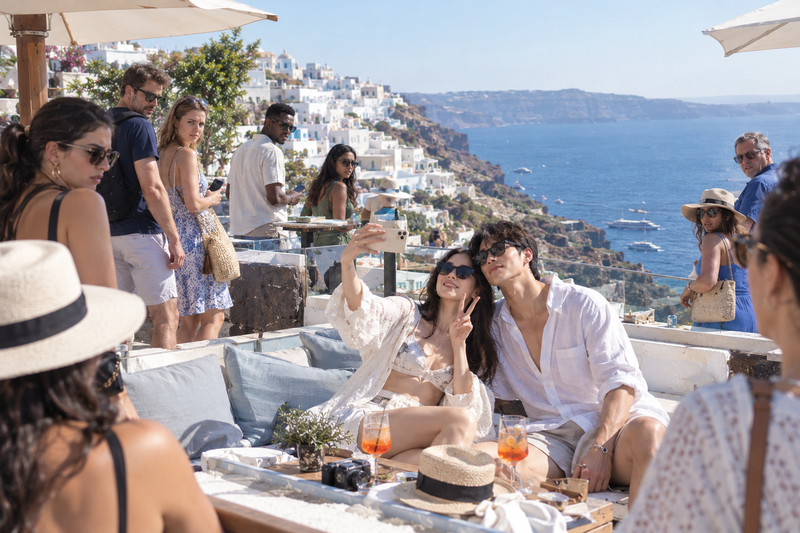
[Financial News] Tourist destinations around the world, including hotels and restaurants, are struggling with influencers who visit to take photos. As a result, some businesses have begun restricting photography or even banning them from entering.
On the 19th (local time), the British newspaper The Guardian reported on the case of Hôtel du Cap-Eden-Roc, a luxury hotel in Antibes in southern France. According to The Guardian, the hotel restricts photography without prior permission because more and more people are booking restaurant reservations, bringing piles of clothes and jewelry, changing outfits several times, taking photos, and leaving.
These measures are spreading to other tourist attractions as well. The Hollies Farm Shop in Cheshire, England, which became famous after a visit by Molly-Mae Hague, a contestant on the British reality show Love Island, has also banned photography and video recording from 10 a.m. to 4 p.m.
A shop in Nantucket, Massachusetts, even put up a sign at its entrance reading, “No Influencers Allowed.” Pomfret, Vermont, famous for its fall foliage, has also restricted influencers’ activities, while a convenience store in Fujikawaguchiko, Yamanashi Prefecture, Japan, has gone so far as to put up a barrier. The store is famous as a photo spot with Mount Fuji in the background, and the measure came after growing numbers of tourists flocked there to take photos.
The reason these lodging businesses and tourist attractions are restricting photography and, in some cases, banning influencers from entering is clear. Anna Peduzzi, chief marketing officer (CMO) of hotel group Beaumier, stressed that creating an environment where guests can stay comfortably is the priority, saying, “We’re here to offer hospitality, not to run a photo shoot location.”
Alongside criticism that criticism of influencers has gone too far, some have also argued that gender bias plays a role in negative perceptions of them. Sophie Bishop, author of Influencer Creep, analyzed influencer culture as a media sphere with high levels of female participation that is closely intertwined with product promotion.
Okrun acknowledged that some influencers may inconvenience others or behave excessively, but cautioned against viewing all creators negatively based on a few cases.
Excessive photo-taking by influencers has also caused problems in South Korea. Recently, a video of a Chinese influencer filming in hanfu at Gyeongbokgung Palace led to a “hanfu controversy.” There have also been repeated controversies over nuisance behavior, including a German influencer playing loud music through a large speaker and dancing on the Seoul subway, and causing a commotion in the streets of Hongdae by throwing punches and kicks at passersby.
[email protected] Kim Hee-seon Reporter