“Single-stock leveraged ETF rollout stems from a subservient financial supervisory system” ... FSS union: “Substantive independence must be guaranteed”
- Input
- 2026-10-21 14:36:15
- Updated
- 2026-10-21 14:36:15
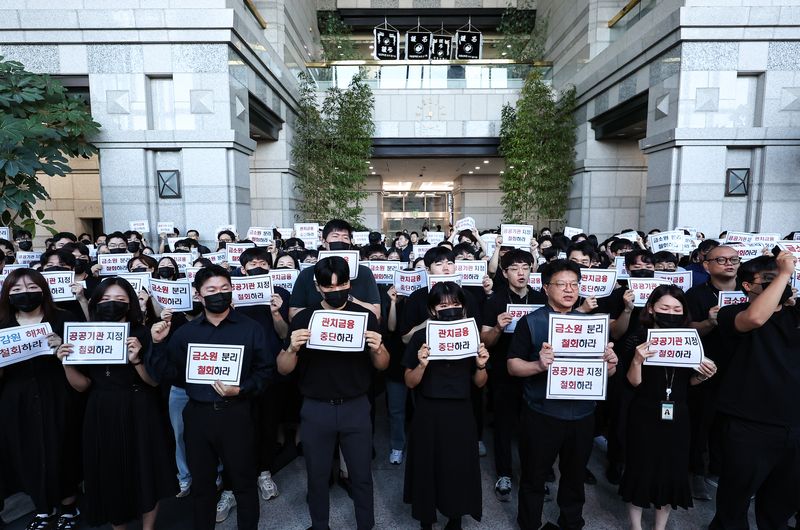
On the 21st, the FSS union argued that the main culprit behind the introduction of this single-stock leveraged ETF was the current financial supervisory system, which had been badly reworked since the FSS was established in 1999, leaving it unavoidably subordinate to policy. The union called for the FSC’s authority to guide and supervise the FSS and approve its budget to be transferred to the National Assembly. It also said a confirmation hearing should be introduced for appointments of the FSS governor to strengthen the independence of financial supervisory bodies.
In a statement, the union said, “During the National Assembly Political Affairs Committee’s audit of the FSS, there were many questions seeking accountability for harm to financial consumers caused by the introduction of single-stock leveraged ETFs,” and added, “The FSS faces a structural limitation that makes it difficult to express candid views because it fears institutional disadvantages, including budgetary consequences, even when there are side effects and problems with financial policies pursued by the executive branch.”
Under the current financial supervisory system, the executive branch (the Financial Services Commission) guides and supervises the Financial Supervisory Service and approves its staffing levels and budget. This means that even when the FSS recognizes side effects and problems in financial policies pursued by the FSC, it finds it difficult to voice a different view for fear of various disadvantages.
The union explained, “Even when side effects and problems are identified early during the implementation of a policy after it has been formulated, the FSS lacks the authority to enact or amend supervisory regulations and put items on the agenda, making a timely response difficult,” adding, “When harm to financial consumers eventually becomes apparent, the FSS is held accountable for its supervisory role after the fact. This leads to a vicious cycle in which administrative controls are continually tightened, including through discussions of designating the FSS a public institution or imposing conditions for deferral.”
The union added, “This is not the first time that harm to financial consumers has been amplified by structural limitations in the current financial supervisory system during a policy failure,” and said, “Since the current supervisory system was introduced in 2008, the 2011 savings bank crisis, the 2013 Tongyang Group CP crisis, and the 2020 private equity fund crisis have all laid bare the system’s problems.”
Along with pointing out problems in the current financial supervisory system, the union also proposed ways to reform it so the FSS can fulfill its role as a genuinely independent financial supervisory body. It called first for the FSC’s authority to guide and supervise the FSS and approve its budget to be transferred to the National Assembly, thereby ensuring the FSS’s managerial independence.
The union also called for a vetting process, including a National Assembly confirmation hearing when the FSS governor is appointed, to ensure that financial supervisory bodies do not become excessively subordinate to policy. This, it said, would strengthen the institution’s independence. It added that the FSS should be given the authority to enact and amend supervisory regulations and put items before the FSC, guaranteeing its freedom to express independent views.
The union also proposed amending the Act on the Management of Public Institutions so the FSS would be excluded from designation as a public institution, thereby guaranteeing the financial supervisory body permanent and genuine independence.
The union said, “We must break away from the deterioration of the financial supervisory system, where the vicious cycle has been repeated because the wrong culprit was identified,” adding, “Starting a discussion on an advanced financial supervisory system will be a great step toward an ‘Irreplaceable Korea.’”
[email protected] Park Mun-su Reporter