‘New Life’ for Flood-Damaged Private Gardens... KAGMI Distributes 10,000 Garden Plants
- Input
- 2026-10-21 11:20:56
- Updated
- 2026-10-21 11:20:56
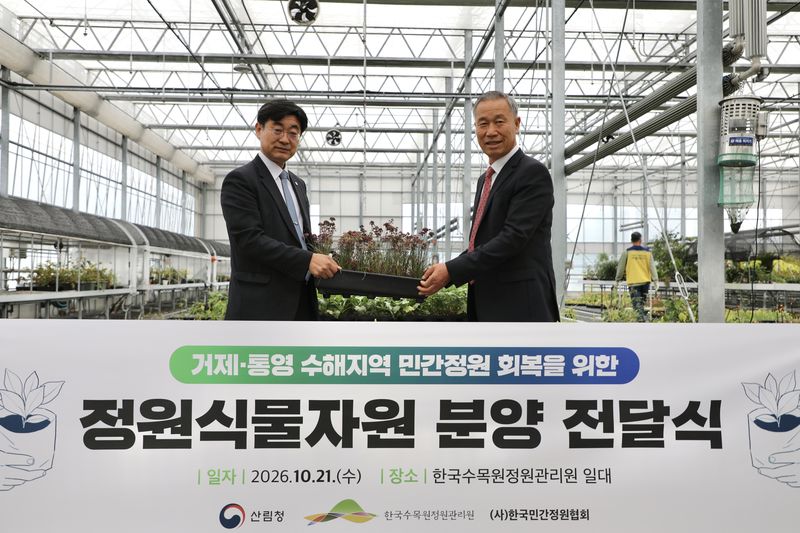
KAGMI said on the 21st that it had delivered 10,000 garden plants to the Korea Association of Private Gardens at the nursery of the National Sejong Arboretum and would distribute them in stages to 144 private gardens nationwide.
The distribution program was planned to support emergency restoration at private gardens in Geoje and Tongyeong, South Gyeongsang Province, which suffered major damage from record summer downpours, including soil erosion and plant die-off.
The main recipients are eight of the hardest-hit sites: Okdong Healing Garden and Sonanggu Sea Garden in Geoje, South Gyeongsang Province, and Arse Garden, Mulbit Sori Garden, Chunhwa’s Garden, Dongbaek Coffee Garden, Haesolchan Garden, and Napoli Farm in Tongyeong, South Gyeongsang Province. KAGMI expanded the support to a total of 144 sites, taking into account plant needs at private gardens nationwide as well as at flood-damaged locations.
The plants being distributed consist of newly developed varieties bred in Korea and native plants with high ecological value. They include domestically developed cultivars such as teolsae ‘Okay Gold Line,’ jjilkkot ‘Noeul Hyanggi,’ and sukryeong ‘Jageun Hwanggeum Baram,’ as well as cheongsacho, Busan kkoripul, and silsaepul.
KAGMI plans to allocate the plants and tailor their distribution by considering each garden’s level of damage, environmental conditions such as the soil and terrain at planting sites, and demand for specific plants.
KAGMI Chairman Shim Sang-taek said, “We will provide support so that private garden operators, who have been deeply distressed by the torrential rains, can restore their gardens and return to their daily lives as soon as possible. We will continue to draw on KAGMI’s plant resources and expertise to build sustainable partnership models with private gardens.”
Meanwhile, native plants such as Busan kkoripul and domestically developed cultivars being distributed this time are known to adapt well even to extreme weather conditions, including torrential rains and droughts caused by climate change. Better suited to conditions in Korea than non-native garden plants, they have high establishment rates after planting and are expected to greatly help restore the ecological stability of gardens, including by preventing soil erosion.
[email protected] Kim Won-jun Reporter