North Korean media remain offline for second day after rumors of Kim Jong Un’s death; cyberattack possible
- Input
- 2026-10-21 10:44:02
- Updated
- 2026-10-21 10:44:02
According to the Ministry of Unification and others on the 21st, access to the websites of North Korean media outlets, including Rodong Sinmun and KCNA, has been blocked for a second day for unknown reasons. The North Korean state media outlets have been inaccessible from the evening of the 20th through the morning of the 21st.
Along with these propaganda outlets, around 40 websites using North Korea’s “.kp” country-code domain—including those of the Ministry of Foreign Affairs, KCNA, Minju Choson and Naenara—have remained inaccessible or had unstable connections. The possibility of a large-scale external cyberattack has also been raised.
The situation has fueled further questions, as foreign media reports have spread that North Korean leader Kim Jong Un collapsed from a cerebral hemorrhage and was urgently airlifted to China. The previous day, US President Donald Trump further stoked speculation when he answered, “I don’t know, I don’t know,” after reporters at the White House asked, “Do you think you could meet the North Korean leader in China next month?”
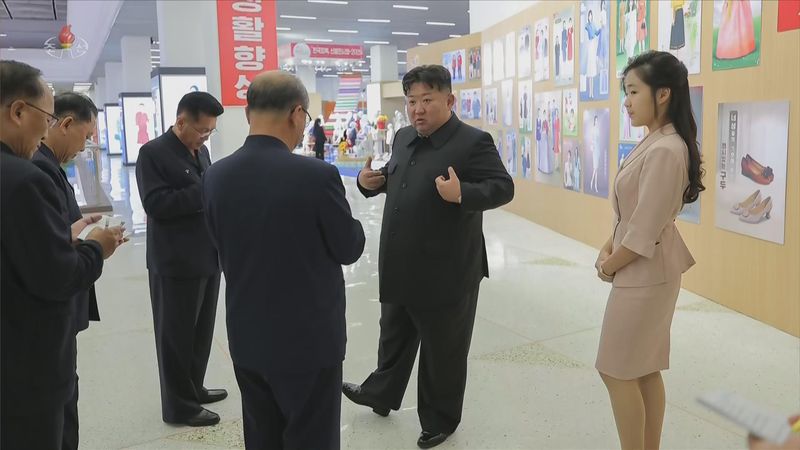
Meanwhile, the previous day, Chairman Kim released photos through North Korean state media of a field visit with his eldest daughter, Kim Ju Ae, and his wife, Ri Sol-ju, showing that he was in good health. But access to KCNA and Rodong Sinmun was blocked after the report.
Kim Yo Jong, Chairman Kim’s younger sister and chief of the General Affairs Department of the Workers’ Party of Korea, has recently brought inter-Korean relations to their worst point by taking her rhetoric against South Korea to its most vitriolic through the two propaganda outlets.
North Korean propaganda outlets have also previously suffered external attacks that left them completely inaccessible, including in 2013–2014, when relations among North Korea, South Korea and the United States were deteriorating toward their worst point.
The years 2013–2014 marked the first direct confrontation among South Korea, North Korea and the United States since Kim Jong Un’s regime came to power. As North Korea began accelerating its nuclear and missile development in earnest, tensions on the Korean Peninsula soared to a breaking point.
In February 2013, North Korea carried out its third nuclear test, and in March it scrapped the inter-Korean nonaggression agreement in its entirety and threatened to strike Seoul. The United States tightened sanctions on North Korea immediately after the nuclear test, but North Korea threatened to attack US bases in the Pacific. In response, the US military deployed the Northrop B-2 Spirit stealth bomber, a nuclear bomber, over the Korean Peninsula in late March, as the two sides remained locked in an explosive military standoff.
On March 13, 2013, the websites of KCNA and Rodong Sinmun suffered a powerful external hacking attack, including DDoS attacks, resulting in widespread loss of internet access and outages. It was the first time the official websites of the two state media outlets had been disabled by hacking.
Also, in late 2014, ahead of the US release of the film The Interview, which centered on the assassination of Kim Jong Un, a large-scale hacking attack believed to have originated in North Korea took place. The United States classified it as cyberterrorism, and soon afterward, North Korea’s entire internet network, including Rodong Sinmun and KCNA, went down for several days in an unprecedented outage.
[email protected] Kim Kyung-soo Reporter