As France reels from protests, far-right Le Pen's chances of winning next year's presidential election rise
- Input
- 2026-10-21 11:02:09
- Updated
- 2026-10-21 11:02:09
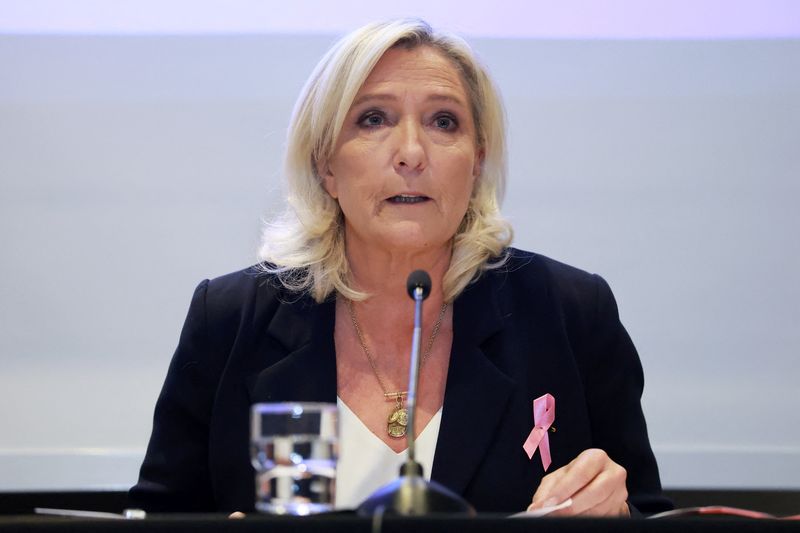
[Financial News] As large-scale protests intensify across France against soaring prices and deteriorating public services, a seismic shift is underway in the race for the country's next presidential election in 2027.
On the 20th (local time), business news network CNBC reported that traders on prediction market platform Kalshi are increasingly assigning a higher probability to far-right National Rally (RN) lawmaker Marine Le Pen winning the election.
The protests in France began last September in Paris, led by students angered by poor educational conditions and a shortage of teachers. They soon became intertwined with accumulated nationwide grievances over inadequate public services, including education and healthcare, and soaring prices, escalating into large-scale unrest across the country. According to authorities, at least 500,000 people took part in protests nationwide over the weekend alone.
The fallout as the protests intensified was also severe. According to the French Interior Ministry, at least 2,000 people were arrested in the worst unrest in years, and about 1,000 police officers and gendarmes were injured.
The political instability was immediately reflected in prediction markets. In Kalshi's contract, “Winner of the next French presidential election,” Le Pen's odds of winning jumped sharply from 39% to 53% in just one month.
By contrast, the momentum of alternative candidates who made a splash early in the protests appeared to wane. Cannes Mayor David Lisnard's odds of winning briefly surged to 44.7% on September 26, shortly after he held a large rally to launch his presidential campaign, but fell to 11% by the afternoon of the 20th as unrest surrounding the protests dragged on.
Le Pen has stepped up her criticism, saying the incompetence of President Emmanuel Macron's centrist government fueled the crisis. She has made a message strongly condemning violence at the protests a central driving force of her campaign. On the 18th, she wrote on social media platform X (formerly Twitter), “Yesterday, we witnessed our cities, streets, and country being trampled, damaged, and destroyed,” and noted, “We are now experiencing a serious crisis of trust and authority that threatens democracy.” She went on, “France is currently being held hostage, trapped between the relentless dread of violence and incompetence,” criticizing the current government's failure to govern.
Political instability in France is also quickly spilling over into financial markets. The CAC 40, France's benchmark stock index, has fallen 2.8% over the past month and plunged nearly 6% over the past six months.
The yield on France's 10-year government bonds, which reflects the government's borrowing costs, has also surged above the 4.9% mark, indicating growing market doubts about the government's fiscal soundness, CNBC reported.
Sharon Bell, a senior equity strategist at investment bank Goldman Sachs, said in an interview with CNBC, “It will be difficult to reduce the fiscal deficit without painful measures.”
[email protected] Yoon Jae-jun Reporter