Hepatitis C cluster infects 14 at Changwon dialysis unit; most asymptomatic, treated with oral medication for 8–12 weeks
- Input
- 2026-10-21 10:08:59
- Updated
- 2026-10-21 10:08:59
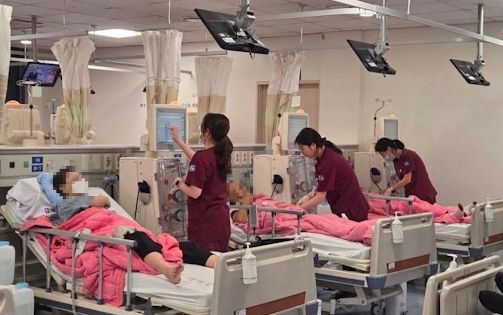
[Financial News] Health authorities have launched an epidemiological investigation after confirming a cluster of hepatitis C infections among 14 patients and staff at the hemodialysis unit of a medical institution in Changwon, South Gyeongsang Province.
The Korea Disease Control and Prevention Agency (KDCA) and South Gyeongsang Province said on the 21st that hepatitis C had been confirmed in 14 people—13 patients and one staff member—at the hemodialysis unit of a medical institution in Changwon, and that they were taking preventive measures to stop the spread of infection and conducting an in-depth epidemiological investigation.
The cluster was uncovered while tracing the source of infection in a patient reported by another medical institution. Two hepatitis C cases at the medical institution were first reported on September 14, and on October 1, investigators looking into a patient reported by another medical institution confirmed that the patient had used the same hemodialysis unit. After a link between the patients was suspected, South Gyeongsang Province and the local public health center began an epidemiological investigation at the medical institution on the 6th.
The province identified June of this year onward as the possible period of infection and conducted testing of all patients and staff who had used the dialysis unit during that time. Earlier, routine hepatitis C antibody tests conducted on June 1 for everyone who used the unit came back negative. Most of those confirmed to be infected have no symptoms, and no cases of serious complications have been identified so far.
Investigations to determine the exact route of infection are also continuing. The province is collecting environmental samples from the dialysis unit and samples from those confirmed to be infected to use genetic analysis to determine whether the infections are linked. It is also examining patient-by-patient dialysis records, medical staff movements, medication use records and closed-circuit television (CCTV) footage to investigate infection risks during medical procedures.
Arrangements have been made for patients confirmed to be infected to receive medical care and treatment at medical institutions in the province. The medical institution was asked to check the patients’ health daily and provide patients and their caregivers with full information about the situation.
Infection-control measures have also been strengthened to prevent further infections. The province is checking whether the dialysis unit is following infection-control protocols and held infection-control training on the 14th and 20th for around 50 staff from the dialysis unit and nursing department.
Since the 8th, the KDCA and South Gyeongsang Province have held three meetings to discuss managing people exposed to infection, identifying the route of infection and additional response measures. Participants included the KDCA, the Gyeongnam Regional Center for Disease Control and Prevention, South Gyeongsang Province, the local public health center, the province’s Infectious Disease Management Support Group, the Gyeongsangnam-do Institute of Health and Environment, and experts in infectious diseases, gastroenterology and nephrology.
South Gyeongsang Province and the local public health center plan to continue providing guidance to and inspecting the medical institution’s infection-control practices, and to keep checking for additional cases in light of the possibility of asymptomatic infections.
Hepatitis C is a viral infectious disease transmitted through the blood of an infected person. It is not spread through everyday contact such as sharing a meal or shaking hands. Effective oral antiviral drugs have recently been developed, and if the infection is detected and treated early, a cure rate of around 98% is possible within 8–12 weeks.
The KDCA urged hemodialysis medical institutions nationwide to strictly follow infection-control protocols to prevent bloodborne infections. Because hemodialysis carries a high risk of infection through exposure to blood, institutions must follow such principles as hand hygiene and appropriate glove use, safe management of medical equipment and supplies for each patient, preparing medications in a clean area separate from the dialysis area, and thoroughly cleaning and disinfecting dialysis equipment and the surrounding environment.
Meanwhile, to promote early detection and treatment of hepatitis C, the government is providing free hepatitis C antibody tests and RNA tests (for those who test positive for antibodies) to 56-year-olds born in 1970 who are eligible for this year’s national health screening. The KDCA urged people in this age group to get tested for hepatitis C through screening and to seek treatment if an infection is confirmed.
[email protected] Jeong Myeong-jin, Medical Correspondent Reporter