Korea Aerospace Industries (KAI) successfully demonstrates AI-powered autonomous satellite operations in orbit
- Input
- 2026-10-21 10:13:32
- Updated
- 2026-10-21 10:13:32
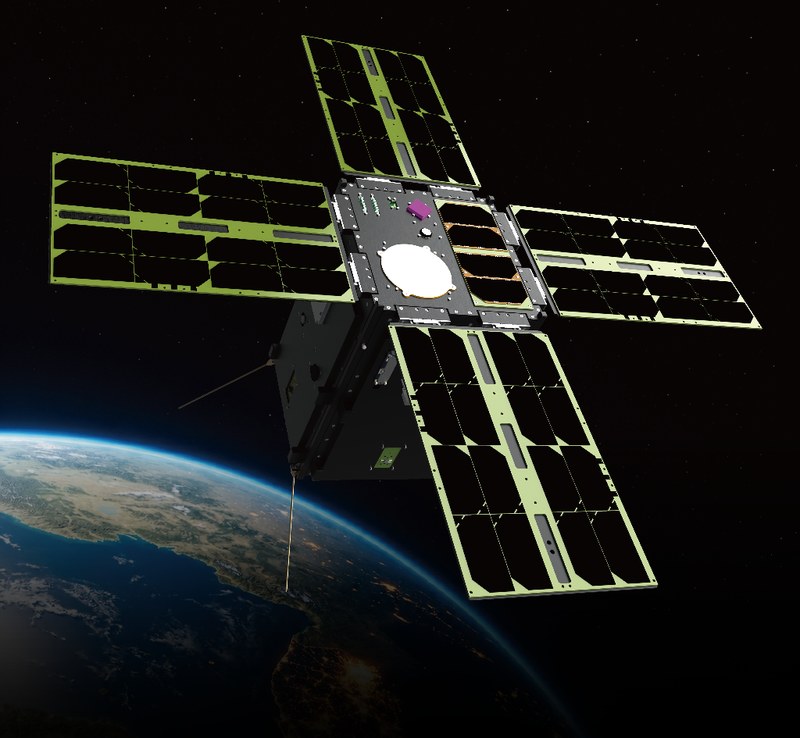
[Financial News] Korea Aerospace Industries (KAI) said on the 21st that it had successfully carried out a pilot mission for its “AI-based autonomous operations technology,” which enables satellites to diagnose their own condition and respond while in orbit. The BEE-1012 CubeSat, which entered space aboard the fifth launch of the Nuri rocket on the 7th of this month, carried an AI module developed in-house by KAI, and successfully completed the technology demonstration the previous day. The demonstration was conducted as a follow-up to a memorandum of understanding signed by KAI and Space Lintech in March to collaborate on demonstrating AI for CubeSats. Yonsei University, Funzin Co., Ltd., and others also took part in the project.
KAI successfully verified its “AI Onboard Processing” technology, which uses data collected by an AI module aboard a satellite to autonomously analyze abnormal conditions and determine the best solution.
The demonstration was successfully completed in three stages: a ground station transmitted a simulated fault signal; the AI module analyzed the cause and scope of the fault; and the module generated a technical report outlining countermeasures and sent it to the ground station. While conventional satellites must transmit data to a ground station and wait for analysis when an anomaly occurs, KAI’s AI module enables immediate, real-time decision-making in orbit. This not only maximizes satellite survivability but can also dramatically reduce the cost of communications with ground stations, making it a key technology for ushering in the era of “fully autonomous satellites.”
KAI developed an AI module in-house, applying to the satellite field fault and service-life prediction systems and predictive maintenance technologies it had advanced through aircraft development. The module was trained on tens of thousands of failure scenarios. The development is especially significant because it strengthened the domestic collaboration ecosystem. Working with Funzin Co., Ltd., a defense AI specialist, KAI developed an intelligent solution optimized for the space environment. It also contributed to self-reliance in space and defense semiconductors by incorporating an NPU (neural processing unit) from Mobilint, a Korean startup.
Building on the results of this pilot mission, KAI will begin work in earnest this December on the “Main Autonomous Operations Technology Demonstration Mission.” Its strategy is to maximize the technology’s reliability and establish it as a key standard specification for the various satellite systems KAI will build in the future.
KAI Space Business Division Head Managing Director Seo Hyun-seok said, “This demonstration verified that AI-based autonomous satellite operations work flawlessly in actual space, and we plan to integrate all space systems around AI technology going forward.” He added, “KAI will continue to advance its space AI technology and apply it not only to KAI’s satellite business but also to a range of next-generation satellite systems, becoming a one-of-a-kind satellite solutions company leading the global NewSpace market.”
[email protected] Yeon Ji-an Reporter