“Was the Polestar 4 Performance really this good?” ... 32% greater acceleration and 15% less steering effort
- Input
- 2026-10-21 10:04:00
- Updated
- 2026-10-21 10:04:00
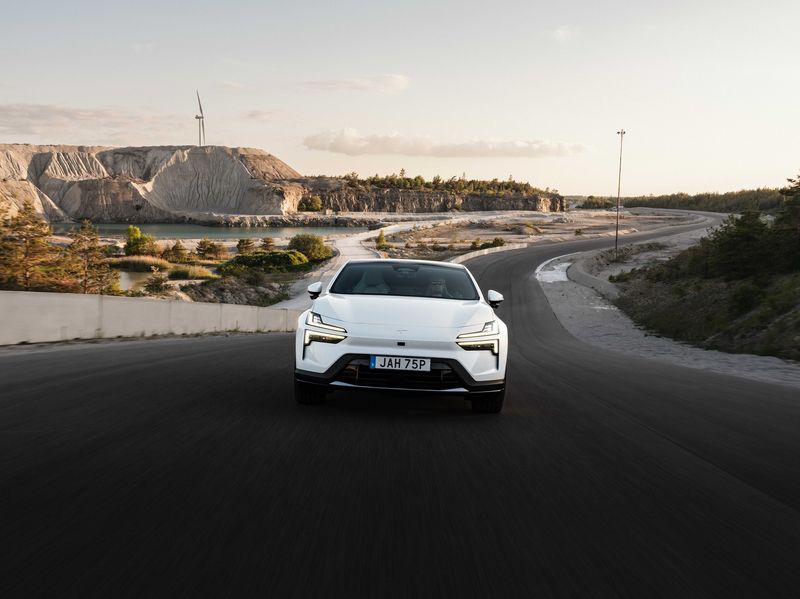
[Financial News] The criteria for evaluating an electric vehicle’s driving performance are expanding beyond simple measures such as power and acceleration to include what drivers actually experience. In a joint study conducted by Polestar and the University of Oxford in the UK, the Polestar 4 Performance trim was found to have up to 32% greater acceleration than the rear-motor model while requiring 15% less steering effort. In particular, trust in the vehicle and a sense of control were identified as key factors determining driving enjoyment.
Polestar said on the 21st that it had conducted a pilot study with researchers from the University of Oxford’s SDG Impact Lab to measure drivers’ perceived driving performance.
The study focused on analyzing the relationship between vehicle movement and driver responses, moving beyond conventional assessments centered on figures such as horsepower, acceleration performance and lap times. The researchers compared the driving experiences of 12 drivers in the Polestar 4 rear-motor and Performance trims at the Gotland Ring circuit in Sweden.
The researchers analyzed vehicle-driving data along with heart rates, eye tracking, psychological assessments and interviews. In dynamic driving situations, drivers blinked less, their pupils dilated, and they spent longer maintaining their gaze, indicating increased focus and engagement.
Performance differences were pronounced even under high-speed driving conditions in which the two models recorded nearly identical lap times. The 544-horsepower Polestar 4 Performance had up to 32% greater acceleration than the rear-motor model and required 15% less steering effort. High loads and strong acceleration also occurred more frequently when cornering.
Differences were also evident in the drivers’ subjective assessments. In the performance and driving dynamics assessment, the Performance trim scored 89.2 out of 100, beating the rear-motor model’s 67.7 by 21.5 points. The overall driving experience scores were 93.0 and 77.9, respectively, a gap of 15.1 points.
The researchers concluded that driving enjoyment is not determined solely by strong acceleration or physical stimulation. They explained that driving satisfaction increases when a driver’s confidence in their ability to predict and control the vehicle’s movements combines with a sense of engagement. However, this was an initial study involving 12 drivers, and further validation is needed before the results can be generalized.
Christian Samson, Polestar’s head of product attributes, said, “As electric vehicles redefine the meaning of performance, Polestar wanted to understand the driver experience in ways that specifications alone cannot explain.” He added, “Our collaboration with the University of Oxford allowed us to connect vehicle engineering with the driver experience and examine performance from a new perspective.”
Max Klapow, a doctoral researcher at the University of Oxford’s SDG Impact Lab, said, “Performance is not simply about driving faster; it is about giving drivers confidence and a sense of control through predictable vehicle responses.” He added, “We have taken the first step toward measuring perceived performance by analyzing vehicle movements and driver responses together.”
[email protected] Kim Dong-ho Reporter