Seoul's public transit ranks fifth in the world... UK and US outlets praise subway safety and convenience
- Input
- 2026-10-21 11:15:00
- Updated
- 2026-10-21 11:15:00
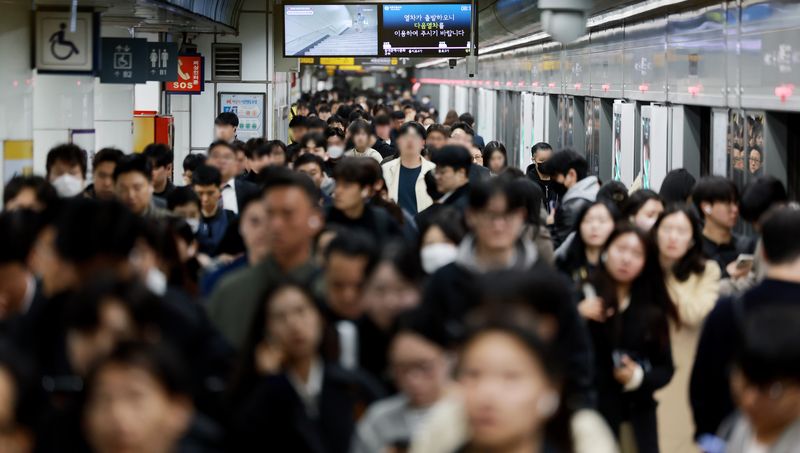
[Financial News] Seoul's public transit is receiving a string of positive reviews from major international media outlets.
According to the Seoul Metropolitan Government on the 21st, Seoul ranked fifth in the world in a survey of the “2026 World's Best Cities for Public Transport” recently published by Time Out, a British publication specializing in cities and travel. That was a rise of three places from eighth last year, while the share of positive ratings for public transit increased by 7.1 percentage points, from 84% to 91.1%.
In the survey of about 24,000 people worldwide, Taipei ranked first with a positive rating of 95.0%. It was followed by Singapore (93.5%), Hong Kong (92.8%) and Edinburgh (92.4%), while Seoul placed fifth, ahead of Zurich and Vienna.
Time Out highlighted Seoul's extensive subway network, comfortable train cars and mobile communications services that work without interruption underground. It also gave positive marks to relatively low fares and a range of transit products, including the Climate Card.
US-based CNN also recently included Seoul among the “18 of the World's Best Subway Systems,” giving high marks to its safety, cleanliness and convenience. It also drew attention to amenities that make travel more comfortable for passengers, including heating and air conditioning in train cars, heated seats and communications infrastructure.
The Seoul Metropolitan Government cited its long-running efforts to expand subway safety facilities and improve the travel environment for people with limited mobility as the reasons behind these assessments.
A leading example is the installation of platform screen doors. The Seoul Metropolitan Government expanded the installation program starting in 2006, during Oh Se-hoon's tenure as mayor, and completed installation at all 262 stations on subway lines 1 through 8 in 2009. It later extended coverage to newly built lines, and as of last year, 345 stations had platform screen doors.
The average annual number of subway accident fatalities fell by about 99%, from 37.1 in 2001–2009, before platform screen doors were installed, to 0.4 in 2010–2024, after installation. There were no deaths from such accidents last year.
The city has also completed an “one accessible route per station” setup at all 338 stations it manages, enabling wheelchair users and older adults to travel from street level to the platform using only elevators, without taking stairs. The Seoul Metropolitan Government has invested a total of 175.1 billion won in the effort since 2007.
More recently, the city has been expanding convenience services that use digital technology. In 2023, it introduced a “tagless” system on the Ui-Sinseol Line that charges fares as passengers pass through the gates, without requiring them to tap a transit card on a reader. An AI real-time interpretation service for foreign tourists is also available at 11 stations, including Myeong-dong Station.
Also, since March this year, passengers have been able to use foreign-issued credit and debit cards at 440 ticket machines across 273 stations on subway lines 1 through 8 to buy tickets and short-term Climate Card passes or top them up.
“Global praise for Seoul's subway is the result of sustained investment in the safety and mobility of citizens,” said Yeo Jang-kwon, head of the Seoul Metropolitan Government's Transport Bureau. “Following the installation of platform screen doors at every station in 2009 and the completion of ‘one accessible route per station’ last year, we will further strengthen the competitiveness of Seoul's public transit through safety, care for vulnerable passengers and advanced technology.”
[email protected] Seong Chorong Reporter