“Government AIDC grid standards raise concerns over investment disruption”
- Input
- 2026-10-21 11:08:00
- Updated
- 2026-10-21 11:08:00
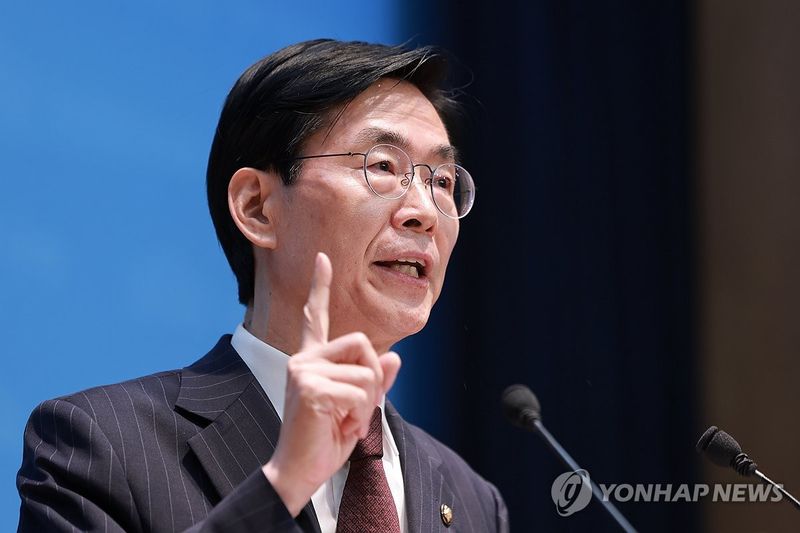
On the 21st, Cho Kyung-tae, a People Power Party lawmaker on the National Assembly of South Korea’s Science, ICT, Broadcasting, and Communications Committee, called on the Ministry of Science and ICT to reflect industry views through interagency consultations and develop measures to protect existing projects.
A grid code sets the interconnection standards that power plants and large electricity-consuming facilities must follow when connecting to the power grid. It requires measures to prevent facilities from shutting down all at once if problems arise on the grid and to keep voltage stable, among other things. Grid codes have mainly applied to power-generation facilities, but the Ministry of Climate, Energy and Environment said last August that it would establish dedicated standards for AIDCs by year-end. The ministry cited concerns that changes in electricity consumption from artificial intelligence (AI) computing could destabilize the power grid.
Cho expressed concern that the new standards could become an additional regulation on AIDC investment. The AIDC Special Act, which passed the National Assembly’s Science, ICT, Broadcasting, and Communications Committee in April, included a provision allowing data centers to trade electricity directly with liquefied natural gas (LNG) power plants. However, the provision was omitted from the bill approved at a plenary session in May amid opposition from the Ministry of Climate, Energy and Environment. The Ministry of Science and ICT and the climate ministry later signed a memorandum of understanding, pledging a stable electricity supply through the national power grid.
Construction has begun, or is about to begin, on gigawatt (GW)-scale AI data center projects in places including Ulsan and Donghae. However, the scope and timing of the grid code’s application remain uncertain. Cho argues that applying the new standards to projects whose designs have already been completed could require redesigns and delay completion. He also noted that if new equipment takes up server space and reduces capacity by 1%, a 1-GW facility would lose 10 megawatts (MW) of capacity.
Overseas, there have already been cases of projects being thrown into uncertainty by delays in connecting to the power grid.
According to The Guardian and other outlets, Microsoft (MS) recently withdrew from a project in Loughton, Essex, which the UK government had described as the country’s largest sovereign AI data center. The move followed a notification from the local grid operator that it would not be able to supply sufficient power until the early to mid-2030s. The project’s developer, Nscale, is considering alternative power sources, including on-site generation.
Cho called on the Ministry of Science and ICT to take part in interagency consultations and convey the views of project developers. Under their memorandum of understanding, the two ministries agreed to establish a joint task force to support the construction of GW-scale AI data centers. In July, the Ministry of Science and ICT launched the “AIDC Mega-Project Interagency Support Task Force,” which includes the Ministry of Climate, Energy and Environment and other agencies. At the upcoming comprehensive audit, Cho plans to seek confirmation from the climate ministry regarding the Ministry of Science and ICT’s plans to participate in grid-code discussions and his plan to urge the climate ministry to protect existing projects.
Cho said, “The standards needed to ensure power-grid safety should be put in place, but projects already underway should, in principle, be exempt from the grid code,” adding, “The Ministry of Science and ICT, the ministry responsible for AI data centers, should actively use the interagency consultation channel to represent the concerns of those on the ground making investments.”
[email protected] Yoon Hong-jip Reporter