KAI Successfully Demonstrates Its Own AI Technology for Autonomous Satellite Fault Response in Space
- Input
- 2026-10-21 14:15:54
- Updated
- 2026-10-21 14:15:54
[Financial News] Korea Aerospace Industries (KAI) has successfully validated AI technology that independently analyzes the causes of satellite malfunctions and determines responses while in orbit. The achievement is seen as laying the groundwork for advancing satellite operations, which have depended on ground-station analysis, and speeding up responses to anomalies.
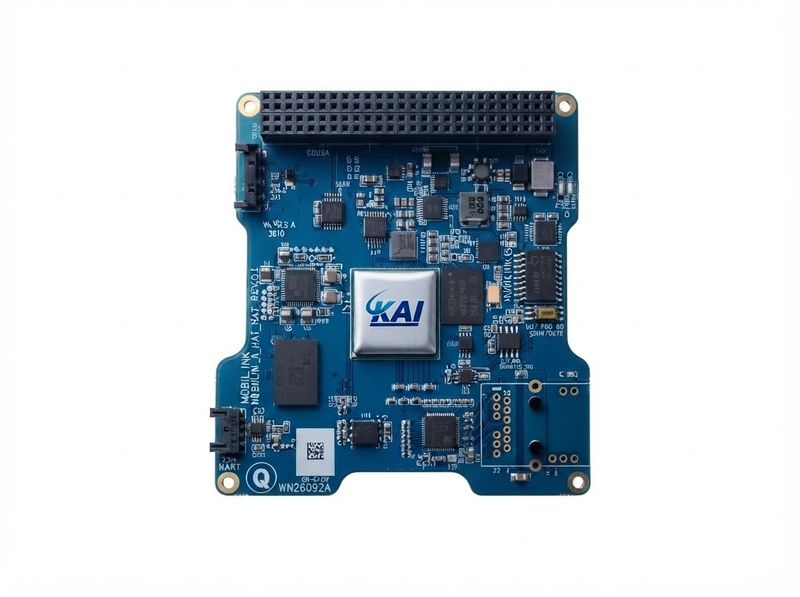
KAI said on the 21st that it had successfully carried out a pilot mission for autonomous satellite operation using its self-developed AI module aboard the CubeSat BEE-1012 on the 20th. BEE-1012 entered space on the 7th aboard the fifth launch of Nuri (KSLV-II).
The demonstration focused on validating “AI onboard processing,” a technology that allows AI aboard a satellite to process data directly. After the ground station sent a simulated fault signal, the AI module analyzed the cause of the fault and the scope of its impact, then generated a technical report containing response measures and sent it to the ground station.
When an anomaly occurs, conventional satellites must send the relevant data to a ground station and wait for the results of its analysis. Analyzing the cause and response measures onboard can reduce reliance on communications with ground stations and enable faster responses. This pilot mission confirmed the satellite’s ability to analyze faults and determine response measures. KAI plans to develop it into a key technology for realizing fully autonomous satellites.
KAI applied to the satellite sector the fault and lifespan prediction systems and predictive maintenance technology it accumulated while developing aircraft. Building on this, it developed an AI module trained on tens of thousands of fault scenarios.
Domestic companies and universities also took part in the development. An intelligent solution suited to the space environment was developed with defense AI specialist Funzin Co., Ltd., and a neural processing unit (NPU) from domestic semiconductor company Mobilint was incorporated. The project followed an MOU on cooperation in CubeSat AI demonstrations signed by KAI and Space Rintek last March, and Yonsei University also participated.
Building on the results of the pilot mission, KAI will begin full-scale demonstrations of autonomous operation technology from December. The company plans to improve the technology’s reliability and establish it as a core standard specification for a range of satellite systems to be built in the future.
KAI Managing Director Seo Hyeon-seok, head of its Space Business Division, said, “This demonstration verified that AI-based autonomous satellite operation technology works in actual space.” He added, “We will continue to advance space AI technology and apply it to a range of next-generation satellite systems, taking a leap forward as a satellite solutions company that leads the global NewSpace market.”
[email protected] Won-il Jeong Reporter