“To the islands by air, not by boat” ... KT conducts UAM trial in Incheon’s island areas
- Input
- 2026-10-21 10:00:00
- Updated
- 2026-10-21 10:00:00
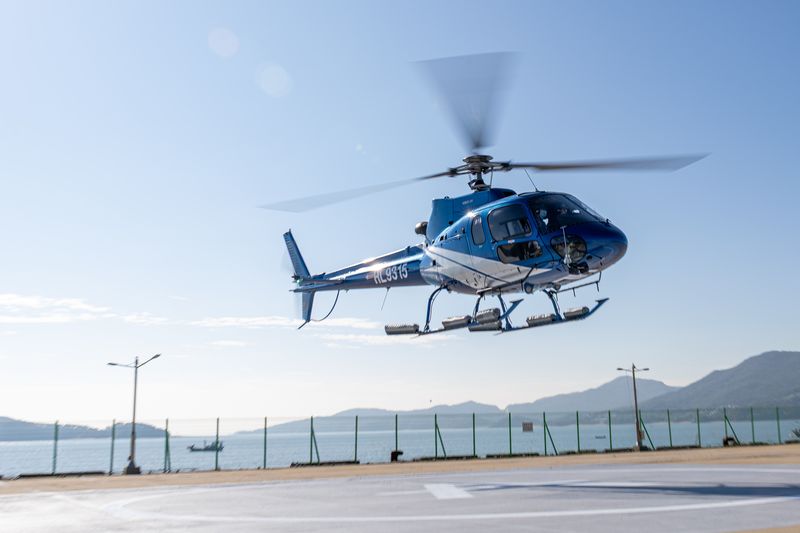
[Financial News] KT has completed an urban air mobility (UAM) trial in Incheon’s island areas and confirmed that AI-based traffic management technology can be operated. The trial verified UAM’s potential as a means of transportation for island areas, with aircraft location data successfully transmitted throughout the entire flight route over an aviation network combining 5G and satellite communications.
KT said on the 21st that it had completed a public UAM trial in Incheon’s island areas with Incheon Metropolitan City, the Aerospace Industry-Academia Convergence Institute and the K-UAM One Team. The team includes KT, Hyundai Motor Company, Hyundai Engineering & Construction, Incheon International Airport Corporation and Korean Air.
The trial applied integrated operational capabilities built up through the K-UAM Grand Challenge, promoted in cooperation with the Ministry of Land, Infrastructure and Transport, the Korea Aerospace Research Institute (KARI) and others, to a route linking Geojampo and Wangsan Marina on Yeongjongdo with Deokjeokdo. It is Korea’s first public UAM trial in an island area conducted in collaboration between the Ministry of Land, Infrastructure and Transport, local governments and private companies.
The trial refined UAM routes to improve transportation access for residents of island areas and verified operational feasibility through actual flights. It also examined an urban air mobility data-sharing system for sharing information needed for safe operations among the relevant agencies.
KT tested AI-based traffic management technology by connecting its self-developed UAM Agent-based Traffic Management AX Platform to a hybrid 5G and satellite aviation network. The UAM agent uses AI to analyze flight plans, aircraft locations, weather information and the operating status of vertiports, the facilities used for takeoff and landing, and proposes appropriate departure and arrival times. It also provides situation-specific standard operating procedures (SOPs) and response plans to support traffic managers’ decision-making. KT applied the technology throughout the entire process, from flight planning to landing.
KT also built a hybrid communications system combining a dedicated UAM 5G aviation network in the 800 MHz band with satellite communications, taking into account island and maritime environments where coverage gaps may occur. In a joint trial with KT SAT Co., Ltd., it successfully transmitted aircraft location data to the traffic management AX platform throughout the entire flight route, achieving a 100% communications success rate. KT said that real-time voice communications between pilots and traffic managers were also conducted reliably over the sea.
Based on this trial, KT plans to expand public UAM services that can complement the existing ship-based transportation options in island areas.
Won Man-ho, head of KT’s AX Platform Division, said, “We will lead the expansion of public UAM services and the commercialization of UAM in Korea.”
[email protected] Choi Hye-rim Reporter