4,080 fewer regular employees, 1,048 more non-regular employees... Employment shifts at five major banks
- Input
- 2026-10-21 09:24:25
- Updated
- 2026-10-21 09:24:25
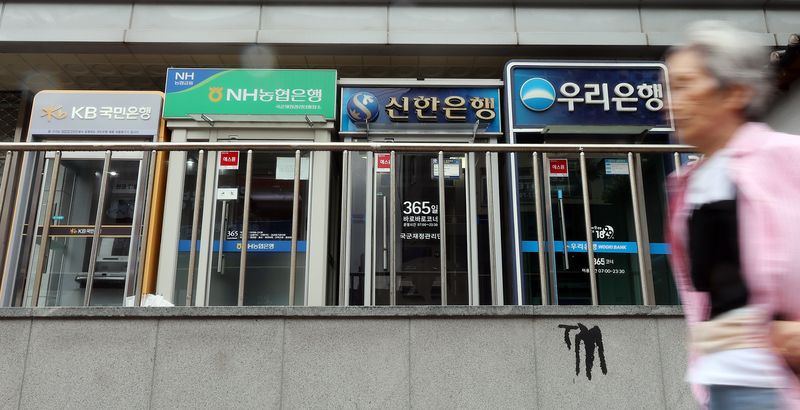
On the 21st, data submitted to People Power Party lawmaker Park Seong-hoon, a member of the National Assembly’s Political Affairs Committee, by the Financial Supervisory Service showed that the total number of employees at the five banks fell by 3,032 from the end of 2022 through the end of July this year. During that period, the number of regular employees fell by 4,080, while the number of non-regular employees rose by 1,048. The increase in non-regular employees offset part of the decline in regular employees, leaving the overall drop in staff smaller than the decline in regular employees.
During this period, Kookmin Bank saw the largest drop in regular employees among the banks, with the number falling by 2,376, from 14,990 to 12,614. By contrast, its non-regular employees rose by 430, from 2,136 to 2,566. As a result, the bank’s total number of employees fell by 1,946, from 17,126 to 15,180.
At Woori Bank, the number of regular employees fell by 519, from 12,855 to 12,336. Over the same period, non-regular employees increased by 504, from 690 to 1,194.
At Hana Bank, the number of regular employees fell by 389, while non-regular employees rose by 661, bringing the total number of employees up by 272. Nonghyup Bank saw no change in its number of regular employees, while its non-regular workforce fell by 126. At Shinhan Bank, regular and non-regular employees fell by 796 and 421, respectively.
The decline in regular employees across the banking sector may have been influenced by a combination of efforts to streamline staffing in response to AI and digital transformation and the expansion of non-face-to-face financial services, as well as workforce restructuring through voluntary and honorary retirement programs.
Rep. Park said, “Financial authorities should closely examine the effects of these changes on employment stability, internal controls and services for financial consumers.”
[email protected] Ye Byeong-jeong Reporter