Global AI Hub Sets Out 19 Evaluation Indicators; Jeju’s Ability to Deliver on Site and Funding Commitments Put to the Test
- Input
- 2026-10-21 09:09:54
- Updated
- 2026-10-21 09:09:54
【Financial News Jeju = Reporter Jeong Yong-bok】 The government has put forward 19 indicators for evaluating locations for the Global Artificial Intelligence (AI) Hub, including industrial and research infrastructure, living conditions for foreign residents, and local governments’ ability to provide land and financial support. Jeju Province must demonstrate concrete plans to secure facilities, personnel and funding, in addition to its 16 years of experience in international training.
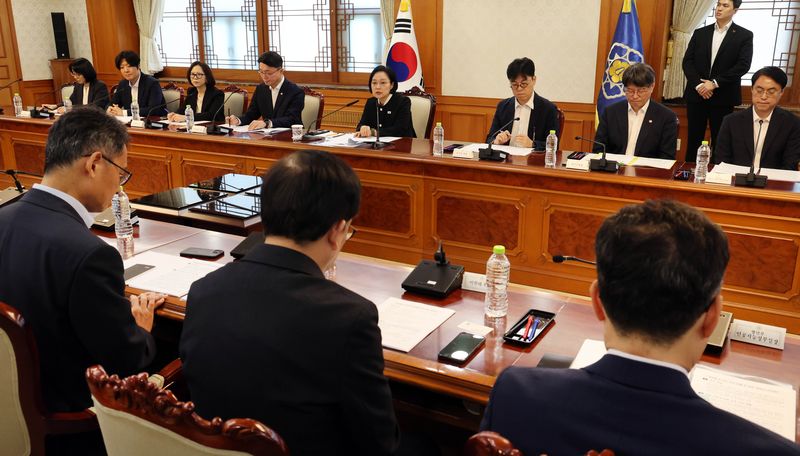
Based on information from the Ministry of Science and ICT released on the 21st and presentations at a recent public hearing on site selection at the Government Sejong Convention Center, the government has drawn up draft criteria for evaluating candidate locations using 19 detailed indicators across four areas: the capacity to perform the AI Hub’s core functions; living conditions; local governments’ capacity and systems for implementation; and alignment with national strategies and policy contributions.
These evaluation criteria are not final. The government plans to incorporate feedback from the public hearing and requirements from participating international organizations, finalize the scores assigned to each area and the detailed evaluation criteria, and then issue a call for applications.
The Global AI Hub is an international cooperation hub where international organizations, multilateral development banks, domestic universities, companies and research institutions carry out joint projects. Last May, the government held a vision declaration ceremony attended by nine international organizations and five multilateral development banks, and set a target of opening the hub in 2027. Its main activities will include applying AI to international issues such as climate, health, food and jobs, developing policies and standards, and providing education and training.
The evaluation will examine the region’s information and communications technology (ICT) and software industry base, its record of carrying out AI projects over the past three years, and its international cooperation experience. Access to international airports and high-speed rail, as well as housing, medical and educational facilities, are also included in the assessment in view of international organization staff working there for extended periods.
A key factor in the evaluation is whether local governments can actually deliver on their support commitments. The assessment will cover the provision of land and buildings, office space that can be used immediately, financial support, a dedicated organization and access to computing resources.
For financial support, the government will check not only the proposed amount but also evidence that it can be delivered, including local council approval, investment screening, secured budgets and commitments from relevant organizations to provide resources. It has also proposed excluding locations from the evaluation if they fail to meet international organizations’ requirements for essential facilities and security.
International organizations will also participate directly in site selection. Under the government’s proposed evaluation plan, scores from three groups will each account for one-third of the total: private-sector members of the Global AI Hub Steering Committee, experts from industry, academia and research, and representatives of participating international organizations.
After written and presentation evaluations, three candidate locations will be selected, and on-site inspections will be used to choose one final location. The government has proposed starting the application process at the end of October, accepting applications for about 35 days, and finalizing the location in the fourth week of December.
Jeju has an established track record in international cooperation. According to a policy issue brief published by the Jeju Research Institute last September, the UN Institute for Training and Research (UNITAR) Jeju International Training Center in Seogwipo has run international training programs since 2010. Last year, 7,049 people from about 150 countries took part in its programs.
A total of 509 people from 63 countries also participated in training on inclusive digital governance in the Asia-Pacific region. Jeju Innovation City is also home to the National Information Society Agency (NIA) Global Center, which carries out digital international cooperation projects for developing countries, as well as international cooperation organizations.

However, a track record in running international training programs and the capacity to carry out joint projects through the Global AI Hub are assessed separately. Jeju must provide concrete details on the participation of existing international cooperation organizations, its research and industrial base, and the facilities and living conditions available for international organization staff working there long term.
Regions competing to host the hub are highlighting their existing assets. Incheon is emphasizing the concentration of international organizations in Songdo International City and its access to an international airport, while Goyang, Gyeonggi Province, is highlighting KINTEX’s international conference facilities and the region’s wide-area transport network. At a public hearing on the 14th, participants also raised questions about how to account for differences in industrial and transport infrastructure between the capital region and areas outside it.
Jeju Province has formed a working-level task force led by Vice Governor for Climate and Economy Lee Chang-heum and is preparing its proposal. Centered on the AI Innovation Promotion Team, the task force is organized into four divisions covering international cooperation, living conditions, trends and public relations, and demonstration models. The Jeju Research Institute is providing policy advice.
The key materials Jeju must submit for this application include the status of securing a candidate site and office space, evidence that financial support can be delivered, conditions for international organizations to be based there, and plans for joint projects with domestic and international partners. Specific support conditions and the scores assigned to each evaluation item will be set out in the application guidelines finalized by the government.
[email protected] Jeong Yong-bok Reporter