Elice, down 32% on its first day in an “IPO disaster,” heads straight for the upper price limit... Has Elice ridden the rebound in IPO stocks?
- Input
- 2026-10-21 14:41:07
- Updated
- 2026-10-21 14:41:07
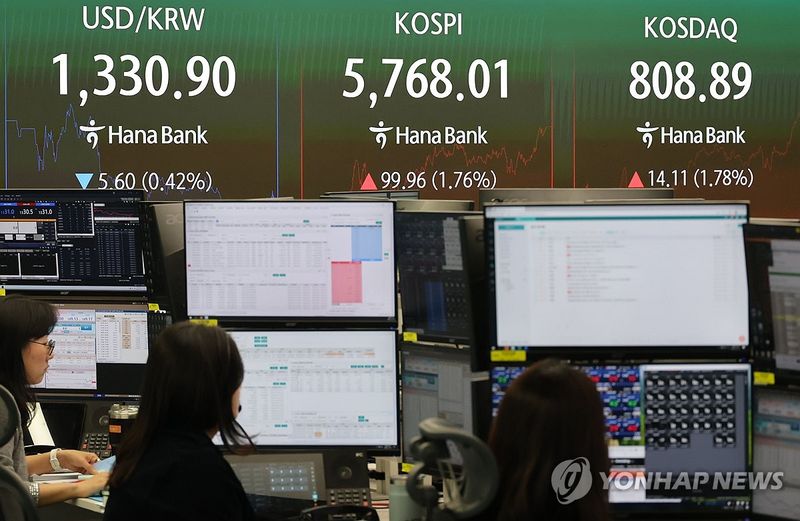
[Financial News] Elice Group, an artificial intelligence (AI) infrastructure company that was branded an “IPO disaster” after plunging more than 30% below its offering price on its first day of trading, surged to the upper price limit on its second day as a listed company. The move is seen as reflecting an influx of bargain hunters who believed the first-day decline had been excessive. However, the share price remains below the offering price, and analysts say it is too early to conclude that investor sentiment in the subdued IPO market has fully recovered.
Shares surge 29.92% to KRW 79,900; offering price was KRW 90,500
According to the Korea Exchange, as of 2 a.m. on the 21st, Elice was trading on the KOSDAQ at KRW 79,900, up KRW 18,400 (29.92%) from the previous trading day. The stock had hit its upper price limit, the highest permitted daily gain. Elice opened at KRW 69,500, 13% above the previous day’s close of KRW 61,500, and hit the upper limit shortly after trading began. At that point, trading volume stood at 1.52 million shares and trading value at KRW 112.9 billion, with more than KRW 100 billion pouring in just over an hour after the market opened.
On its first day of trading the previous day, Elice opened at KRW 75,700, about 16% below its offering price of KRW 90,500, and did not recover the offering price at any point during the session. It ultimately closed at KRW 61,500, down KRW 29,000 (32.04%) from the offering price. At one point during the session, its decline exceeded 37%, bringing it close to the lower price limit for its first day of trading—40% below the offering price.
The stock recovered a substantial portion of its losses in a single day by hitting the upper price limit, but it still stood KRW 10,600 (11.7%) below the offering price. Its market capitalization was KRW 889.2 billion, still short of the valuation in the KRW 1 trillion range implied by the offering price. This means most investors who took part in the IPO remain in loss territory.
Elice drew considerable market attention during its IPO. It recorded a subscription rate of 389 to 1 in the book-building process for institutional investors, while retail investors placed KRW 10.2599 trillion in subscription deposits. The view is that its first-day decline was excessive given how strong demand had been. Some analysts also say the sharp drop was driven more by a steep correction in the domestic stock market that day and weakening sentiment toward IPOs overall than by the company’s intrinsic value.
Elice’s first-day performance as a listed company also drew attention overseas. The U.S. financial publication Barron’s focused on the sharp drop in Elice’s share price in an article headlined “An IPO Disaster From South Korea Exposes the Vulnerability of the AI Investment Boom.” CNBC also reported that U.S. data-center stocks came under downward pressure following the weak listing of a South Korean cloud company. The sharp rebound a day later could be seen as challenging interpretations that the drop was a warning of an AI bubble, though some also noted that it again highlighted the high volatility seen early after a listing.
Experts: Beware of reading too much into this as a signal of an IPO market recovery
The IPO market remains weak overall. Based on the previous day’s closing prices, seven of the nine IPO stocks listed since last month, excluding SPACs, were trading below their offering prices, with an average return of -16.77% relative to those prices. Duksan Nepcores, listed on the 30th of last month, had the steepest decline at -40.21%. Global Technology (-30.30%), Wise Planet Company (-27.58%) and Brills (-16.67%) were also well below their offering prices. Jincostech, which went public through a SPAC merger, fell 45.41%, from a reference price of KRW 23,850 to KRW 13,020 at the previous day’s close.
Market participants caution against reading Elice’s rebound as a sign that the IPO market as a whole is recovering. Instead, they expect stock performance to diverge more sharply from one company to another. Kang Young-hoon, a researcher at Samsung Securities Co., Ltd., said, “This year, there has been a tendency for capital flows to concentrate in anticipation of a premium in the early stages of a listing. But if a wave of new listings hits the market all at once, individual stocks may become less scarce and attract less attention.” He added, “As IPOs continue to flood the market from this month onward, investors are expected to become even more discerning, weighing sector competitiveness and whether valuations are appropriate.”
[email protected] Kim Hee-seon Reporter