Ukraine Internet Restrictions a Solo Move by Musk? ... Possible Trump Influence
- Input
- 2026-10-21 09:51:01
- Updated
- 2026-10-21 09:51:01
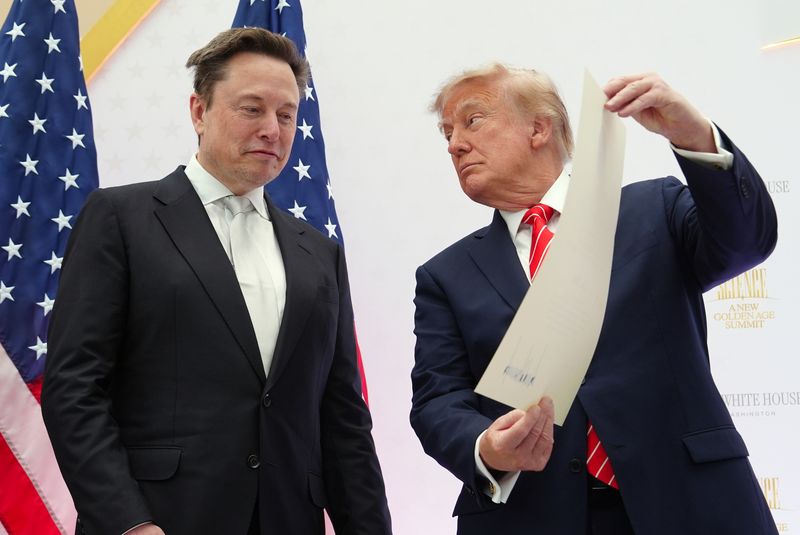
[Financial News] Elon Musk, CEO of U.S. company SpaceX, is alleged to have personally ordered a limit on the speed of the satellite internet service the company provided to Ukraine. Musk had previously emphasized that the matter fell under the U.S. government’s jurisdiction, while the U.S. government said it knew nothing about it.
On the 20th (local time), the U.S. Wall Street Journal (WSJ), citing sources, reported that Musk had imposed speed limits on Ukrainian equipment while maintaining its access to Starshield, so the service could not be used to operate attack and interception drones. Unlike Starlink, the company’s civilian satellite internet service, Starshield is a service for the military and government launched in 2022. The two services use the same SpaceX satellites but operate differently.
In Ukraine, starting on the night of the 13th, SpaceX’s Starshield service suddenly began experiencing disruptions in which the signal cut out at certain speeds (160 km/h or higher). The Ukrainian military currently uses drones for a range of purposes, including reconnaissance and resupply as well as medium-range strikes, and needs Starshield for these operations. Frontline Ukrainian units in particular are struggling to hit Russian targets as satellite signals to their attack drones repeatedly cut out.
On the 14th, Musk posted on the social media platform X: “The Starshield system is owned and controlled by the U.S. government,” adding, “All restrictions on speed and use are determined by the U.S. military and, ultimately, by the U.S. president.”
On the 18th, Ukrainian President Volodymyr Zelenskyy said on U.S. broadcaster NBC, referring to the speed limits: “I believe the U.S. government ordered the restrictions, and SpaceX technically implemented them.”
However, speaking to reporters on the 16th about the speed limits, U.S. President Donald Trump said, “It wasn’t me (who did it). Elon (Musk) probably wasn’t responsible, either.” U.S. Secretary of War (Defense) Pete Hegseth also said in a statement on the 20th, “We have not restricted anything,” adding, “There are terms of service that must ultimately be followed (in using Starshield), and Starlink has the discretion to make decisions on that.”
According to two sources who spoke to the WSJ on the 20th, Trump called Musk and discussed the issue shortly after the Starshield controversy became public. One of the sources said the two had discussed the matter even before satellite internet speeds were restricted.
Another U.S. government official said Musk had acted unilaterally in taking this measure and that Trump had not specifically ordered any retaliation against Ukraine. Another source, however, said Musk had discussed it in advance with Trump and other senior government officials.
With rising diesel prices causing him headaches ahead of the November midterm elections, Trump blamed rising diesel prices on Ukraine’s attacks on Russian refineries and pressured Ukraine to halt them. After Zelenskyy refused, Trump publicly called for him to step down this month. Zelenskyy pushed back over the internet speed restrictions, saying Trump wanted Ukraine to surrender.
It has yet to be established whether Musk acted alone in taking this measure. Musk has, however, grown close to the Trump administration since the 2024 presidential election and, as of this month, has made the largest political contributions of anyone in this year’s midterm election cycle. On the 20th, the U.S. political news outlet Politico reported that Democratic lawmakers are preparing a targeted investigation into Musk if they regain a House majority in the November midterms. The investigation is expected to cover the Ukraine controversy, SpaceX’s government contracts, Tesla’s energy subsidies, and Musk’s conduct while heading the Department of Government Efficiency (DOGE), among other matters.
[email protected] Park Jong-won Reporter