“Not just a disease of overweight middle-aged men”: Sleep apnea also affects thin people, women and children [Health Talk]
- Input
- 2026-10-21 08:16:10
- Updated
- 2026-10-21 08:16:10
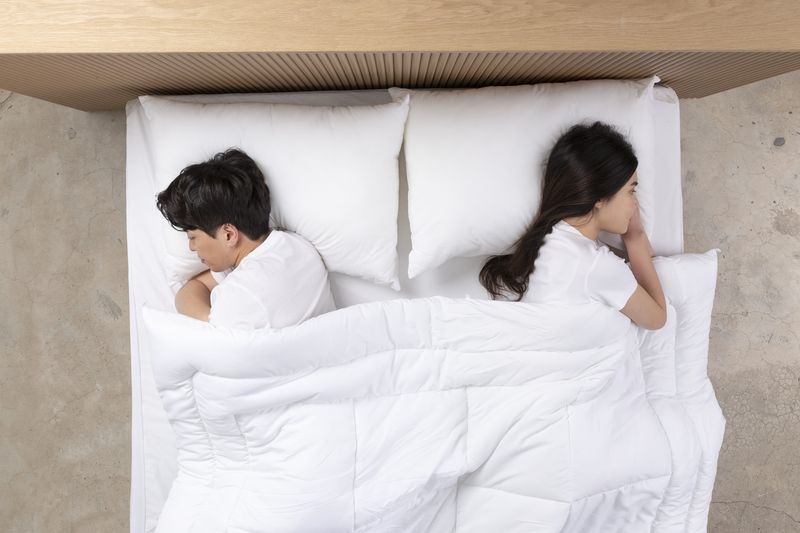
[Financial News] Contrary to the perception that sleep apnea is “a disease of snoring, overweight middle-aged men,” it also affects thin people, women and children. In women, particularly after menopause, it can be easy to miss because it may manifest only as insomnia and fatigue rather than snoring.
Obstructive sleep apnea is a condition in which the airway repeatedly becomes blocked during sleep. This can make oxygen supply unstable and repeatedly interrupt sleep, leading to fatigue and drowsiness during the day. Over the long term, it may also affect cardiovascular health.
Weight isn’t the only cause...suspect sleep apnea even without snoring
Hong Seung-no, a professor in the Department of Otolaryngology at Seoul Metropolitan Government Boramae Medical Center, explained, “It is true that sleep apnea is more common in men and people with obesity. But while fat and soft tissue around the neck can narrow the airway, it can also become blocked during sleep in people with a small jaw, a narrow airway due to their facial bone structure, or enlarged tonsils or tongue.”
Functional factors, such as how well the muscles that keep the airway open work and the characteristics of breathing regulation, also play a role. Even at the same weight, a person’s risk and the causes of the condition can differ.
Women tend to face a higher risk after menopause, but they often report nonspecific symptoms such as insomnia or fatigue rather than obvious snoring. The possibility of sleep apnea should not be ruled out simply because the snoring is not severe.
Snoring and sleep apnea are closely related, but they are not the same thing. When a person falls asleep, the muscles around the tongue and neck relax, and the soft palate at the back of the roof of the mouth or the base of the tongue can sag backward, narrowing the airway. When air passing through the narrowed passage makes tissue vibrate, snoring occurs; when the passage becomes severely narrowed or blocked, apnea or hypopnea occurs. Not everyone who snores has sleep apnea, and sleep apnea can occur even without obvious snoring.
Louder snoring does not necessarily mean a more severe condition. In fact, the sound may stop when the airway becomes completely blocked. Repeated episodes of heavy snoring followed by sudden silence and then gasping for breath should be taken seriously. Sleep apnea can cause morning headaches, unrefreshing sleep, chronic fatigue and excessive daytime sleepiness, but these symptoms alone are not enough to confirm the diagnosis.
Polysomnography is used to make an accurate diagnosis. It measures brain waves; eye and muscle movements; airflow through the nose and mouth; breathing movements in the chest and abdomen; oxygen saturation; and electrocardiogram readings to determine whether sleep apnea is present, how severe it is and what treatment may be needed. The key measure, the apnea-hypopnea index (AHI), is the number of apnea and hypopnea events per hour of sleep. In adults, an AHI of 5 or higher but less than 15 is generally considered mild, 15 or higher but less than 30 moderate, and 30 or higher severe. Whether to treat the condition is determined based on symptoms and coexisting conditions as well as the AHI.
Alcohol and treating nasal congestion won’t solve it...PAP is like “glasses”
Drinking alcohol to help you fall asleep does not help. Alcohol may briefly shorten the time it takes to fall asleep, but it can further relax the muscles that support the airway and worsen snoring and apnea. People with sleep apnea should avoid drinking before bedtime.
Treating nasal congestion alone will not resolve the problem either. A deviated nasal septum, allergic rhinitis and nasal polyps can worsen symptoms, but snoring often comes from around the soft palate and uvula, while the base of the tongue and the tonsils can also narrow the airway. Nasal treatment can make breathing easier and help with PAP use, but obstruction deeper in the throat may remain. For this reason, doctors examine the structures of both the nose and throat and, when needed, use imaging or drug-induced sleep endoscopy to check where and how the airway becomes blocked during sleep.
PAP therapy is a standard treatment and is generally considered first for patients with moderate or more severe sleep apnea. It can also be used by patients with mild sleep apnea, depending on their symptoms and coexisting conditions. Contrary to a common misconception, it is not a machine that supplies oxygen; it delivers air at a steady pressure through a mask to support an airway that is prone to collapse. When used properly, it can reduce apnea and hypopnea and improve sleep quality and daytime sleepiness. Just as glasses help you see only when you wear them, PAP keeps the airway open only while it is being worn, so it needs to be used consistently. That does not mean everyone has to use it for life: if a person’s condition changes after weight loss or surgery, they can reassess with their medical team whether to continue.
Other treatments include weight loss, changes to sleeping position, oral appliances and surgery. Weight loss can help people with obesity. For those with “positional” sleep apnea, in which breathing problems worsen when lying flat on the back, sleeping on one’s side may be effective. An oral appliance that moves the lower jaw forward to widen the airway may be considered for patients who have difficulty using PAP, among others, but its effectiveness may be lower than PAP’s and should be assessed.
Surgery can correct structural causes of airway obstruction, including the tonsils, soft palate and base of the tongue, and may be effective for patients with excessively enlarged tonsils or clear obstruction at a particular site. Surgery to move the jaw forward or nerve stimulation therapy to control tongue movement may also be considered. However, the site and cause of obstruction vary from person to person, and functional factors also play a role, so surgery does not cure everyone; breathing problems may persist or recur. Drug treatment for weight loss is also being considered for some patients with obesity, but it should be used only after checking the approved indications for each medication and the patient’s condition.
Children’s snoring should not be dismissed either. If a child snores heavily every day or stops breathing during sleep, pediatric obstructive sleep apnea may be suspected. Enlarged tonsils and adenoids are the main cause in children, and ongoing breathing problems can affect daytime concentration and behavior, learning and growth. Occasional snoring may not be a concern, but if snoring continues or is accompanied by apnea, behavioral changes or reduced concentration, the child should be seen by a doctor. If enlarged tonsils or adenoids are the cause, removal may be effective; the decision to operate is based on the symptoms, test results and the child’s overall condition.
Professor Hong said, “If you notice pauses in breathing along with snoring, or feel tired despite getting enough sleep and are very sleepy during the day, you shouldn’t dismiss it as a sleep habit or a consequence of age. Treatment for sleep apnea varies depending on its cause and severity, so getting an accurate examination to understand your condition and managing it consistently are the first steps toward healthy sleep.”
[email protected] Medical correspondent Jeong Myeong-jin Reporter